

Removing stubborn soot and creosote from fireplace glass requires understanding the chemical bond between combustion byproducts and tempered glass surfaces.
The Chemistry of Fireplace Deposits
Soot is primarily composed of amorphous carbon particles, which deposit on the glass alongside sticky, partially burned wood resins known as creosote. When these organic compounds are subjected to high temperatures, they undergo thermal polymerization, baking onto the glass and forming a resilient, highly cohesive layer. Standard glass cleaners fail because they are formulated for dust and water-soluble grime, lacking the chemical strength to break down polymerized lipids and carbon chains.
How Alkaline Cleaners Break the Bond
Effective soot removal relies on alkaline hydrolysis, a process where high-pH agents break down organic esters and acidic resins. Potassium hydroxide or sodium hydroxide are the active chemical agents commonly found in heavy-duty fireplace cleaners. These strong bases react with the acidic components of creosote, converting insoluble organic residues into soluble salts that can be easily wiped away. When using these alkaline formulas, the order of operations is critical:
- Ensure the glass is completely cool to prevent thermal shock and rapid evaporation of the chemical agent.
- Apply the alkaline solution evenly across the glass surface.
- Allow the chemical to dwell for three to five minutes, giving the active ingredients time to break the molecular bonds of the soot.
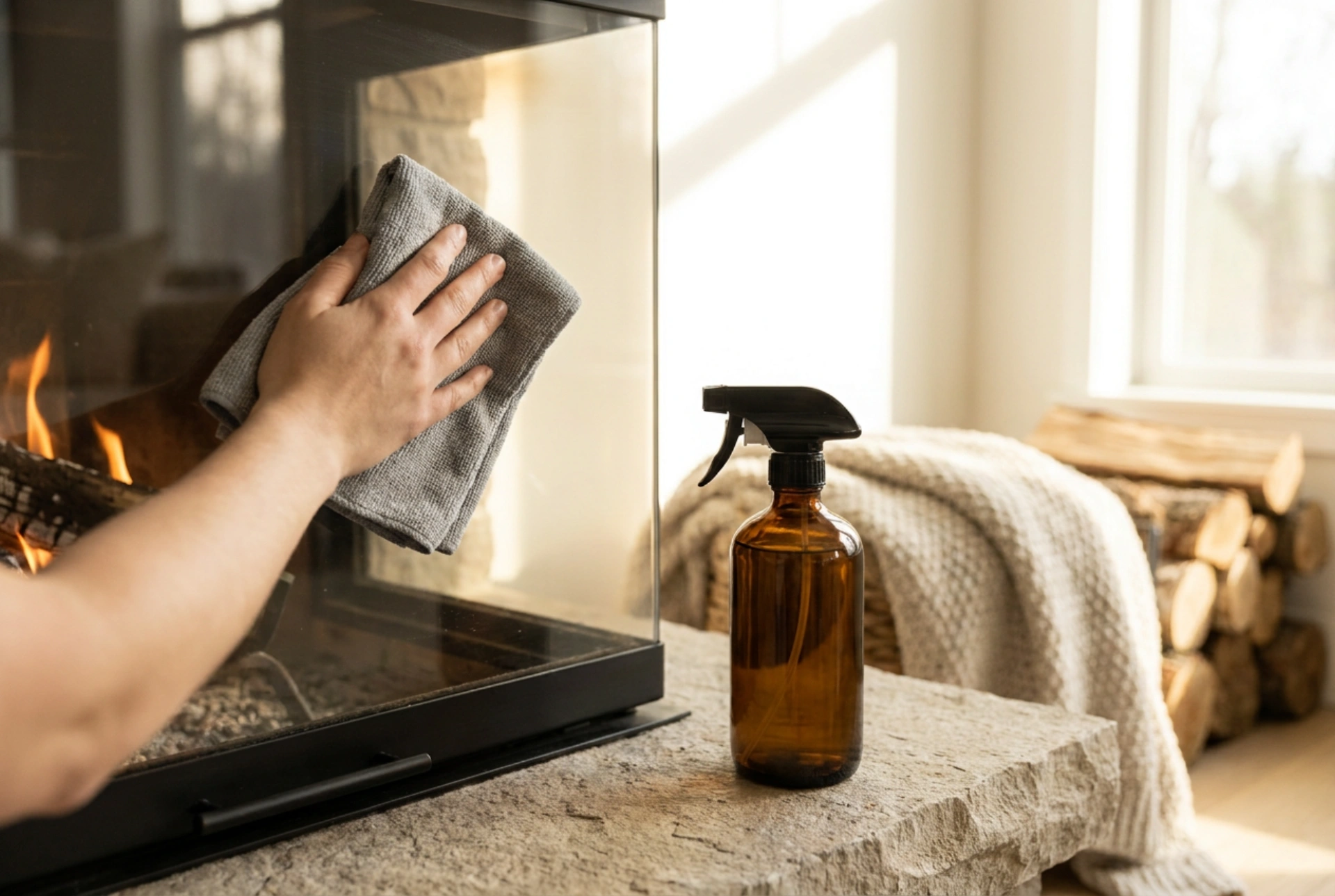
- Wipe the dissolved residue away using a damp microfiber cloth, moving in consistent circular motions.
The Mechanical Approach: Utilizing Wood Ash
For a non-reactive, highly accessible alternative, the chemistry of wood ash can be harnessed. Hardwood ash contains potassium carbonate, a mild alkali that acts as a natural cleaning agent. When mixed with a small amount of water on a damp cloth, the ash forms a gentle abrasive paste. This paste mechanical-chemically dissolves the soot without scratching the tempered glass. To execute this technique safely, select only fine, white ash from the combustion chamber, ensuring no abrasive charcoal fragments or nails are present in the mixture.
Safety and Material Preservation
Strong alkaline cleaners require careful handling to protect both the operator and the surrounding materials. These chemicals can corrode the anodized aluminum frames, degrade fiberglass sealing ropes, and etch natural stone hearths if allowed to drip or pool. Always shield the surrounding masonry and metal with protective sheeting, wear chemical-resistant gloves, and ensure adequate room ventilation to disperse any aerosolized particles during application.