

Open wardrobe systems offer an elegant, minimalist aesthetic, but keeping garments exposed requires a deep understanding of fabric preservation, spatial mechanics, and structural balance.
The Physics of Load Distribution on Metal Structures
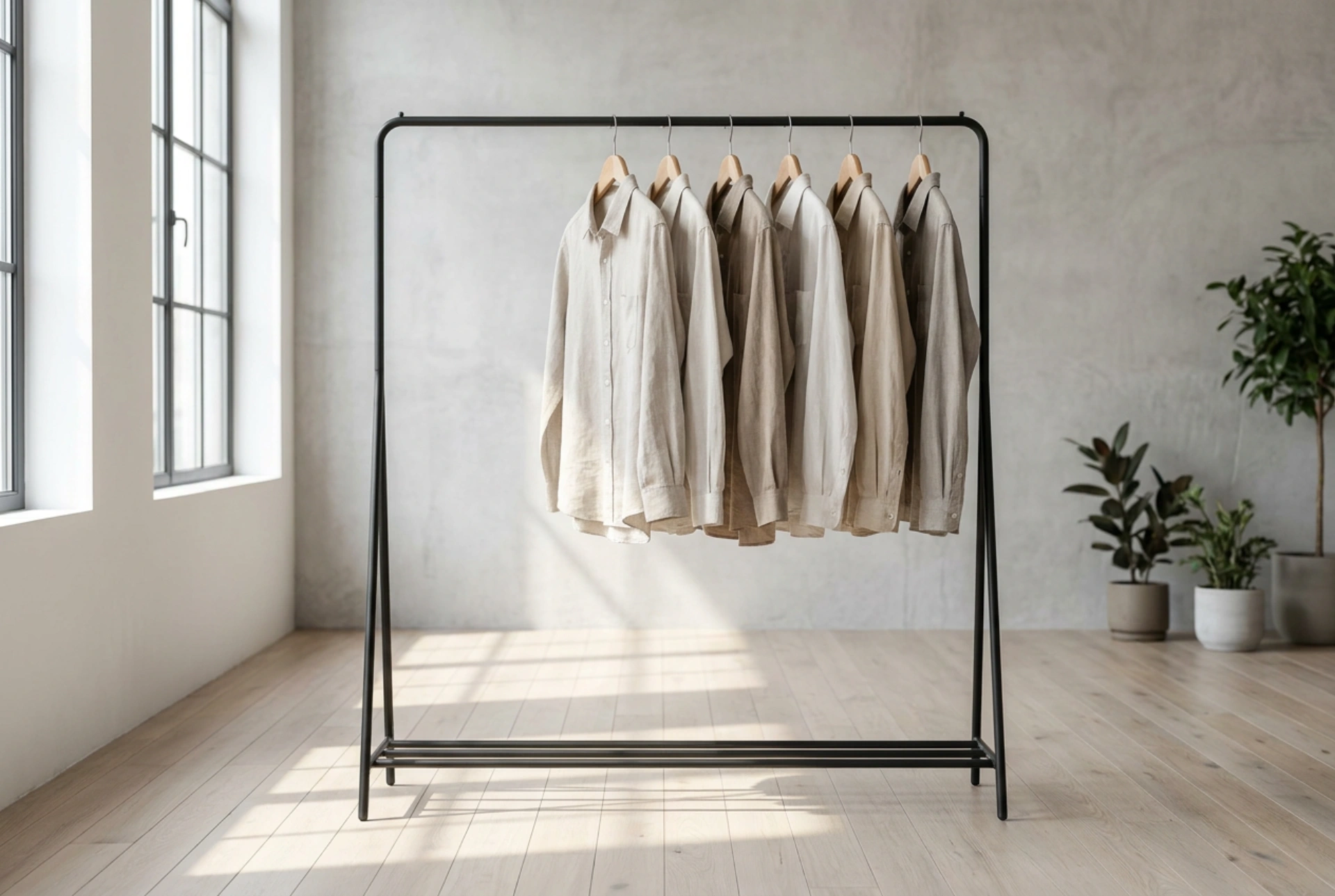
Industrial clothes racks, typically constructed from steel pipes or matte-coated iron, must support significant weight. When selecting or positioning a rack, structural physics dictates how garments should be arranged. Heavy winter coats, denim, and structured blazers exert a downward gravitational force that can warp thin metal rods over time. To prevent structural fatigue, place the heaviest items closest to the vertical support pillars. This transfers the load directly down to the base rather than flexing the center of the horizontal rail. Wooden hangers should be spaced at least two centimeters apart; this density control ensures adequate air circulation, preventing moisture buildup between compressed natural fibers.
Protecting Exposed Fabrics from Environmental Factors
Storing clothes outside a traditional wooden wardrobe exposes them to light, dust, and indoor humidity. Understanding these elements is crucial for material preservation:
- Photodegradation: Ultraviolet and visible light break down chemical bonds in fabric dyes, causing fading. Position your rack away from direct window paths. If exposure is unavoidable, select garments made of undyed linen, white cotton, or light synthetic fibers for the outermost positions.
- Dust Accumulation: Airborne particulates settle on horizontal surfaces, most notably the shoulders of hung garments. Use breathable cotton shoulder covers for high-value items like wool suits or silk blouses. Avoid plastic covers, which trap ambient moisture and can lead to mildew.
- Humidity Control: Airflow is your primary defense against musty odors. Unlike closed wardrobes, open racks benefit from natural room ventilation, but they should never be placed directly against cold, uninsulated exterior walls where condensation can occur.
Material Compatibility: Selecting the Right Hangers
The interface between the hanger and the garment determines how well a piece retains its shape. Wire hangers exert highly concentrated pressure on narrow points of the fabric, leading to permanent shoulder puckering and fiber stretching. Heavy garments like wool coats require wide, contoured wooden hangers that mimic human shoulder anatomy, distributing the weight across a broader surface area. Delicate fabrics, such as silk or satin, slip off polished wood easily; for these, hangers wrapped in high-friction velvet or textured silicone grips are essential to prevent slipping and subsequent creasing on the floor.
Spatial Organization and Visual Weight
An open wardrobe functions as a visual element within a room, meaning its layout affects the perceived size of the space. Grouping garments by length creates a clean, rising diagonal line that guides the eye and leaves open floor space beneath the shorter items. This lower zone can be utilized for heavy storage boxes or shoes, lowering the physical center of gravity of the entire setup and increasing stability. Arrange garments by color density—from lightest to darkest—to create a balanced visual flow that prevents the rack from looking cluttered or overwhelming in a minimalist interior.