

Compact and tabletop dishwashers are highly efficient tools for small households, but maximizing their water-saving potential requires a precise understanding of loading physics, water circulation, and chemical dosing.
The Mechanics of Compact Water Circulation
Standard dishwashers rely on high-volume spray arms, whereas compact models operate with restricted physical space and lower water volumes, typically using only 6 to 9 liters per cycle. Within this confined chamber, water must reach every surface via a single or dual spray arm system. Understanding this geometry is crucial. If a large plate or bowl blocks the path of the spray arm, it creates a rain shadow effect, preventing water and detergent from reaching the items positioned behind or above the obstruction.
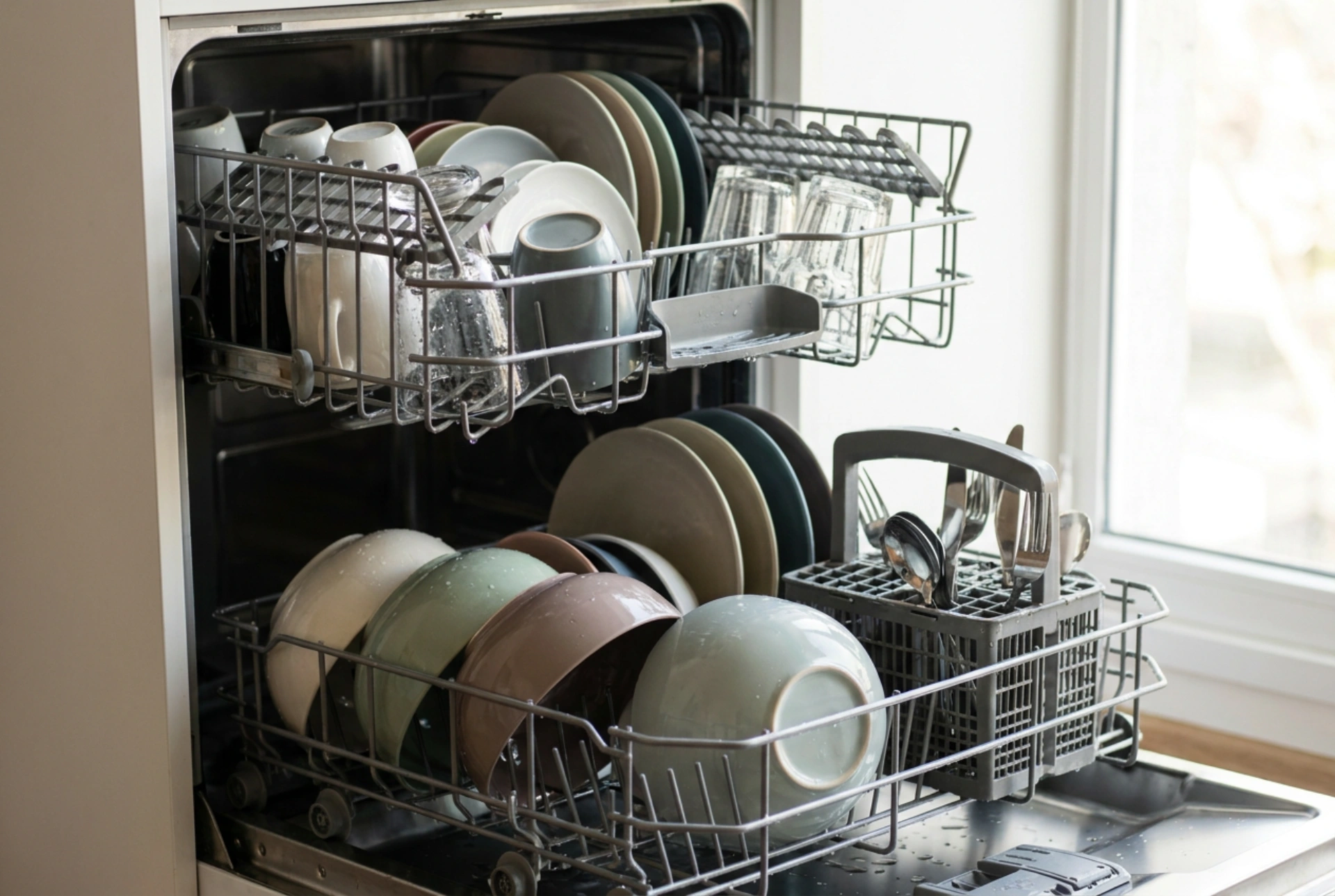
To ensure optimal water circulation, always place larger, flatter items at the outer perimeter of the rack. Angle deep bowls downward at a 45-degree angle. This orientation prevents dirty water from pooling in the concave bases, which otherwise wastes clean water during the rinse cycle by contaminating the freshly cleaned load.
The Chemistry of Small-Volume Washing
One of the most common mistakes with compact dishwashers is overdosing detergent. Standard multi-action tabs are formulated for full-sized, 12-to-14 place setting machines operating with 12 liters of water or more. Using a full tab in a compact machine leads to an oversaturated chemical solution, leaving a dull, white residue of undissolved surfactants on your glassware and lining the interior walls.
To prevent this and eliminate the need for extra rinse cycles, switch to powder detergent or liquid gel. This allows you to scale the dosage down to match the physical volume of the load. Typically, a compact dishwasher requires only one-third to one-half of the standard detergent quantity. Additionally, ensure the rinse aid compartment is filled; rinse aid reduces the surface tension of the water, allowing it to sheet off the dishes rapidly, which accelerates drying without relying on energy-intensive heating elements.
Optimal Loading Patterns for Maximum Efficiency
Achieving maximum efficiency is a matter of strategic placement. Grouping items by material and soil level ensures that water is distributed where it is needed most:
- Cutlery Placement: Mix spoons, forks, and knives in the basket with some handles pointing up and others down to prevent nesting. Nesting occurs when nested spoons block water flow, requiring a rewash.
- Glassware Separation: Position delicate glasses securely on the upper tines. Avoid allowing glassware to touch, as the vibrations during the wash cycle can cause micro-fractures or chipping.
- Heavy Soils Facing Inward: Highly soiled surfaces, such as breakfast bowls, must face directly toward the center spray nozzle to benefit from the direct impact of the water jet.
Water-Saving Operational Habits
Pre-rinsing dishes under running water before loading them defeats the water-saving purpose of a compact dishwasher. Modern detergents contain enzymes (amylases and proteases) that require food soils to bind to and function correctly. Without organic matter to break down, these enzymes foam excessively and can damage delicate surfaces over time. Instead, simply scrape solid food scraps into the waste bin using a silicone spatula.
Always run the dishwasher only when it is fully loaded. Running a half-empty compact machine doubles your water and energy consumption per dish. If you must leave soiled dishes in the machine for a day to accumulate a full load, run a brief cold rinse cycle if available, which uses minimal water to prevent odors without initiating a full heating cycle.