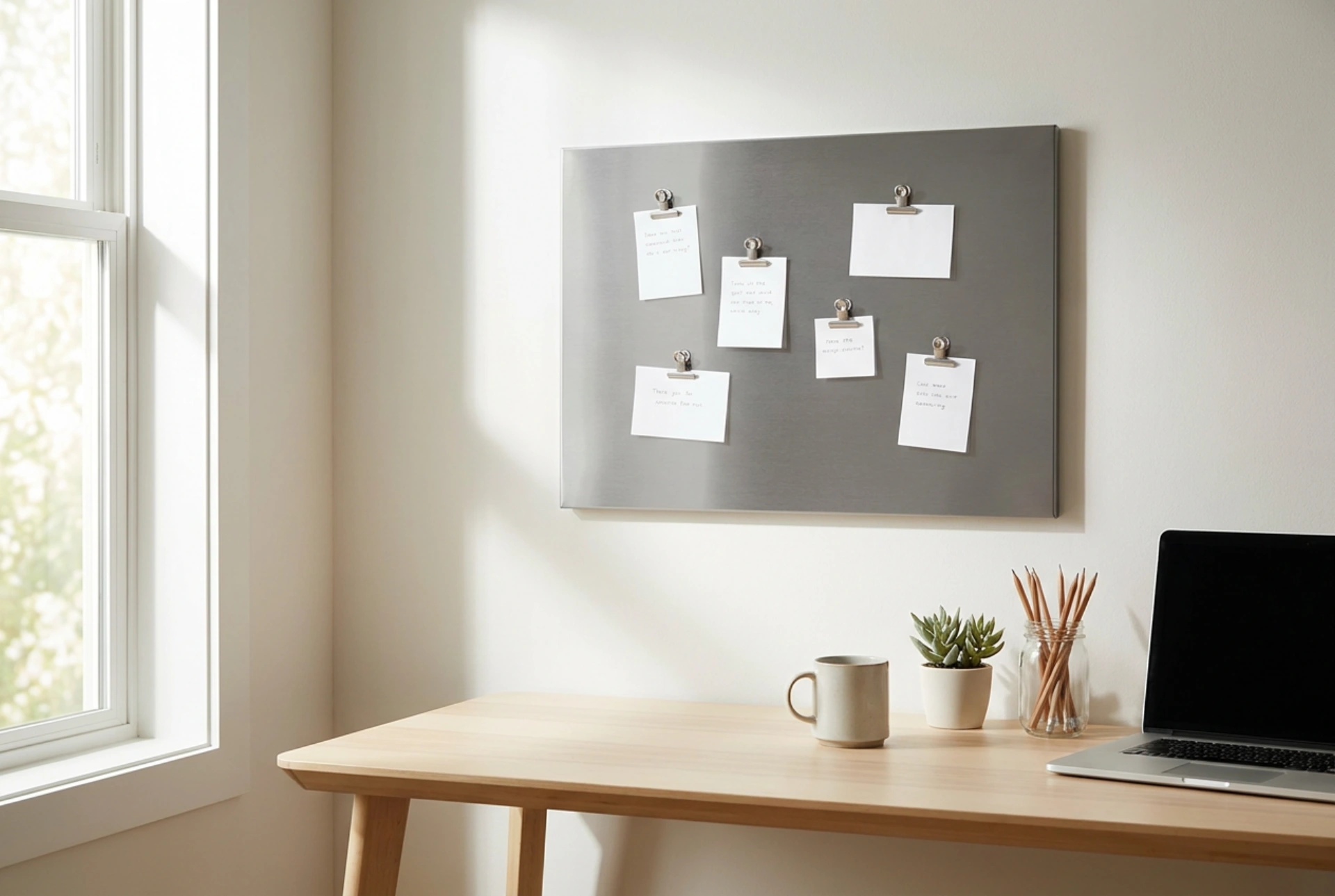


A well-planned magnetic wall board transforms a chaotic workspace into a highly functional visual hub, relying on basic physics and spatial design to optimize your daily workflow.
Understanding Magnetic Pull and Material Thickness
The performance of your wall board depends entirely on the interaction between the backing metal and the magnets you select. Ferromagnetic metals, such as steel, are essential for creating a strong hold. Standard thin sheet metal may warp under tension or fail to provide enough magnetic force for heavier documents. When selecting your steel sheet, aim for a thickness of at least 0.8 mm to 1.2 mm. This provides structural rigidity and ensures a dense concentration of iron atoms to maximize magnetic pull. Avoid aluminum or standard stainless steel alloys, as their atomic structure does not support magnetic attraction.
Selecting the Right Magnets for Your Workspace
Not all magnets are created equal, and choosing the wrong type can lead to slipping papers and damaged surfaces. Classic ferrite magnets are inexpensive but have a weaker magnetic field, meaning you need larger sizes to hold simple sheets of paper. For a clean, minimalist home office, neodymium magnets (rare-earth magnets) are highly superior. These compact powerhouses use a combination of neodymium, iron, and boron to create an incredibly strong magnetic field in a tiny footprint. However, because they exert high force, always choose neodymium magnets coated in epoxy or silicone to prevent scratching the board surface during repositioning.
Installation and Surface Preparation
Securing a heavy steel board to your home office wall requires careful planning to prevent sagging or wall damage. Start by identifying the wall composition. For drywall or plasterboard, you must locate the vertical wooden studs using a stud finder to anchor the mounting screws safely. If studs are unavailable, specialized heavy-duty toggle bolts are mandatory to distribute the weight evenly. Ensure the board is mounted completely level; even a slight tilt can cause cylindrical magnets to roll off the surface. If you prefer a seamless, painted magnetic wall instead of a metal sheet, you can apply magnetic paint. This process requires applying at least three to four coats of paint containing dense iron dust, followed by a light sanding between each layer to ensure a smooth finish before applying your final color coat.
Zoning the Board for Cognitive Efficiency
To maximize productivity, divide your magnetic board into distinct functional zones. According to cognitive ergonomics, our brains process spatial organization faster than written lists. Establish a three-zone system: a dynamic zone on the left for active, incoming tasks; a central zone for high-priority items and current weekly schedules; and a right-hand zone for long-term reference and inspiration. Use color-coded magnetic pins or magnetic strips to categorize different projects. Keeping at least twenty percent of the board surface empty prevents visual clutter, allowing your eyes to focus immediately on high-priority tasks without cognitive fatigue.