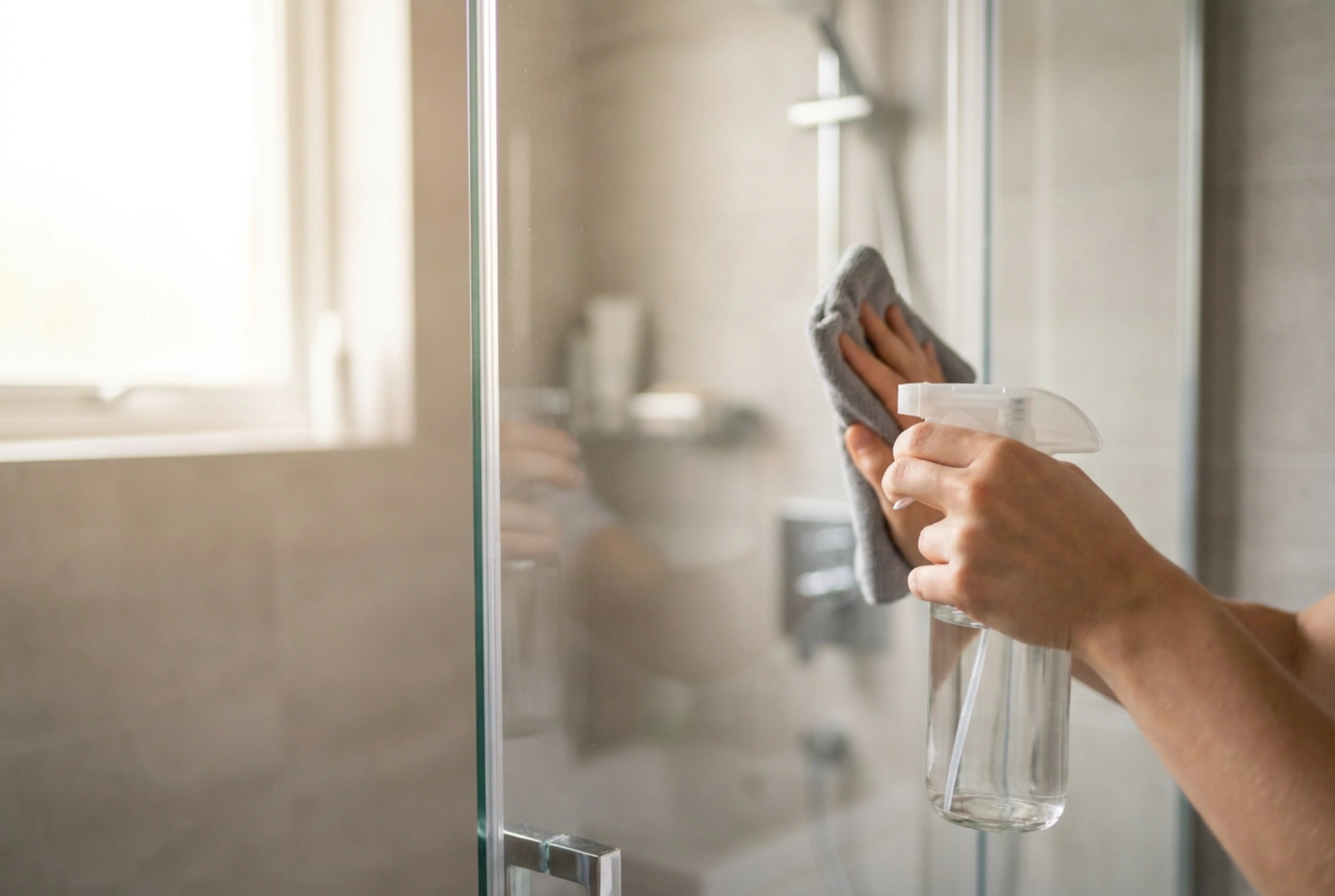


Selecting the correct cleaning agent for a shower cabin requires understanding the chemical nature of the deposit you are trying to remove.
The Chemistry of Bathroom Buildup
Shower cabins accumulate two main types of stubborn deposits: inorganic mineral scale and organic soap scum. Each requires a fundamentally different chemical approach to break the molecular bonds adhering to your glass, acrylic, or ceramic surfaces. Using the wrong agent can leave the surface dull, damage the protective coatings, or simply waste your effort without removing the stain.
Dissolving Inorganic Limescale with Acidic Agents
Limescale is primarily composed of calcium carbonate and magnesium carbonate, which precipitate out of hard water as it evaporates on warm surfaces. Because these minerals are highly alkaline, they must be neutralized with an acid to become water-soluble again.
- Mild organic acids: Citric acid and lactic acid are highly effective at breaking down calcium bonds without releasing toxic fumes. They are safe for most high-quality shower glass coatings and acrylic trays.
- Acetic acid (vinegar): While effective, acetic acid can slowly degrade rubber gaskets and silicone sealants if left to soak for extended periods. Use it in controlled concentrations and rinse thoroughly.
- Application technique: Spray the acidic solution onto the dry surface. Water on wet glass dilutes the acid, reducing its chemical activity. Allow the solution to dwell for 3 to 5 minutes so the acid can chemically dissolve the crust, then wipe using a non-abrasive microfiber cloth in circular motions to lift the loosened mineral particles.
Breaking Down Organic Soap Scum with Alkaline Agents
Soap scum forms when the fatty acids in bar soaps react with the calcium ions in hard water, creating an insoluble, greasy layer of calcium stearate. This organic matrix traps skin cells, body oils, and dust, creating a sticky grey or dull film. Acids are ineffective against this greasy barrier; you need an alkaline agent or a surfactant-heavy formulation to emulsify the lipids.
- Alkaline cleaners: Sodium bicarbonate (baking soda) acts as a mild base and a gentle physical abrasive. It neutralizes fatty acids, converting them into soluble salts that can be easily rinsed away.
- Surfactants: Modern surface-active agents reduce the surface tension of water, allowing it to penetrate the greasy barrier, lift the organic matter from the glass, and suspend it in the rinsing water.
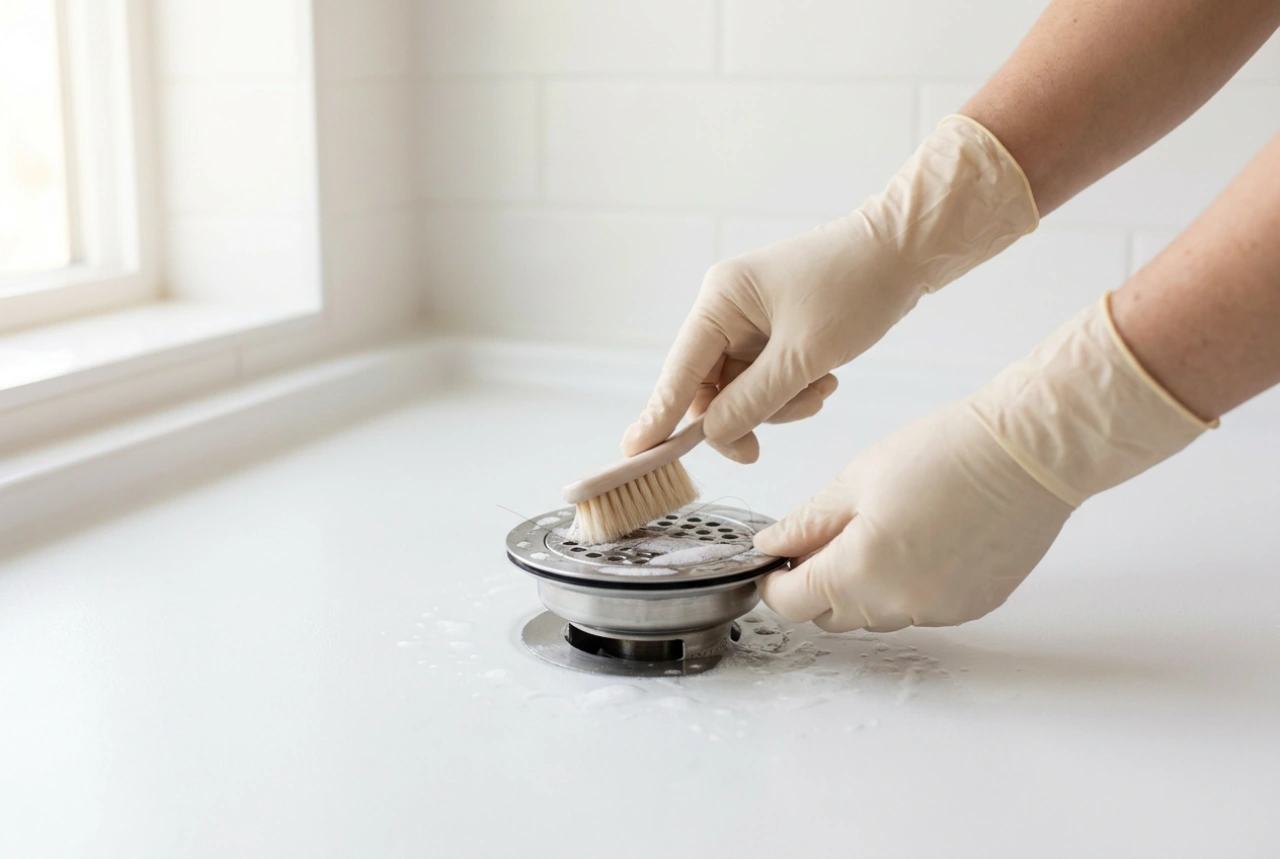
- Application technique: Apply an alkaline paste or a surfactant-rich foam to the dry scum. Work the mixture with a soft sponge using firm, linear strokes. The mechanical action combined with emulsification breaks the bond between the oil and the shower substrate.
Preventing Damage to Sensitive Materials
Different parts of a shower cabin react uniquely to chemical cleaners. Knowing the material science of your bathroom fixtures prevents permanent etching and corrosion.
- Coated glass: Modern shower glass often features a hydrophobic polymer coating to repel water. Strong mineral acids or abrasive scrubbing pads will strip this protective layer, leading to rapid, permanent water staining. Stick to mild organic acids and soft microfiber.
- Anodized aluminum profiles: Strong acids and highly alkaline products can attack the oxide layer on aluminum frames, causing permanent discoloration and pitting. Always rinse metal profiles immediately after contact with any cleaner.
- Natural stone and grout: Acidic cleaners will dissolve cement-based grout and natural stones like marble or travertine. For these materials, rely on pH-neutral stone cleaners and mechanical scrubbing with stiff, non-wire brushes.