

Organizing a wardrobe for maximum accessibility relies on practical spatial planning, ergonomic placement, and utilizing light reflection to improve visibility. By aligning your clothing layout with daily physical movements and leveraging the properties of a built-in mirror, you can eliminate morning friction and protect your garments.
The Physics of Wardrobe Lighting and Mirror Placement
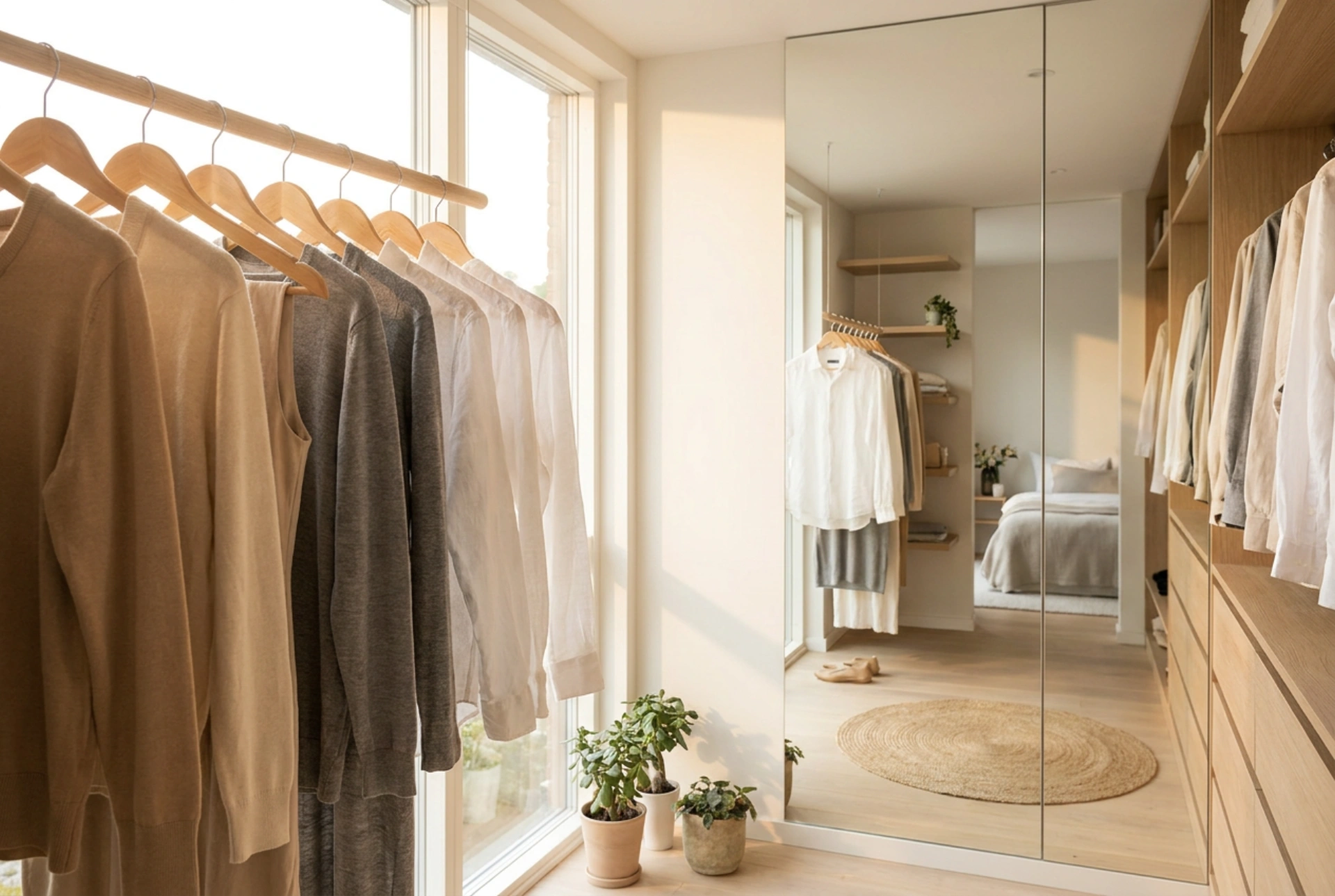
A mirror is not just a tool for checking your outfit; it is an active instrument for distributing light inside a deep, dark wardrobe cavity. Positioning your mirror on the inside of the main door or directly adjacent to the hanging rail allows it to catch ambient room light and bounce it back into the corners of the shelving units. This immediately improves the visibility of darker textiles, preventing the typical searching process that disrupts folded stacks. When organizing, place high-contrast, daily-wear items on the shelves directly opposite the mirror surface to maximize this reflective illumination.
The Ergonomic Zone System for Quick Access
To achieve rapid access without creating mess, categorize your storage space into three distinct physical zones based on the natural range of motion of your arms:
- The Active Zone (Chest to Eye Level): This is the prime ergonomic real estate. Store your most frequently worn garments here. Hanging rails should sit at a height where you do not need to stretch or bend. Use this zone for daily shirts, trousers, and dresses.
- The Lower Zone (Waist to Floor): Reserved for heavier items and footwear. Utilize pull-out mesh baskets or shallow drawers rather than deep shelves. Pull-out mechanisms bring the items into the light, allowing you to view everything from above without kneeling or digging through dark corners.
- The Upper Zone (Above Eye Level): Dedicated strictly to seasonal storage, extra bedding, or low-frequency items. Keep these in sealed, dust-proof fabric containers to maintain structural order below.
Material Selection and Hanger Dynamics
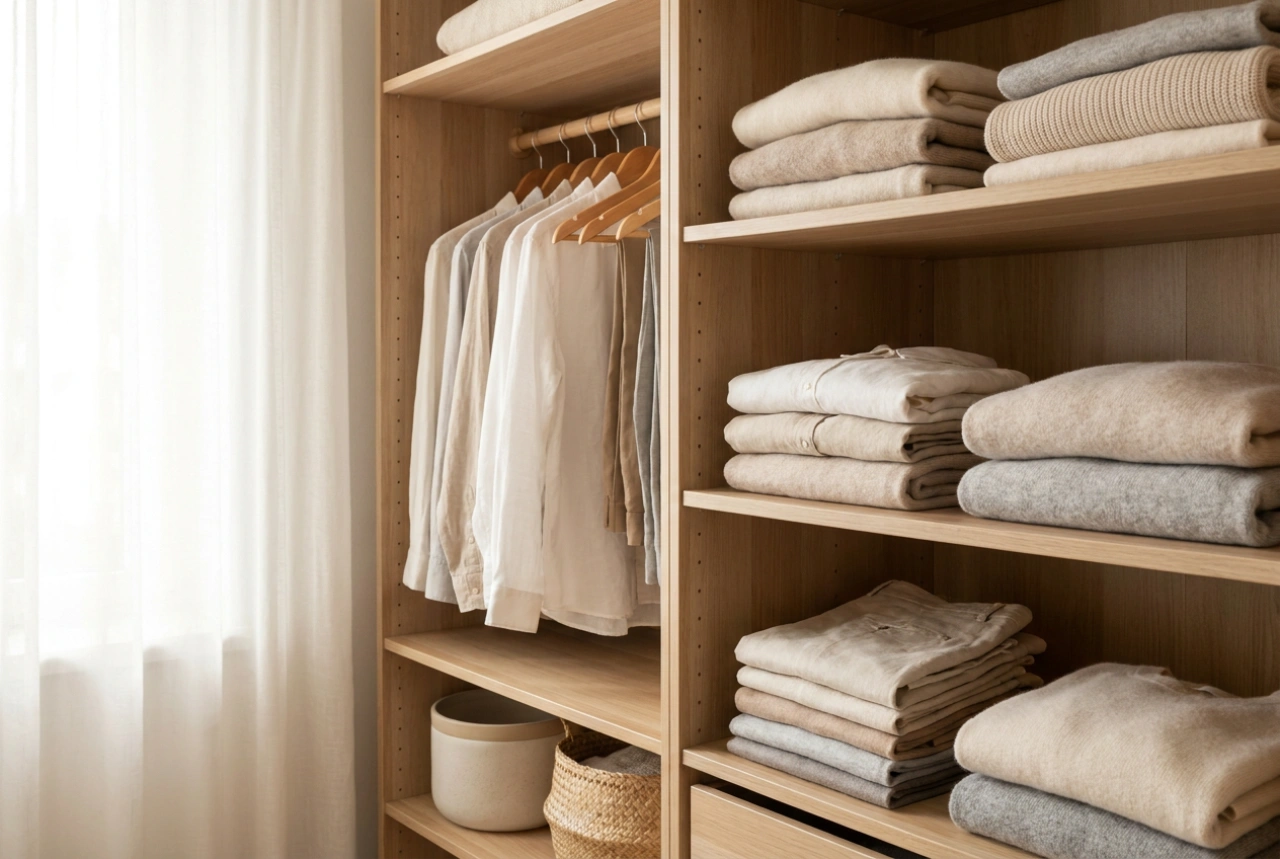
Quick access requires friction control. Wire hangers bend under weight and cause fabrics to snag, while plastic hangers often let silk and fine wool slip off onto the floor. Standardizing your wardrobe with sturdy wooden or high-friction velvet hangers ensures that garments remain perfectly aligned and spaced. Keep a consistent orientation, with all hanger hooks facing inward toward the back of the wardrobe. This simple rule allows your hand to glide smoothly along the rail, selecting and removing items with a single, fluid upward motion without tangling adjacent clothes.
The Fold-and-File Technique for Shelves and Drawers
Traditional vertical stacking on deep shelves is a major barrier to quick access; pulling a shirt from the bottom of a stack inevitably destabilizes the entire pile. To prevent this, implement horizontal filing in your drawers. Fold your t-shirts, sweaters, and knitwear into compact, self-standing rectangles and place them vertically, front-to-back, like files in a cabinet. This ensures that every single garment is visible at a glance upon opening the drawer. For open shelves, use rigid, removable shelf dividers to prevent tall stacks of heavier items like denim from tilting or spilling into neighboring sections.
Maintaining Order: The One-In-One-Out Flow
Even the most scientifically organized wardrobe will fail if volume exceeds physical capacity. Maintain a strict equilibrium by ensuring that hanger capacity matches your active wardrobe size. Leaving approximately two centimeters of free space between each hanger prevents compression, wrinkling, and the shadow casting that obscures visibility. This physical boundary acts as a natural limit, ensuring your quick-access system remains functional over the long term.