

Wicker baskets are highly effective tools for micro-organization, combining structural breathability with natural friction that prevents small objects from sliding around.
The Physics of Wicker Storage
Unlike smooth plastic containers, woven wicker possesses a textured surface and natural flexibility. This structural weave provides passive ventilation, which prevents micro-moisture buildup around stored items. The natural friction of willow, rattan, or seagrass fibers also acts as a non-slip barrier, holding internal organizers firmly in place. However, because small items can easily slip through the weave or get caught in the fibers, successful wicker storage relies on a layered organization system.
The Container-in-a-Container Method
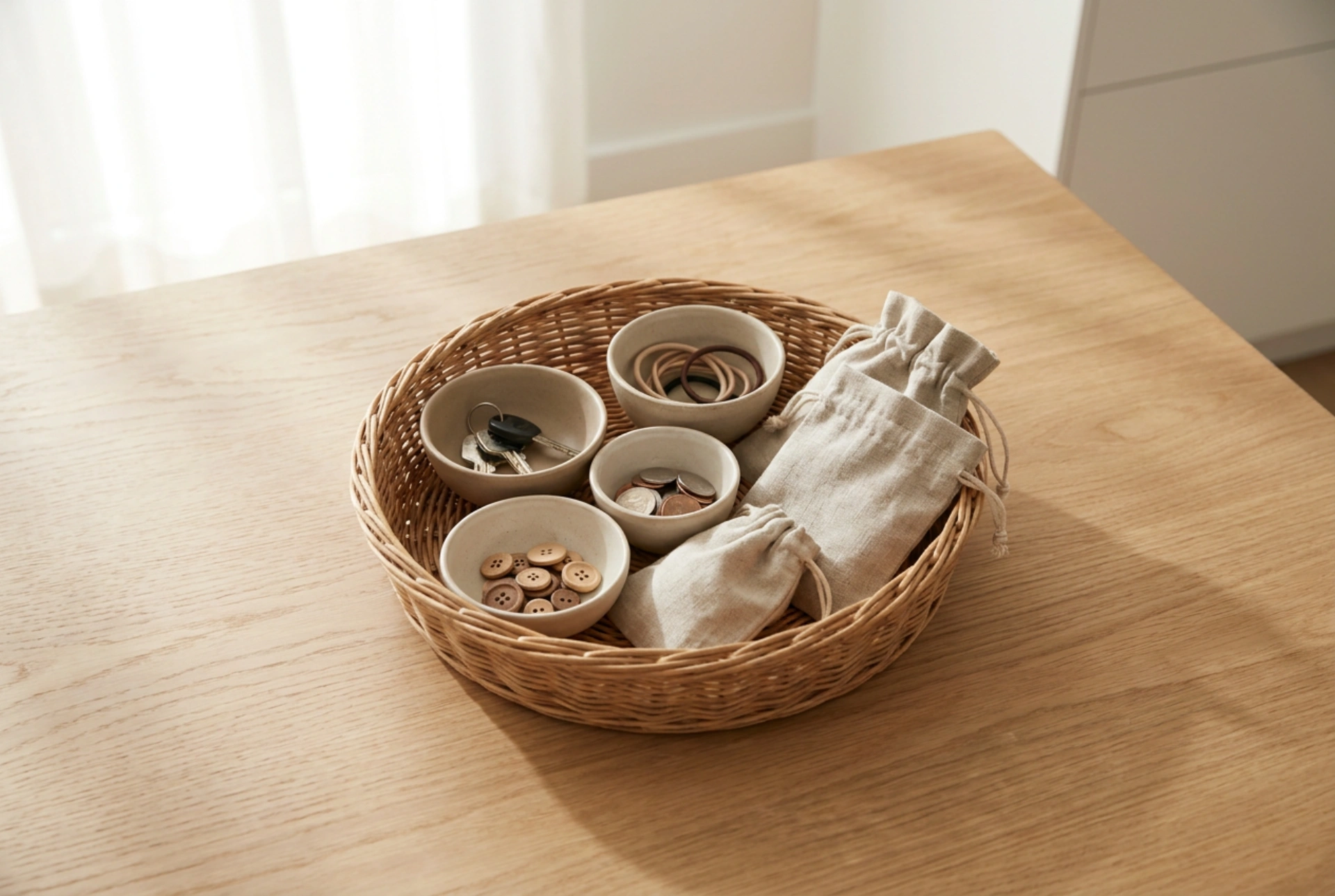
To store tiny household trinkets in a wicker basket without losing them in the crevices, you must establish internal boundaries. This technique uses smaller, solid receptacles inside the basket to categorize items while utilizing the basket as a unifying structural frame.
- Ceramic and Glass Inserts: Place small, heavy pinch bowls or shallow glass vessels inside the basket. These are perfect for holding metal items like paperclips, keys, or safety pins, preventing them from scratching or getting tangled in the wicker fibers.
- Linen and Cotton Pouches: Use soft drawstring bags made of natural fibers to group loose items such as sewing kits, spare buttons, or charging cables. The fabric protects the basket from sharp edges and keeps dust off the contents.
- Cardboard Dividers: Cut and slot dense cardboard to create custom grid systems. This is highly effective for organizing small bottles, essential oils, or craft supplies, keeping them upright and preventing leaks.
Protecting the Basket and Its Contents
Natural fibers are sensitive to moisture and physical snagging. To ensure your storage system lasts, always line the bottom of the basket. A simple piece of thick felt, heavy linen, or archival paper cut to the dimensions of the basket floor creates a flat, stable foundation. This lining catches any dust or debris, protects the weave from potential ink or oil leaks, and makes cleaning as simple as lifting and shaking out the liner.
Maintenance and Cleaning of Woven Organizers
Because wicker has countless small crevices, it naturally accumulates dust over time. Regular maintenance preserves the integrity of the fibers. Vacuum the basket monthly using a soft brush attachment on low suction to draw dust out of the weave. If a spill occurs, do not submerge the basket in water, as excessive moisture swells the fibers and leads to mold. Instead, wipe the affected area with a damp microfiber cloth and allow it to air-dry completely in a well-ventilated space away from direct heat sources.