

Organizing a refrigerator with bottom freezer drawers requires a strategic approach to temperature zones and physics to maximize shelf life and prevent food waste.
The Physics of Freezer Drawers
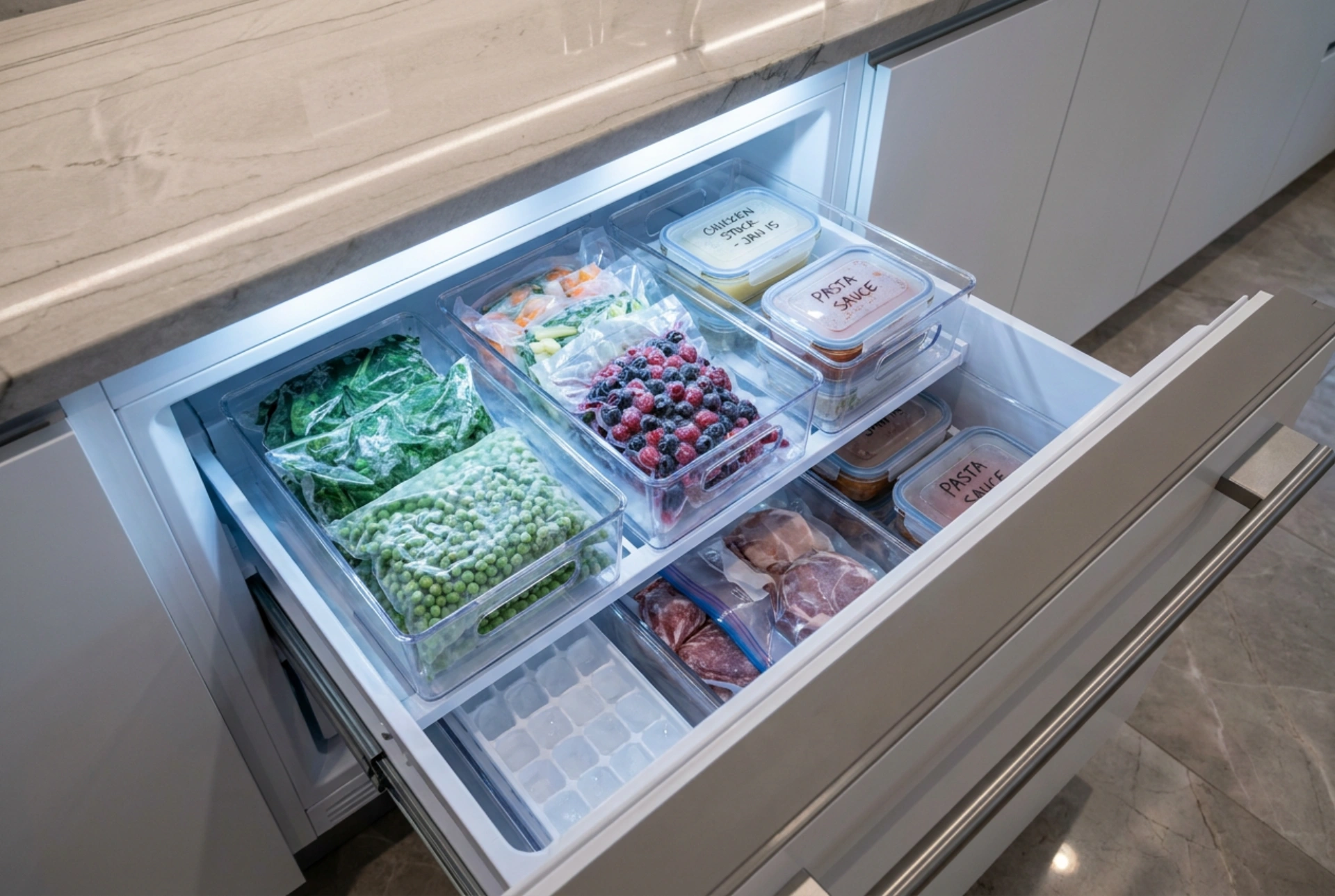
Freezer drawers are highly efficient because cold air naturally sinks. When you open a pull-out drawer, the cold air remains trapped inside the compartment rather than spilling out onto your kitchen floor, as happens with traditional upright freezer doors. However, this design can lead to items burying one another, resulting in forgotten, freezer-burned food. To prevent this, organize your drawers vertically rather than horizontally. Group items by category and store them upright, like files in an office cabinet, so everything remains visible at a single glance.
Setting Up Temperature-Based Zones
To keep food fresh, you must align your storage choices with the temperature gradients of your appliance. The top drawers of the freezer are slightly warmer than the bottom ones, making them ideal for items containing sugar or fat that do not freeze rock-solid, such as ice cream, butter, or pre-cooked baked goods. The lowest drawer is the coldest zone, which is the perfect environment for raw meats, seafood, and long-term storage of frozen vegetables. Storing raw meat at the very bottom also eliminates the risk of cross-contamination from accidental drips during any defrosting cycles.
Managing the Main Refrigerator Compartment
The upper shelves of the main refrigerator maintain the most consistent temperature, making them the safest place for dairy products, eggs, and ready-to-eat foods. Avoid putting milk in the door balcony, where temperature fluctuations are most extreme due to frequent opening. The lower shelves are the coldest part of the fridge section and should hold raw proteins. Utilize the crisper drawers correctly by adjusting the humidity sliders: high humidity (closed vents) keeps leafy greens from wilting by trapping moisture, while low humidity (open vents) allows ethylene gas to escape, preventing thin-skinned fruits and vegetables from rotting prematurely.
The Rule of Decanting and Labeling
Cardboard packaging is a poor thermal conductor and takes up unnecessary physical space. Remove commercial boxes and transfer frozen goods into uniform, reusable silicone bags or flat, stackable glass containers designed for freezing. When freezing liquids or soft foods, lay the bags flat on a metal baking sheet first; once frozen solid, they can be stood upright in your drawers to save space. Always label containers with the contents and the date of freezing using water-resistant markers. Practice the 'First-In, First-Out' (FIFO) method by placing newer items at the back or bottom and older items at the front for immediate consumption.
Preventing Frost and Maintaining Airflow
To maintain mechanical efficiency, your freezer needs proper air circulation. Do not pack the drawers so tightly that you block the evaporator vents, as this forces the compressor to work harder, raising your electricity bill and causing uneven temperatures. A good rule of thumb is to keep the compartments about eighty percent full. This density allows the frozen items to act as thermal mass, helping the appliance maintain its cold temperature when opened, while still leaving enough gap for cold air to circulate freely around every container.