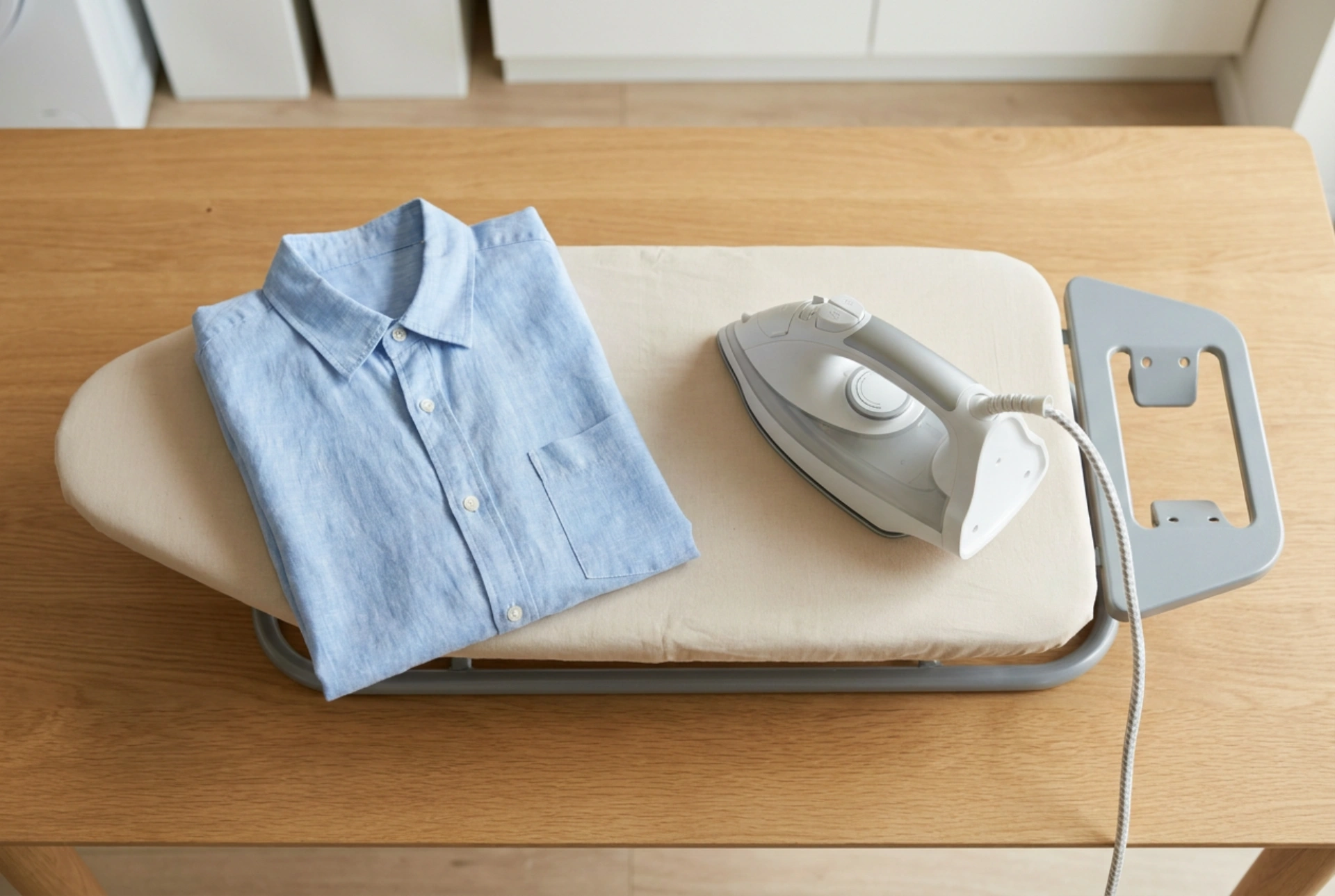


A tabletop ironing board is a highly functional alternative to freestanding models, offering unmatched stability and space-saving efficiency when used under the right conditions.
The Physics of Tabletop Stability
Standard freestanding ironing boards often suffer from structural wobble due to their scissor-leg design and high center of gravity. A tabletop ironing board eliminates this issue by utilizing a solid, pre-existing foundation—such as a dining table, kitchen countertop, or a sturdy desk. Because the weight is distributed directly across a broad, flat surface, the risk of tipping is virtually non-existent, allowing you to apply consistent downward physical pressure. This mechanical advantage makes it significantly easier to set sharp creases in heavy cotton trousers or structured linen shirts.
Ideal Scenarios for Small-Scale Ironing
While a full-sized board is useful for large textiles like bed sheets, the tabletop variant excels in specific everyday situations:
- Micro-Living and Limited Storage: In studio apartments or homes without dedicated utility closets, storing a 1.2-meter steel frame is impractical. A tabletop board folds flat to a thickness of just a few centimeters, sliding easily under a bed, into a wardrobe, or behind a washing machine.
- Quick Touch-ups: Setting up a large board for a single collar or pair of cuffs is a common barrier to garment care. The tabletop board can be deployed and retracted in under ten seconds, making it ideal for morning preparation.
- Crafting and Sewing: Quilting, applique, and garment construction require frequent pressing of seams. Having a compact pressing surface directly next to your sewing machine optimizes your workflow and reduces fatigue.
Heat Transfer and Surface Protection
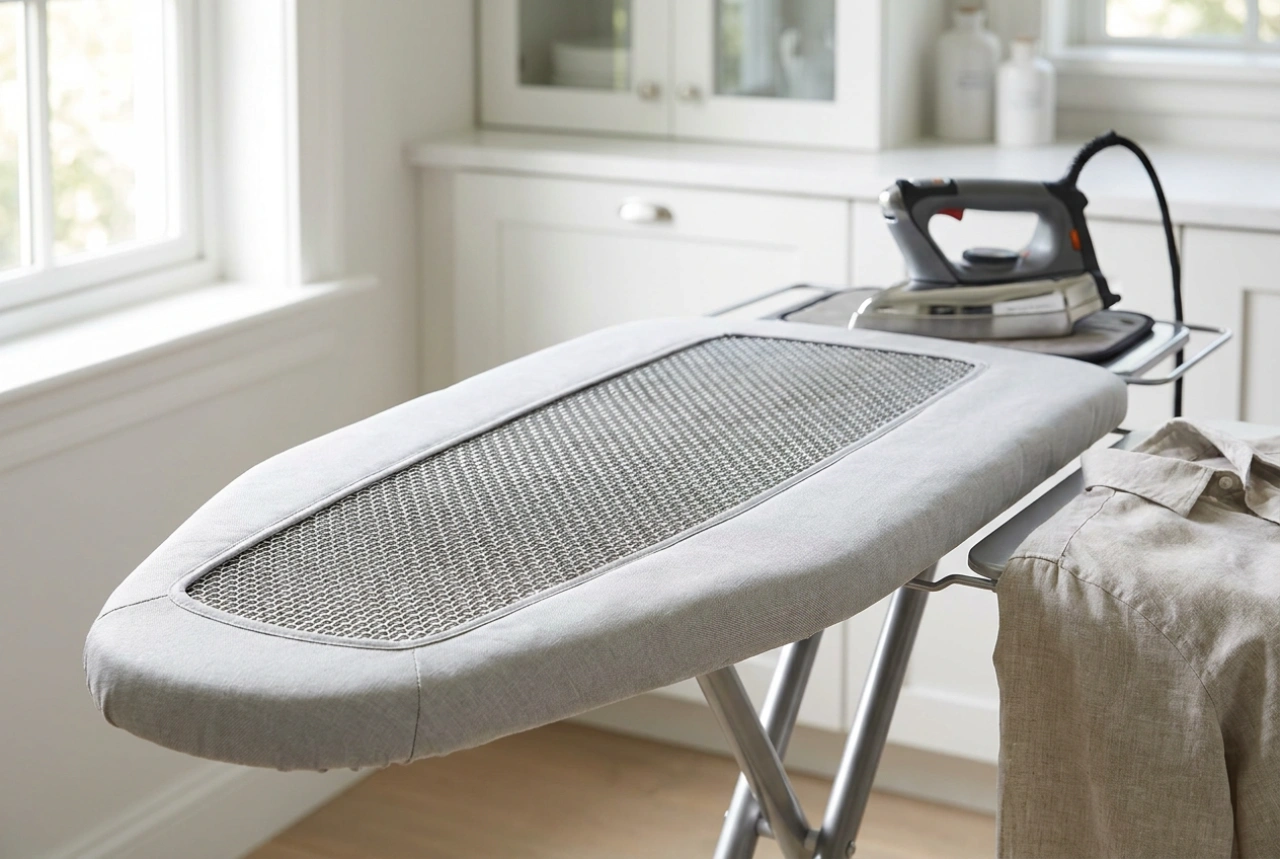
Using an iron on a table requires careful consideration of thermal dynamics. High-quality tabletop boards are designed with multi-layered protective systems to prevent heat and steam damage to the underlying furniture. The core of the board usually features a perforated steel mesh, which allows steam to pass through the garment rather than condensing inside the fibers. Beneath the outer cotton cover, a thick layer of dense felt or foam acts as a thermal barrier, absorbing moisture and preventing heat transfer that could otherwise ruin the finish of wooden or laminate tables.
Choosing the Right Padding and Material
The efficiency of your ironing is highly dependent on the quality of the board cover. For optimal heat reflection, look for covers treated with metallic particles or constructed from heavy-duty unbleached cotton. These materials reflect the thermal energy back through the underside of the fabric, effectively ironing both sides of the garment simultaneously. When setting up, always ensure the integrated non-slip rubber feet are fully extended; these feet not only prevent the metal frame from scratching your furniture but also absorb the lateral kinetic energy generated by the sliding motion of the iron.