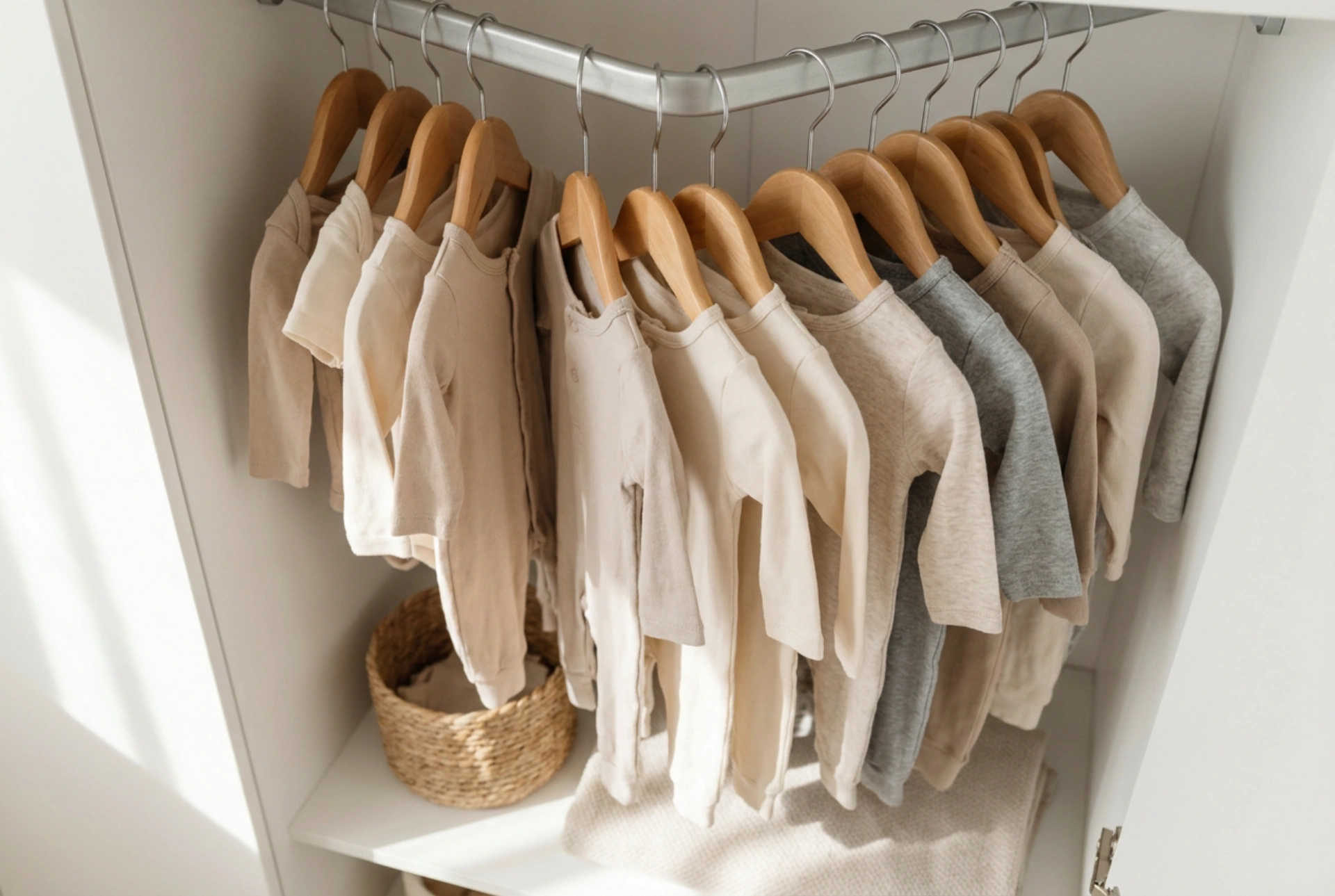


Organizing baby clothes requires a systematic approach to space management and material preservation, where using the correct size of hanger prevents fabric distortion and optimizes closet efficiency.
The Physics of Small Hangers: Preventing Fabric Stretch
Using adult-sized hangers for infant clothing forces the fabric to stretch beyond its natural elasticity. When a small garment is pulled over a large frame, the shoulder seams are subjected to continuous tension. Over time, this mechanical stress deforms the weave of cotton, wool, or bamboo knits, resulting in permanent puckering commonly known as hanger bumps. Baby hangers, typically measuring between 25 and 30 centimeters in width, match the natural shoulder span of infant garments. This alignment ensures that the weight of the wet or dry fabric is distributed evenly across the support bar, preserving the structural integrity of the collar and shoulder seams without stretching the delicate fibers.
Material Selection and Friction Dynamics
The choice of hanger material directly impacts both closet space and clothing maintenance. Understanding the friction dynamics of different surfaces helps in selecting the right tool for specific garment types:
- Velvet-Flocked Hangers: These provide high surface friction, which prevents slippery synthetic blends and wide-neck garments from sliding off. The micro-textures of the flocking grip the fabric securely, reducing the need for clips that can leave indentation marks on soft cotton.
- Smooth Wooden Hangers: Offering excellent structural rigidity, wooden hangers are ideal for heavier outerwear like winter coats or thick knits. The smooth, lacquered finish allows garments to slide off easily when pulled, minimizing snagging risks.
- Slim Plastic Hangers: These are highly moisture-resistant, making them suitable for hanging damp garments directly from the washing machine. Their ultra-thin profile maximizes horizontal hanging space along the closet rod.
Optimizing Closet Space with Vertical Cascading
Infant clothing is short, which often leaves a large amount of unused vertical space beneath a standard closet rod. To maximize storage density, apply the cascading technique. By utilizing hangers equipped with integrated secondary hooks, or by adding simple connector loops, you can suspend multiple hangers vertically from a single point. This physical arrangement transforms a single horizontal slot into a multi-tiered storage column, tripling the capacity of the wardrobe. This method is particularly effective for organizing coordinated outfits, keeping matching tops and bottoms anchored together while minimizing clutter on the closet floor.
Order of Operations for Efficient Wardrobe Rotation
Because infants outgrow clothing sizes rapidly, organizing garments by size and fabric weight is essential for daily efficiency. Begin by grouping garments into chronological size categories (e.g., newborn, 0-3 months, 3-6 months). Position the current size category in the most accessible central zone of the closet. Use rigid size dividers labeled clearly along the rod to establish physical boundaries between different developmental stages. When returning laundered items to the rack, always insert them from the left side of the current section and retrieve clean garments from the right. This rotational system ensures even wear across all items and prevents outgrown clothes from being pushed to the back and forgotten.