

Fitting a universal carbon filter to your range hood is a simple, cost-effective way to restore air filtration efficiency, provided you measure accurately and secure the media correctly.
The Science of Active Carbon Air Filtration
Range hoods operating in recirculation mode rely on active carbon to neutralise kitchen odours, grease vapours, and volatile organic compounds. Unlike standard grease mesh filters that trap physical particles mechanically, carbon filters work through adsorption. This is a chemical process where gas molecules adhere to the massive, highly porous internal surface area of the carbon particles. Over time, these microscopic pores become saturated with grease and cooking residues, reducing air flow and odour control. Replacing this media periodically is essential to maintain motor efficiency and prevent grease build-up inside the hood casing.
Preparing and Measuring for a Perfect Fit
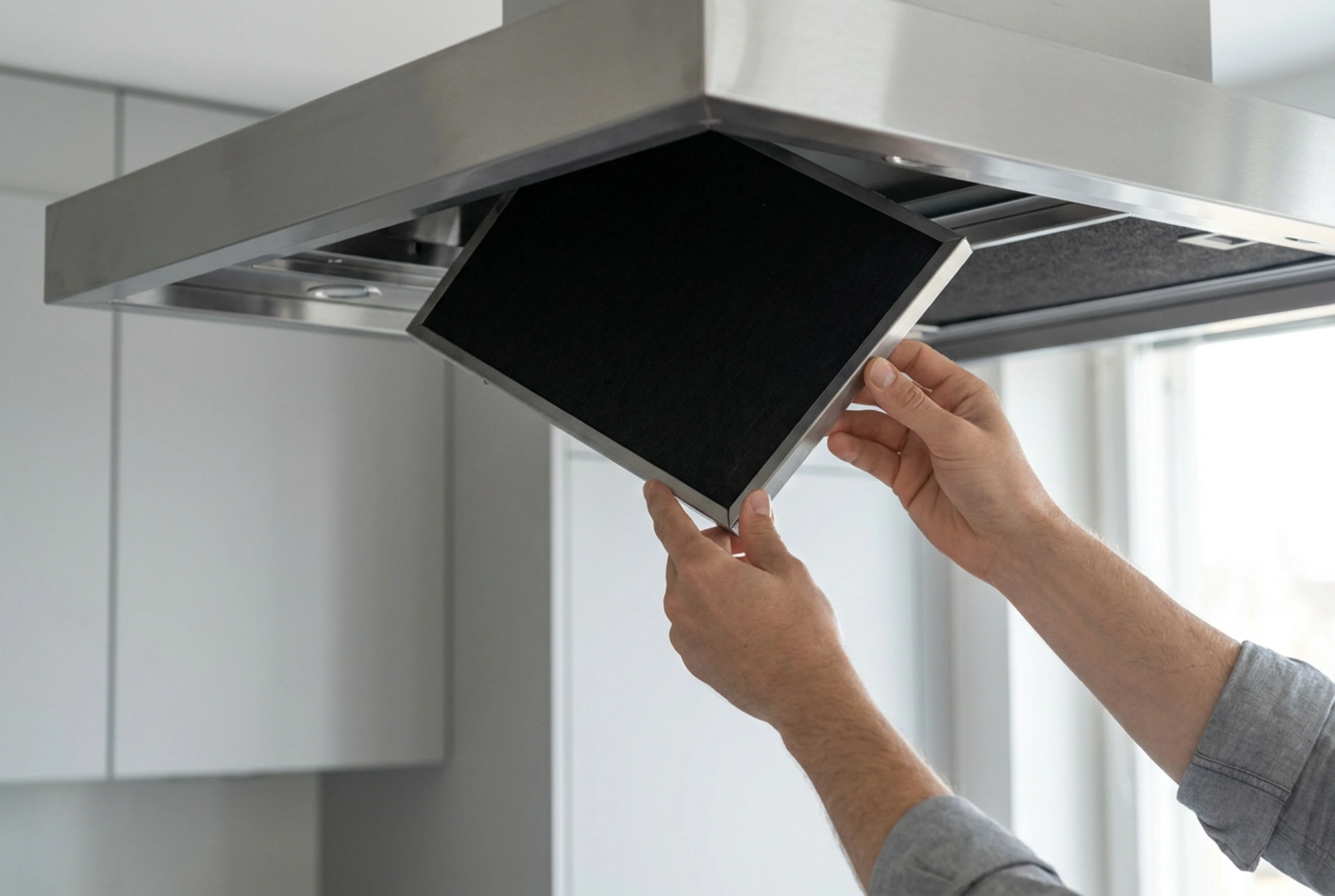
Universal carbon filter sheets are designed to be cut to size, making them compatible with almost any hood model. However, precision during preparation is critical to ensure there are no gaps where air can bypass the filter. Before starting, disconnect the appliance from the mains power supply for safety. Remove the outer metal grease filters to expose the internal housing and the area where the carbon filter sits.
- Use the old filter as a template: If the previous filter is still intact, lay it flat on top of the new universal sheet and trace the outline using a chalk marker.
- Measure the retention frame: If the original filter is missing, measure the internal dimensions of the filter tray or retaining wire frame. Add a margin of five millimetres to each side to ensure a snug fit against the housing walls.
- Choose the right cutting tools: Use heavy-duty kitchen shears or a utility knife on a self-healing cutting mat. A clean, straight edge prevents the carbon fibers from fraying or spilling active granules.
The Correct Order of Layering and Installation
Many universal carbon filters are dual-action, featuring a white grease-absorbing layer on one side and a black carbon-impregnated layer on the other. Getting the orientation of these layers correct is vital for the system to function. The white grease layer must always face downward, toward the cooktop, while the black carbon layer must face upward, toward the exhaust fan. This layout allows the physical grease to be trapped first, protecting the carbon pores from premature clogging and extending the lifespan of the filter.
Securing the Filter and Testing Airflow
Once the sheet is cut to size, it must be secured firmly inside the hood frame to prevent it from sagging or being sucked into the fan blades under high pressure. Most range hoods utilize wire retaining clips or plastic brackets to hold the filter sheet in place. Ensure these clips are tensioned correctly and span across the center of the sheet. After securing the media, reinstall the outer metal grease mesh. Reconnect the power and turn the hood on to the lowest speed setting. Listen for any rattling sounds, which indicate loose clips, and check the perimeter of the hood with your hand to confirm that air is being drawn in evenly across the entire surface.