

Designing the interior of a solid wood wardrobe requires a balance between structural load capacity, wood physics, and long-term storage ergonomics.
Understanding Wood Physics and Structural Integrity
Solid wood is a living material that reacts to changes in ambient humidity and temperature. When planning the internal layout, you must account for natural expansion and contraction to prevent the frame from warping or the drawers from sticking. Heavy-load areas, such as long shelves designed for folded knitwear or bedding, must have adequate support. A shelf made of solid wood with a thickness of 18 to 22 millimeters should not exceed a span of 80 centimeters without intermediate vertical support. Exceeding this width leads to structural sagging under constant load, which permanently deforms the wood fibers. For wider sections, integrate vertical wooden dividers that distribute the downward force evenly to the base of the wardrobe.
Optimizing Air Circulation to Prevent Moisture Trapping
Unlike synthetic laminate boards, natural wood breathes and regulates moisture. However, packed clothing can restrict airflow, leading to stagnant microclimates and potential mustiness. To maximize natural ventilation, design the interior compartments with a clearance of at least 5 centimeters between the back panel and the rear edge of the shelves. Drawers should be constructed with traditional slatted bottoms or low-profile front panels to allow air to circulate freely. When storing natural fibers like wool, silk, or linen, this ventilation prevents the accumulation of humidity, protecting the textiles from fiber degradation and discouraging pests without the need for synthetic chemical repellents.
The Ergonomics of Vertical Zoning
An efficient wardrobe layout utilizes three distinct ergonomic zones based on frequency of access and physical reach. The primary zone, situated between waist and eye level (70 to 160 centimeters from the floor), is reserved for daily wear. This area should feature smooth-gliding wooden drawers and sturdy hanging rails. The secondary zone, located at the bottom of the wardrobe, is ideal for heavy items, shoes, or pull-out wooden trays. The tertiary zone, comprising the highest shelves above 160 centimeters, should be reserved for seasonal storage, spare bedding, and lightweight items. Placing heavy objects at the top compromises the center of gravity of the wardrobe and puts unnecessary stress on the upper joints of the wooden carcass.
Choosing and Positioning Hanging Mechanisms
Hanging rails must be anchored securely into the solid wood side panels using durable metal brackets. When planning hanging heights, allocate 160 to 170 centimeters of vertical space for long coats and dresses to prevent the fabric from pooling and creasing at the bottom. For shirts, jackets, and trousers folded over hangers, a vertical clearance of 100 to 110 centimeters is optimal. Double-tier hanging zones maximize vertical space but require robust wooden dividers to isolate the weight load. To prevent structural strain on the wardrobe walls, ensure that the metal hanging rail is positioned exactly in the center of the wardrobe depth, which should be a minimum of 60 centimeters to allow standard hangers to clear the doors comfortably.
The Role of Material-Friendly Drawers and Organizers
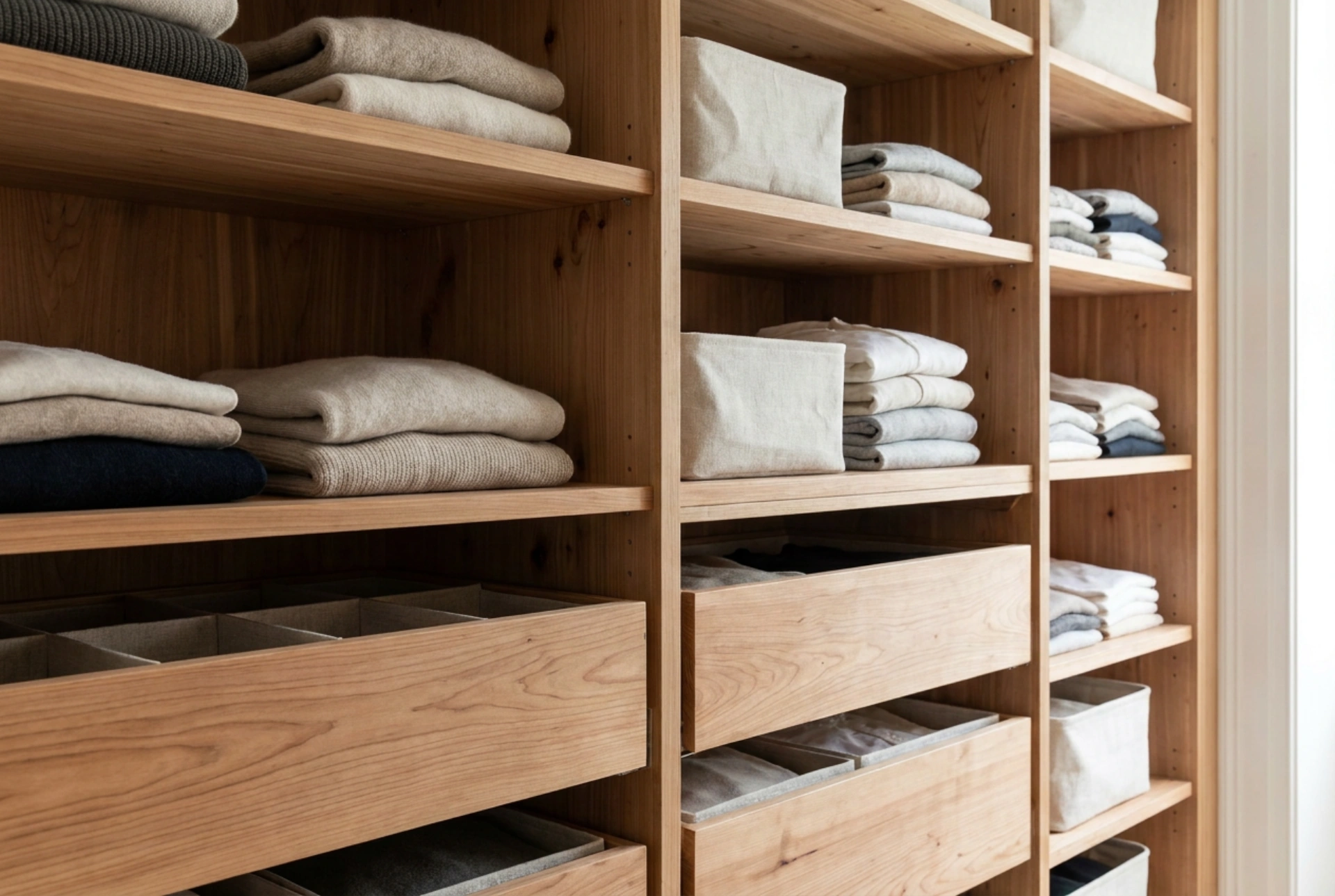
Drawers in a wooden wardrobe should operate on high-quality, concealed under-mount runners with soft-close mechanisms. This reduces physical vibrations that can loosen joint joinery over time. For the internal organization of drawers, avoid non-porous plastic inserts which can trap moisture against the wooden surfaces. Instead, utilize custom wooden dividers or breathable linen storage boxes. These materials maintain the natural humidity-regulating properties of the wardrobe while keeping small accessories, undergarments, and socks neatly compartmentalized and easily accessible.