

Managing organic kitchen waste without experiencing unpleasant odours or structural bag failure requires understanding the physics of decomposition and moisture accumulation.
The Chemistry of Bio Waste Degradation
Biodegradable and compostable bags are designed to break down when exposed to microorganisms, heat, and moisture. This process, while beneficial for the environment, begins the moment organic matter is placed inside the bag. As food scraps decompose, they release water vapor and organic acids. If this moisture is trapped in an airtight environment, anaerobic respiration occurs, leading to the production of volatile sulfur compounds and ammonia, which cause foul odours. To prevent this, the waste management system must allow for gas exchange and moisture evaporation.
Selecting and Structuring the Base
Preventing liquid accumulation at the bottom of the bin is critical to maintaining the structural integrity of compostable liners. Liquid pooling dissolves the bag from the inside out, leading to leaks when the bag is lifted.
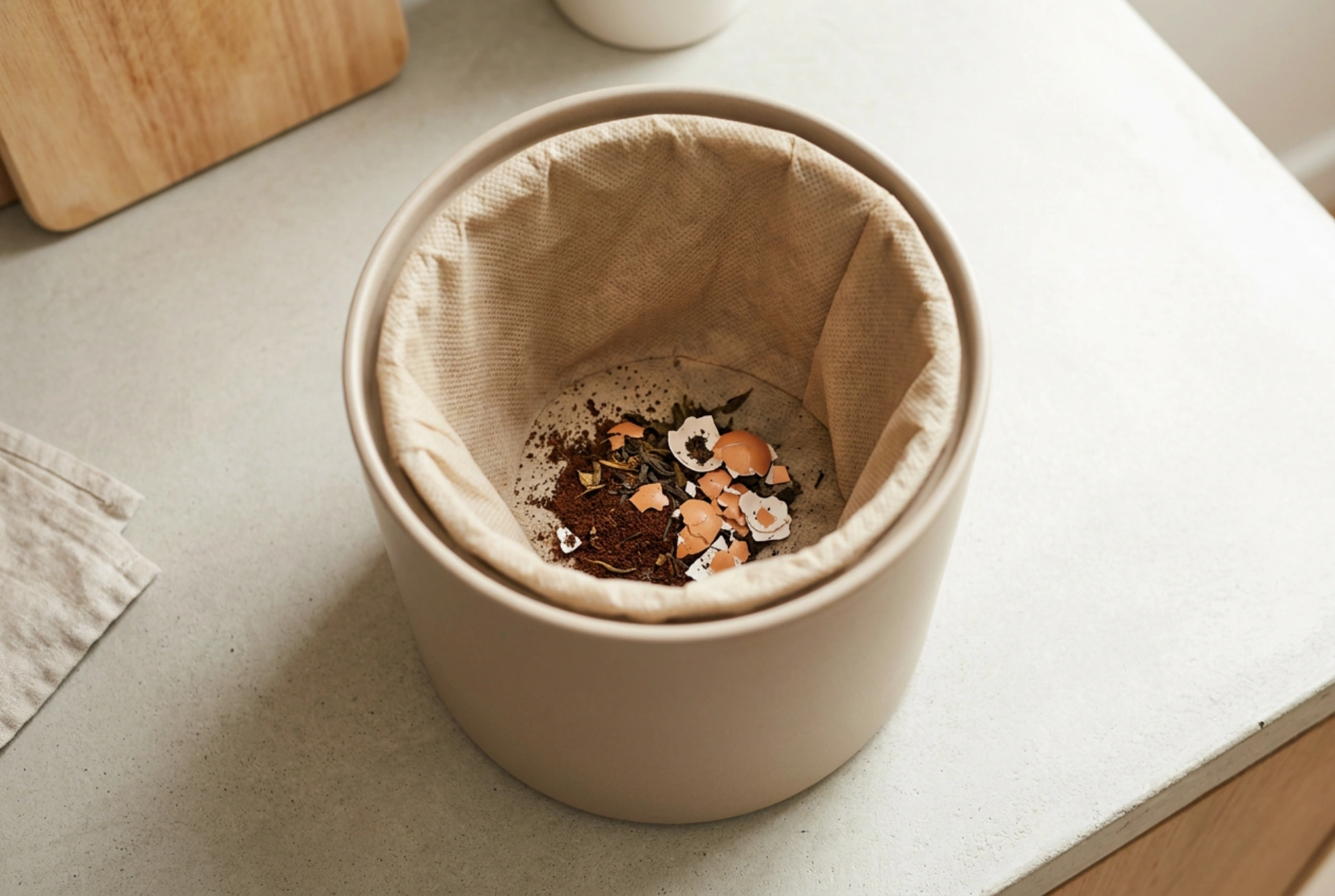
- Dry Carbon Buffer: Always place a layer of dry, carbon-rich material at the bottom of the bio bag before adding food scraps. A crumpled sheet of unprinted newspaper, a piece of plain cardboard, or clean sawdust acts as a sponge, absorbing excess liquid and balancing the nitrogen-rich kitchen waste.
- Air Circulation: Use a ventilated bin container. Solid plastic bins trap humidity, creating a microclimate that speeds up the weakening of the bio bag. A perforated bin allows moisture to evaporate, keeping the bag dry and reducing the rate of anaerobic decay.
Optimising the Waste Entry Method
The state in which food scraps enter the bag determines how quickly odours develop. Introducing hot or wet waste accelerates the degradation process rapidly.
- Cooling Period: Never pour hot food scraps, coffee grounds, or boiled vegetable peelings directly into the bio bag. The heat creates immediate condensation on the cooler bag walls, accelerating physical breakdown. Allow all waste to reach room temperature first.
- Pre-Draining: Use a sink strainer to remove free liquids from food waste. Wet tea bags and fruit pulp should be gently pressed to expel excess moisture before disposal. Minimizing liquid entry is the most effective way to prevent bag rupture.
Physical Techniques to Control Odour and Pests
Odour control relies on managing pH levels and preventing access for pests like fruit flies, which are attracted to the chemical signals of fermentation.
- pH Neutralisation: A light sprinkle of sodium bicarbonate (baking soda) over each fresh layer of organic waste neutralizes acidic odours. Sodium bicarbonate reacts with acidic compounds, converting them into odourless salts.
- Layering Technique: Keep a container of dry carbon material, such as spent coffee grounds (fully dried) or dry leaves, next to your bin. Cover wet kitchen waste immediately with a thin layer of this dry material to block odour molecules from escaping into the room and to deter insects.
Optimal Rotation and Disposal Intervals
Even with perfect moisture control, biodegradable bags have a limited lifespan under domestic conditions. To ensure clean transport to the main compost bin, establish a strict removal schedule. Regardless of volume, compostable liners should be tied off and replaced every three to four days. When lifting the bag, support the base with one hand to counteract any material weakening that may have occurred due to localized humidity.