

Improperly hung trousers develop unsightly horizontal creases across the thighs or slip off their hangers entirely, disrupting your wardrobe organization and damaging fabric fibers.
The Mechanics of Fabric Friction and Gravity
Trousers fail to stay on hangers due to an imbalance between the weight of the fabric and the surface friction of the hanger bar. Heavy fabrics like denim or thick wool pull down on one side, while smooth fabrics like silk, linen, or lightweight suit wool slide off at the slightest movement. Understanding how to lock the fabric pieces against each other utilizes gravity to secure the garment rather than fight it.
The Overlocking Savile Row Fold
This classic tailoring method uses the natural weight of each trouser leg to lock the other in place, completely eliminating slippage without requiring rubber grips.
- Step 1: Hold the trousers upside down by the hems, with the legs separated.
- Step 2: Straddle the hanger bar between the legs. Pull one leg through the center of the hanger frame and fold it over the bar so the hem rests near the crotch seam.
- Step 3: Take the second trouser leg and fold it directly over the first leg on the bar in the opposite direction. The weight of the second leg presses down on the first, creating friction that prevents either leg from sliding.
Maintaining the Crease and Preventing Fiber Distortions
For formal trousers with a sharp vertical crease, maintaining the structural alignment of the seams is critical. Hanging them incorrectly can warp the wool fibers over time, requiring high-heat ironing that degrades fabric quality.
The Alignment Technique
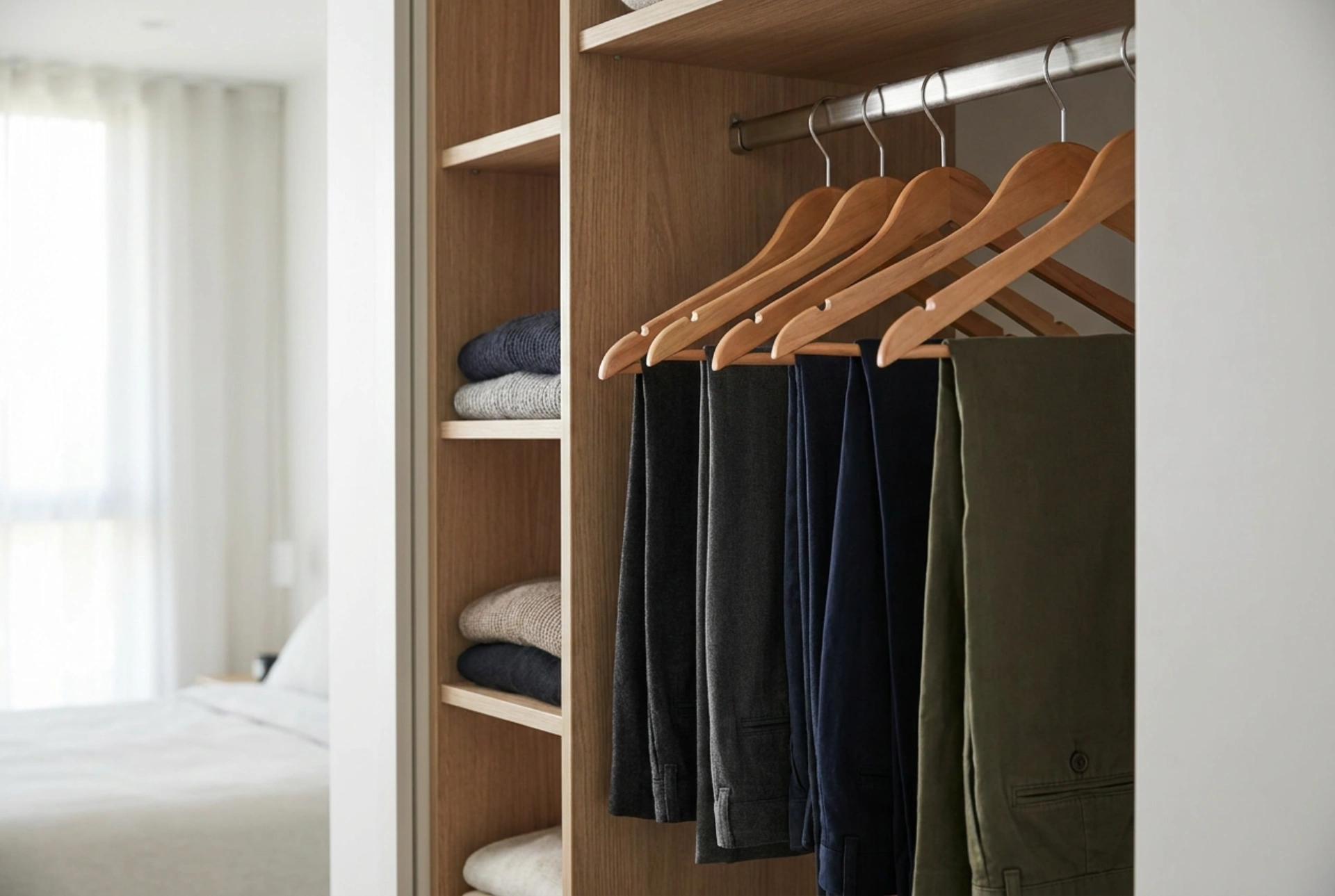
To preserve the original silhouette of pleated or creased trousers, always fold them along their natural creases rather than the side seams. Hold the trousers by the cuffs, locate the front and back crease lines, and pinch them together. This naturally folds the legs so that the side seams align in the center. Gently drape them over a wide, rounded wooden hanger bar. A thicker bar distributes the weight over a larger surface area, preventing the sharp horizontal pressure mark caused by thin wire hangers.
Selecting and Preparing Your Wardrobe Infrastructure
The materials you introduce to your closet directly affect fabric longevity. Wire hangers bend under the weight of heavy cotton or wool, concentrating all pressure on a single point. This thins out the weave and causes permanent stretching.
Hanger Material Dynamics
- Untreated Hardwood: Provides excellent grip for medium-weight fabrics and helps absorb ambient moisture from the wool fibers.
- Friction Bars: Hangers equipped with a silicone sleeve or velvet flocking increase coefficient friction, making them ideal for delicate, slippery fabrics like silk or rayon.
- Clamping Hangers: For delicate hems, felt-lined clamp hangers grip the trousers at the very bottom cuff, allowing the weight of the waistband to pull the fabric straight down, naturally smoothing out wrinkles over time.