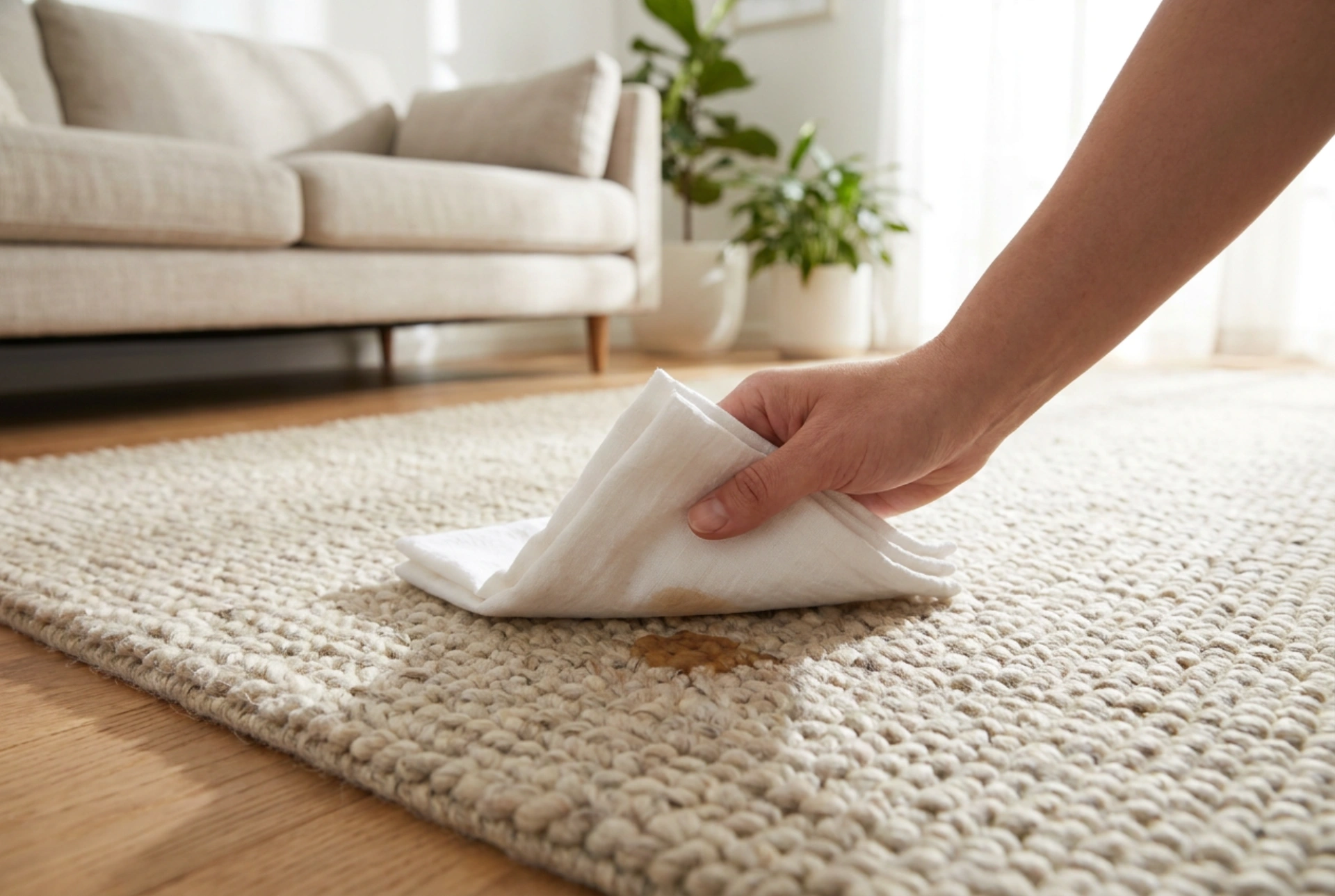


A spilled cup of coffee on a rug requires immediate action, but standard rubbing or scrubbing will permanently damage the carpet fibers and push the pigment deeper into the backing.
The physics of capillary action in rug fibers
When coffee spills, the liquid quickly penetrates the porous structure of the rug pile through capillary action. If you rub the surface, you apply friction and lateral pressure. This pressure forces the dark coffee particles (tannins and lipids) into the microscopic crevices of the individual fibers, locking them in. Rubbing also unravels the twisted tips of the yarn, causing permanent texture damage known as pile distortion or blooming. To prevent this, your entire removal strategy must rely on vertical capillary transfer—drawing the liquid upward into an absorbent material using only downward, vertical pressure.
The immediate phase: High-extraction blotting
To successfully lift the liquid before it binds with the rug fibers, you must act while the spill is still wet. Use a highly absorbent, undyed cotton cloth or a thick layer of white paper towels. Lay the cloth directly over the spill and press firmly downward with the flat of your hand. Do not move your hand horizontally. Hold the pressure for five seconds to allow the liquid to transfer up into the cloth. Fold the cloth to a fresh, dry section and repeat the process. Continue this vertical blotting until no more brown liquid transfers onto the white cloth.
The chemical phase: Breaking down tannins
Coffee contains organic compounds called tannins, which act as a natural dye on natural wool and synthetic fibers. To break these bonds without harsh chemicals, you need a mild acidic solution. Mix one tablespoon of white vinegar (acetic acid) with one teaspoon of neutral, fragrance-free liquid dish soap in two cups of lukewarm water. The acetic acid neutralizes the alkaline tannins, while the surfactants in the soap lower the surface tension of the water, allowing the solution to surround and lift the pigment particles. Dip a clean sponge into the solution, squeeze out the excess so it is damp but not dripping, and gently press it onto the stain. Let it sit for three minutes to allow the chemical reaction to take place, then blot vertically with a dry towel.
The rinsing phase: Eliminating soapy residue
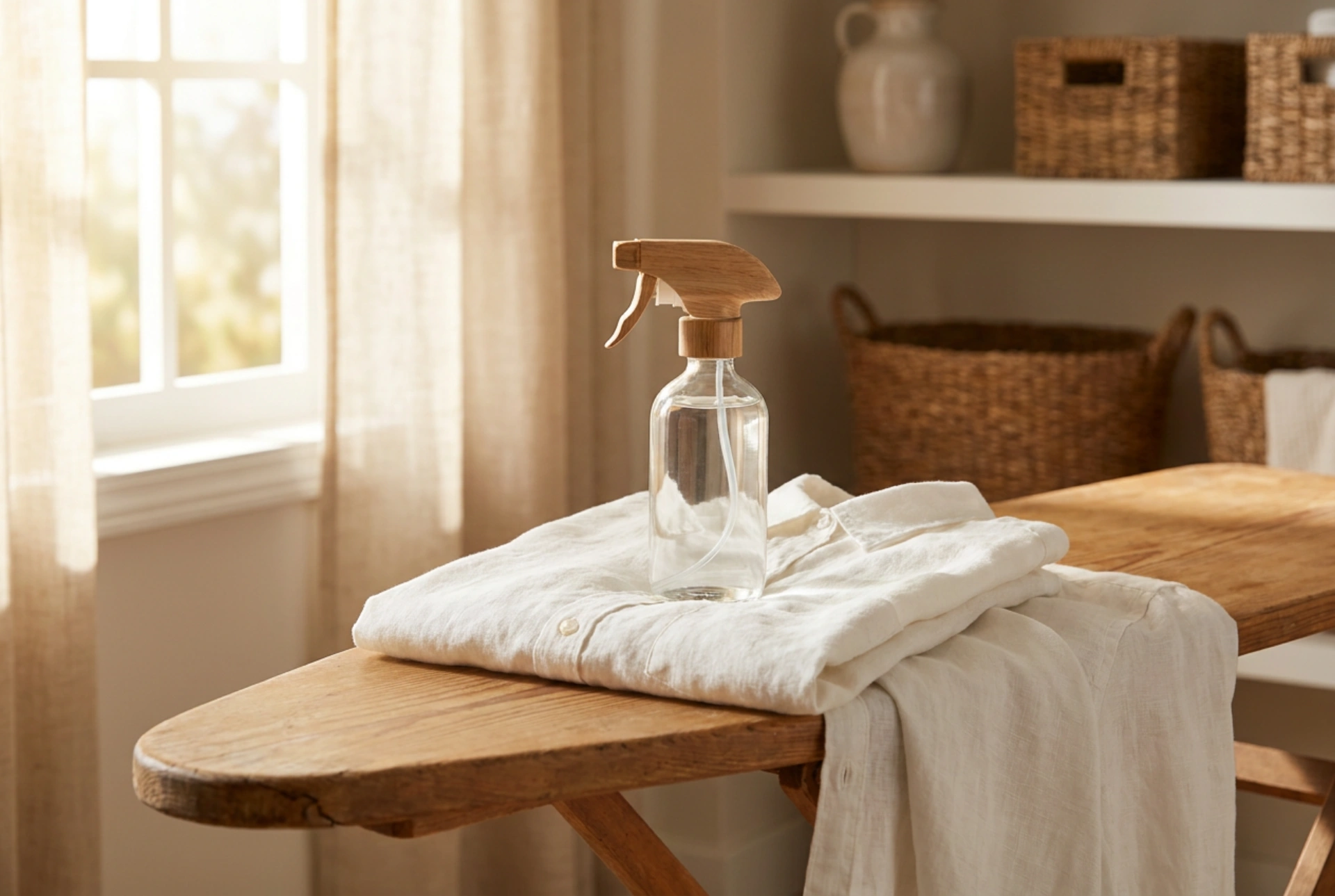
Leaving detergent residue in the rug pile is a common mistake. Dried soap acts as a magnet for everyday dirt, causing a dark spot to reappear weeks later. To rinse the area, mist a small amount of clean, cold water onto the treated section using a spray bottle. Avoid soaking the backing of the rug, as excess moisture can lead to mold or dry rot. Blot the damp area firmly with a clean, dry white towel to draw up the remaining water and soap residues. Repeat this rinsing and blotting sequence twice.
The drying phase: Restoring the pile structure
Once the stain is removed, the damp pile must dry in a natural position. Place a dry, clean white towel over the wet area and weigh it down with a heavy, flat object like a book for several hours to extract the deep moisture. After removing the weight, gently brush the damp fibers back into their original direction using a soft-bristled brush or your fingers. Allow the rug to air dry completely before walking on it to ensure the pile retains its texture and structure.