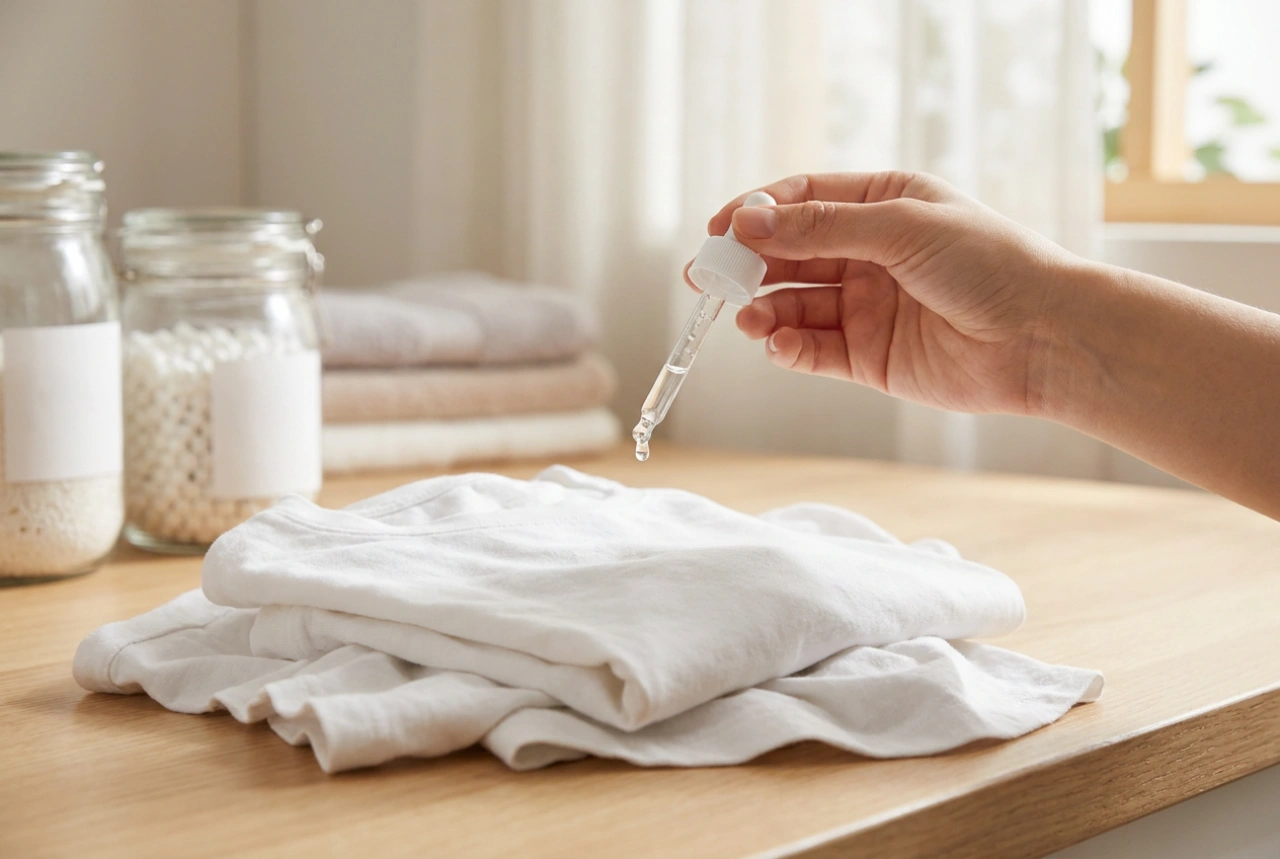


Restoring the pristine brightness of white fabrics requires an understanding of textile chemistry and the specific molecular bonds that hold different stains together.
The Chemistry of Whiteness and Stain Bonding
White fabrics do not actually contain white pigment; instead, they are bleached during manufacturing and often treated with optical brighteners. These synthetic chemical compounds absorb invisible ultraviolet light and re-emit it in the blue spectrum, which fools the human eye into perceiving a brighter, cleaner white. When a substance soils this surface, it bonds with the fibers through covalent or ionic bonds, or simply becomes physically trapped within the weave. Understanding whether a stain is organic, protein-based, or synthetic dictates the specific chemical reaction needed to dissolve it without degrading the underlying fabric structure.
Oxygen Bleach vs. Chlorine Detergents
Choosing the correct active ingredient is critical for preserving fabric integrity and achieving true stain removal. The two main categories of chemical bleaching agents behave very differently on a molecular level:
- Oxygen-based bleach (Sodium percarbonate): When dissolved in water above forty degrees Celsius, this compound releases hydrogen peroxide and sodium carbonate. The active oxygen breaks the double bonds in the carbon chains of stain pigments, rendering them colorless and water-soluble without damaging the fabric fibers or stripping away optical brighteners.
- Chlorine-based bleach (Sodium hypochlorite): This is a highly aggressive oxidizing agent. While highly effective at destroying organic matter, chlorine chemically attacks the fibers of cotton, linen, and synthetics. It strips away the factory-applied optical brighteners, which often results in a permanent, dingy yellow cast rather than a bright white. Additionally, it can structurally weaken the textile over time.
Temperature, Kinetic Action, and Time
Chemical reactions require specific physical conditions to work efficiently. To maximize the efficacy of an oxygen-based stain remover, the water temperature must be high enough to activate the release of oxygen, typically between forty and sixty degrees Celsius. However, delicate synthetic fibers like polyester or nylon can become structurally compromised at high heat, meaning you must balance chemical activity with fabric tolerance. Kinetic action, such as gentle agitation, helps physically detach loosened soil from the microscopic pores of the thread. Soaking is often more effective than vigorous scrubbing, as prolonged exposure allows the chemical agents to break down complex proteins and lipids without causing mechanical wear or pilling on the textile surface.
Step-by-Step Deconstruction of Protein and Tanin Stains
To successfully treat common discoloration on white garments, follow a logical chemical sequence that prevents the stain from setting permanently:
1. Temperature Control and Pre-treatment
Never apply hot water to unknown stains, especially those containing proteins like sweat, blood, or dairy. High heat coagulates proteins, binding them permanently to the cotton fibers. Always flush the area with cold water first to physically wash away loose particles. Next, apply a concentrated solution of oxygen bleach directly to the affected area, allowing it to penetrate the weave for fifteen minutes.
2. Active Soaking
Submerge the entire garment in a warm water bath mixed with dissolved sodium percarbonate. This ensures uniform chemical exposure and prevents halo-ring stains from forming around the treated zone. Let the garment soak for at least one to two hours, giving the oxygen molecules ample time to cleave the pigment bonds.
3. Standard Wash Cycle
Transfer the garment to the washing machine. Use a heavy-duty laundry detergent containing enzymes such as protease and amylase, which specifically target protein and starch residues. Run a cycle at the maximum temperature permitted by the garment care label to thoroughly rinse away the dissolved contaminants and chemical residues.