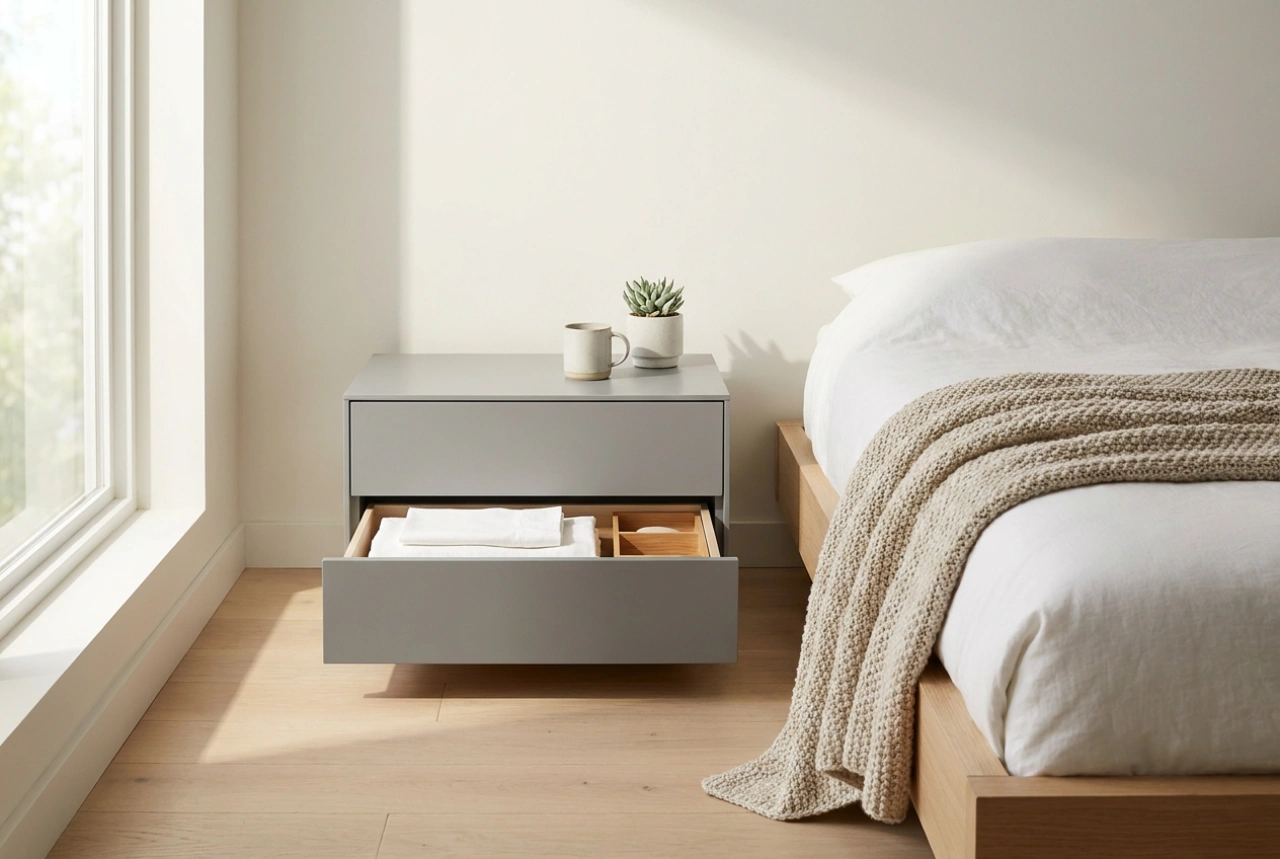


Combining a wardrobe and a chest of drawers within a single bedroom footprint requires a strategic understanding of storage geometry and physical access patterns to prevent wasted spatial volume.
Analyzing Storage Volume and Physics of Access
To integrate these two storage elements efficiently, you must first differentiate between active and passive storage zones. Drawers utilize horizontal pull-out depth, making them ideal for the ergonomic zone between your knees and chest. Hanging rods require vertical drop and full-depth clearance. Placing a chest of drawers inside or directly adjacent to a wardrobe without a clear structural plan leads to dead space—specifically in the upper corners and behind door frames. By aligning the front planes of both units, you eliminate deep pockets where dust accumulates and light cannot penetrate.
The Flush Alignment Technique
Achieving a seamless, built-in appearance relies on matching depths and eliminating physical gaps that fragment the visual field. Standard wardrobe depths range from 60 to 65 centimeters to accommodate hanging hangers without crushing clothing sleeves. Standard chests of drawers are typically shallower, around 40 to 45 centimeters. To combine them without duplicating space, you have two precise physical configurations:
- The Integrated Inset: Place a shallower chest of drawers directly inside the base of a deep wardrobe framework. This utilizes the lower, less accessible zone of the wardrobe for high-density pull-out storage, leaving the upper section free for hanging garments.
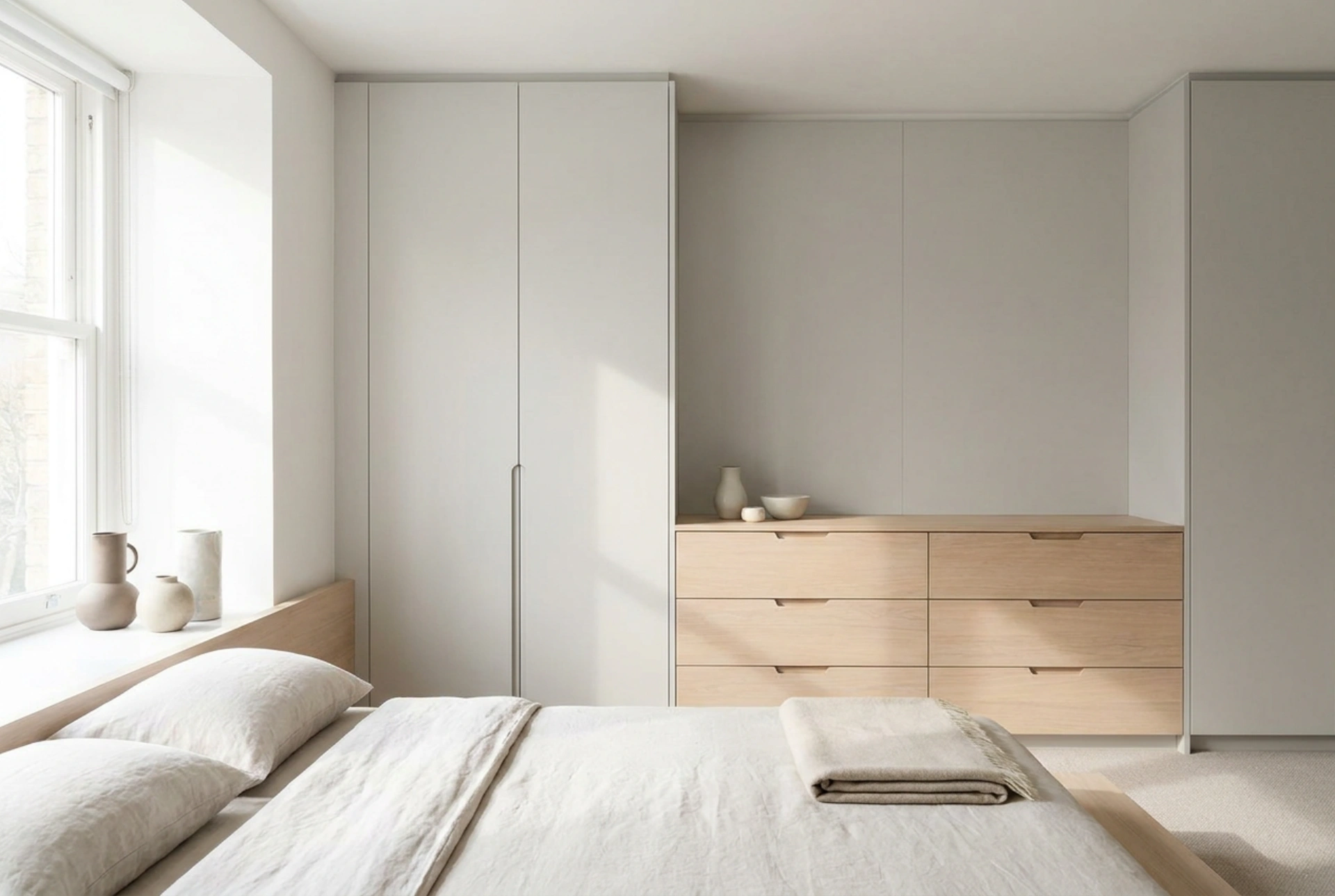
- The Linear Bridge: Position a standalone chest of drawers flush alongside a wardrobe by building a custom plinth or using a filler panel. This ensures both units share a single, continuous front plane, preventing the shadow-gap effect that makes small bedrooms feel fragmented.
Optimizing Kinetic Clearance
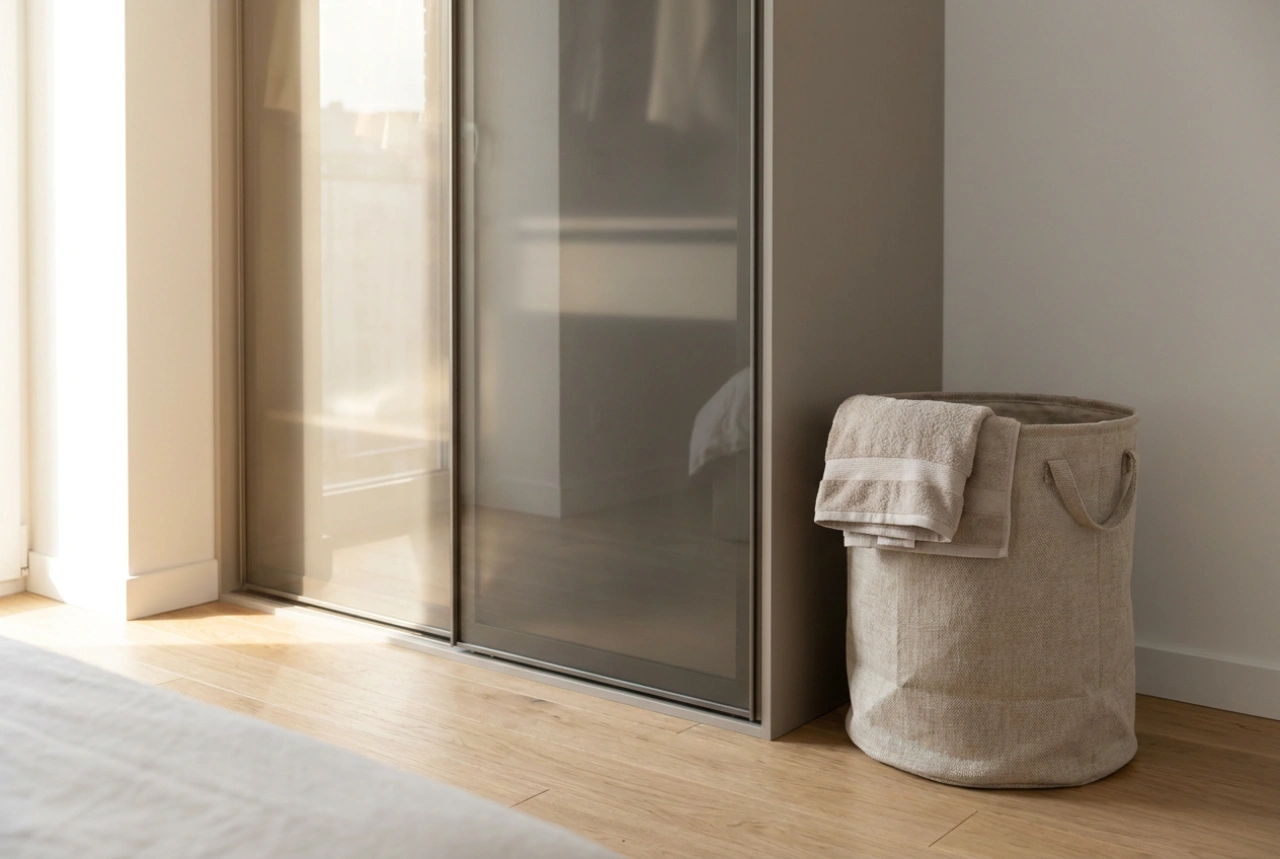
Every drawer slide and door hinge requires a specific kinetic clearance zone. Standard wardrobe doors require a swing radius equal to the door width (usually 50 to 60 centimeters). When a chest of drawers is placed adjacent to a swinging wardrobe door, the door can block access to the drawers, or vice-versa. To resolve this mechanical conflict, employ sliding wardrobe doors or coordinate the heights so that the drawer units sit entirely below the lowest point of the door swing. For compact bedrooms, opting for push-to-open drawer runners eliminates external hardware, allowing wardrobe doors to slide or swing past the drawer fronts with mere millimeters of clearance.
Material Integration and Weight Distribution
When stacking a wardrobe unit above a chest of drawers, structural load distribution is critical. A standard chest of drawers is not engineered to support the downward compressive force of a heavy wardrobe filled with hanging clothes. If you are stacking units vertically, you must build an independent, load-bearing external carcass or secure the upper wardrobe directly to the wall studs using heavy-duty L-brackets. This transfers the gravitational load of the wardrobe directly to the wall and floor structure, preventing the top panel of your chest of drawers from bowing, which would otherwise bind the drawer runners and ruin the alignment.