

Organizing a refrigerator with a bottom freezer or deep lower drawers requires a strategic approach to temperature zones and gravity to prevent food spoilage and maximize storage efficiency.
Understanding the Temperature Gradient and Air Circulation
Refrigerators rely on thermodynamic convection. Cold air naturally sinks, which means the lowest shelves and the drawers directly above the freezer compartment are typically the coldest zones in the appliance. To maintain food safety, it is crucial to align your food placement with these thermal zones while preserving unobstructed pathways for internal air circulation.
Many modern appliances feature a bottom drawer configuration designed specifically for fresh produce or meat. Packing these areas too tightly blocks the vents that distribute chilled air, leading to localized warm spots and premature spoilage. Aim to leave at least a two-inch gap between containers and the back wall of the fridge to allow the cold air to flow freely down from the cooling element.
The Hierarchy of Food Placement
To prevent cross-contamination and ensure optimal preservation, food must be organized by its required cooking temperature and sensitivity to moisture. This physical hierarchy protects ready-to-eat foods from raw ingredients.
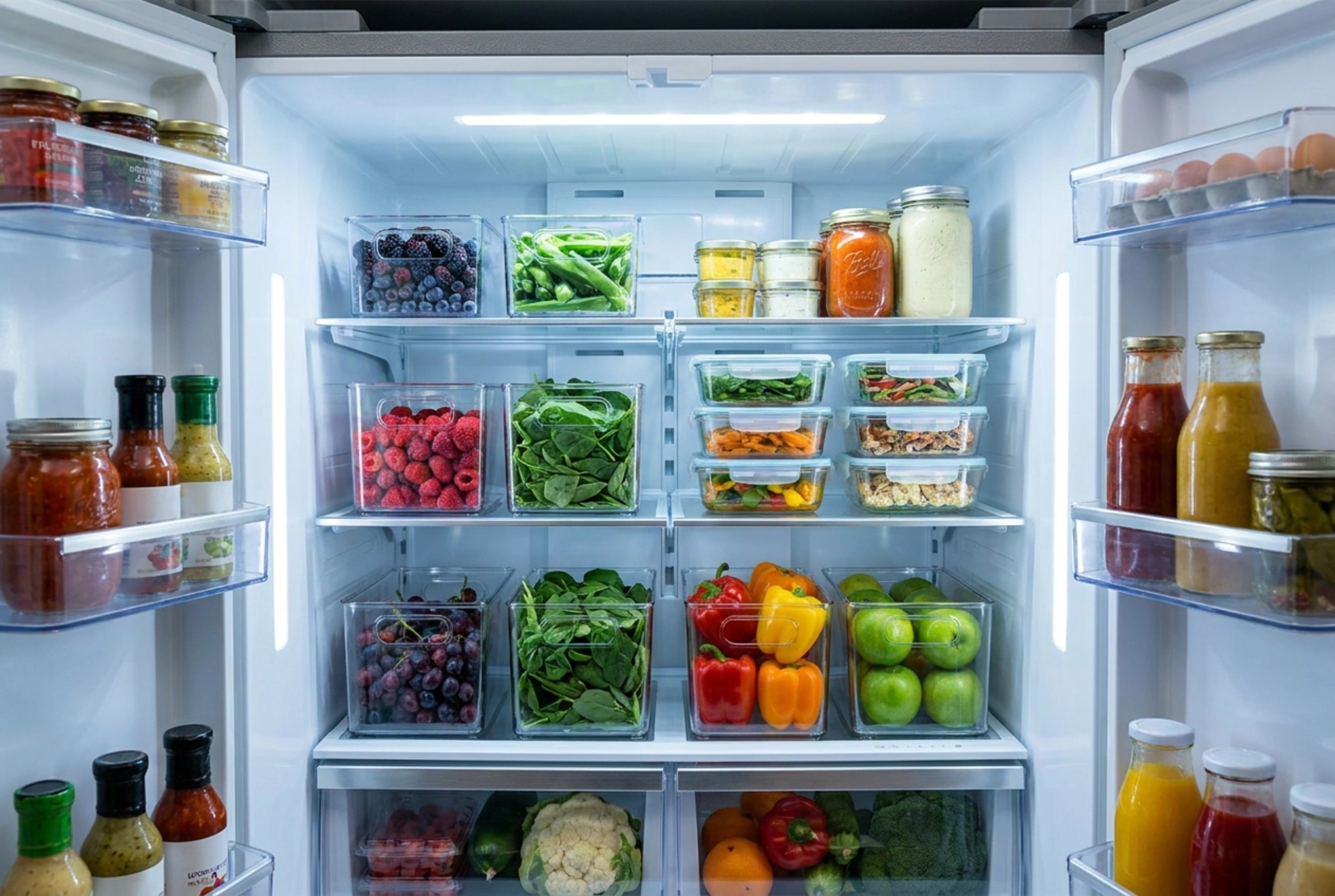
- Top Shelves (Warmest and Most Consistent Zone): Best for pre-cooked meals, leftovers, yogurt, cheese, and deli meats. Since these foods require no further cooking, placing them high keeps them safe from any potential drips from raw ingredients.
- Middle Shelves: Ideal for dairy products, eggs, and items that require stable, cool temperatures. Keep eggs in their original carton rather than the door shelves to shield them from temperature fluctuations caused by frequent door opening.
- Lower Shelves (Coldest Zone): Reserved for raw meat, poultry, and fish. Storing these items at the very bottom prevents accidental drips onto other foods and subjects them to the coldest ambient air. Always place raw meats on a dedicated tray or in a sealed glass container to contain moisture.
Optimizing Bottom Drawers and Humidity Controls
Bottom drawers, often called crisper drawers, are designed to control moisture levels. Understanding how to set and use these humidity sliders is key to extending the shelf life of your fresh produce.
High-humidity drawers restrict airflow, trapping moisture inside. This environment is perfect for leafy greens, carrots, broccoli, and herbs that are prone to wilting. The moisture keeps them crisp by preventing water loss through evaporation.
Low-humidity drawers allow air to circulate freely. This setting is ideal for fruits and vegetables that produce ethylene gas as they ripen, such as apples, pears, avocados, and stone fruits. Letting the gas escape prevents these items, and nearby produce, from rotting prematurely. Never store ethylene producers in the same drawer as ethylene-sensitive greens.
Using Container Systems for Structural Efficiency
Deep bottom drawers can easily become chaotic piles of forgotten food. Implementing physical boundaries using clear, food-grade bins prevents the "out of sight, out of mind" effect. Use rectangular glass or BPA-free plastic bins to create modular compartments within large drawers.
Store items vertically where possible. For example, standing celery stalks or carrots upright in a small amount of water inside a sealed container keeps them crisp for weeks. When stocking drawers, use the "first-in, first-out" method: place older produce toward the front or top of the drawer, and newly purchased items at the back or bottom.