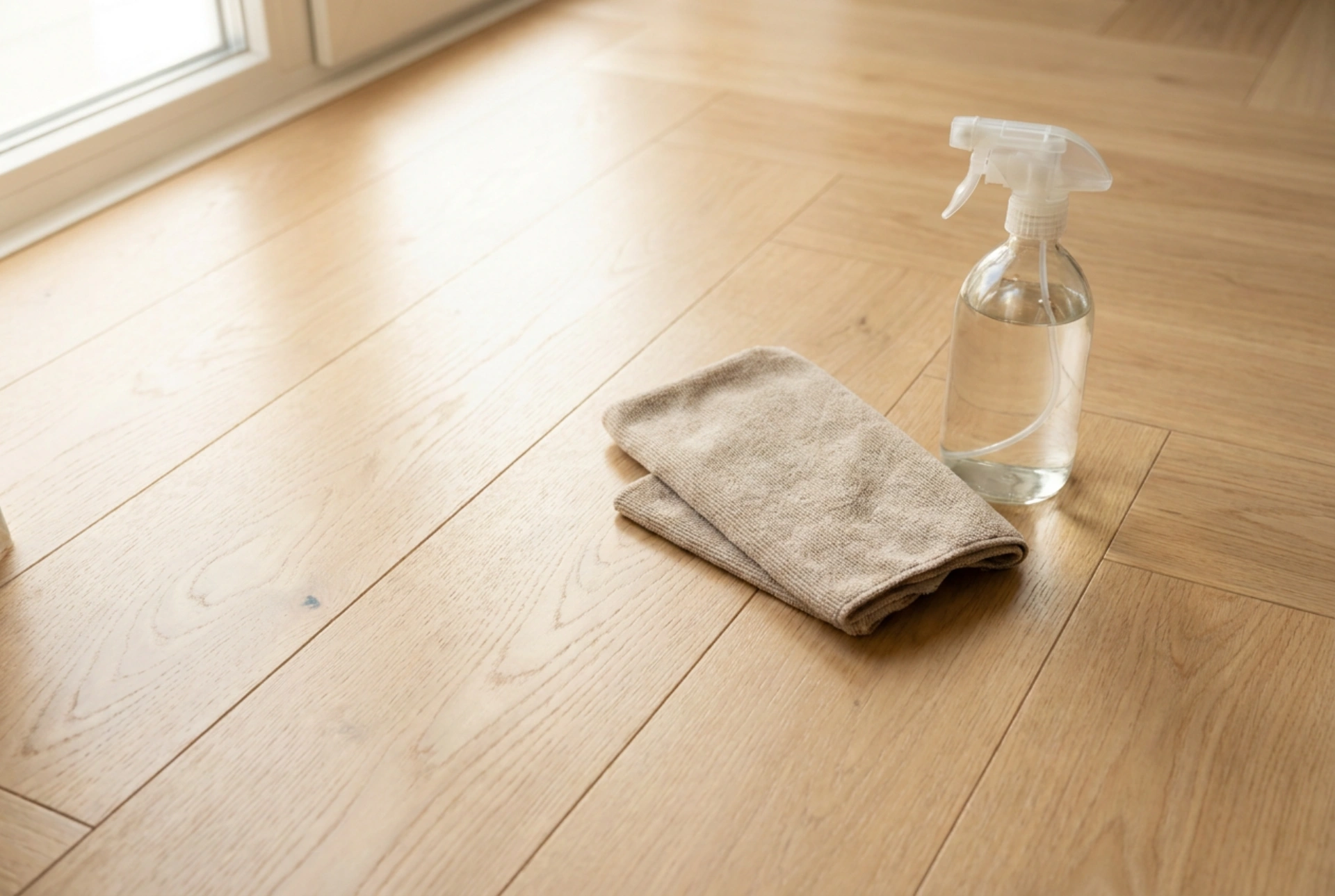


Choosing the right parquet cleaner is a decision rooted in wood anatomy and polymer chemistry, determining whether your floor retains its structure or suffers permanent moisture damage.
The Vulnerability of Wood and the Role of pH
Parquet is made of natural wood, a hygroscopic material that constantly reacts to its environment. Unlike resilient tiles, wood fibers expand when exposed to excessive moisture and contract when dry. Standard multi-purpose detergents often feature high alkalinity to strip grease, but alkaline substances break down the natural lignin and cellular structure of wood, leading to grey discoloration and weakened fibers. A high-quality parquet cleaner must maintain a neutral pH value, typically between 5.5 and 7. This chemical neutrality ensures the protective varnish, wax, or oil layer remains completely intact while lifting surface dirt without chemical abrasion.
Surfactants and the Mechanics of Low-Moisture Evaporation
The primary enemy of any wood floor is standing water, which penetrates microscopic cracks in the sealant, causing warping, cupping, and joint rot. Premium parquet cleaners utilize specialized, highly efficient surfactants. These surface-active agents lower the surface tension of water, allowing the cleaning solution to spread evenly into an ultra-thin film rather than forming droplets. This physical reaction facilitates rapid evaporation. The formula must be designed to lift dirt particles into suspension immediately, allowing a damp microfiber cloth to absorb them before the water can migrate into the wood pores.
Caring for Varnished vs. Oiled Surfaces
The choice of cleaner depends heavily on the surface finish of your parquet, as different coatings require distinct chemical responses:
- Varnished Parquet: Sealed floors need non-streaking formulas that leave zero residue. Standard soaps leave a dulling film that attracts dust. The ideal cleaner uses gentle synthetic surfactants that evaporate completely, preserving the pristine, light-reflecting qualities of the polyurethane or acrylic lacquer.
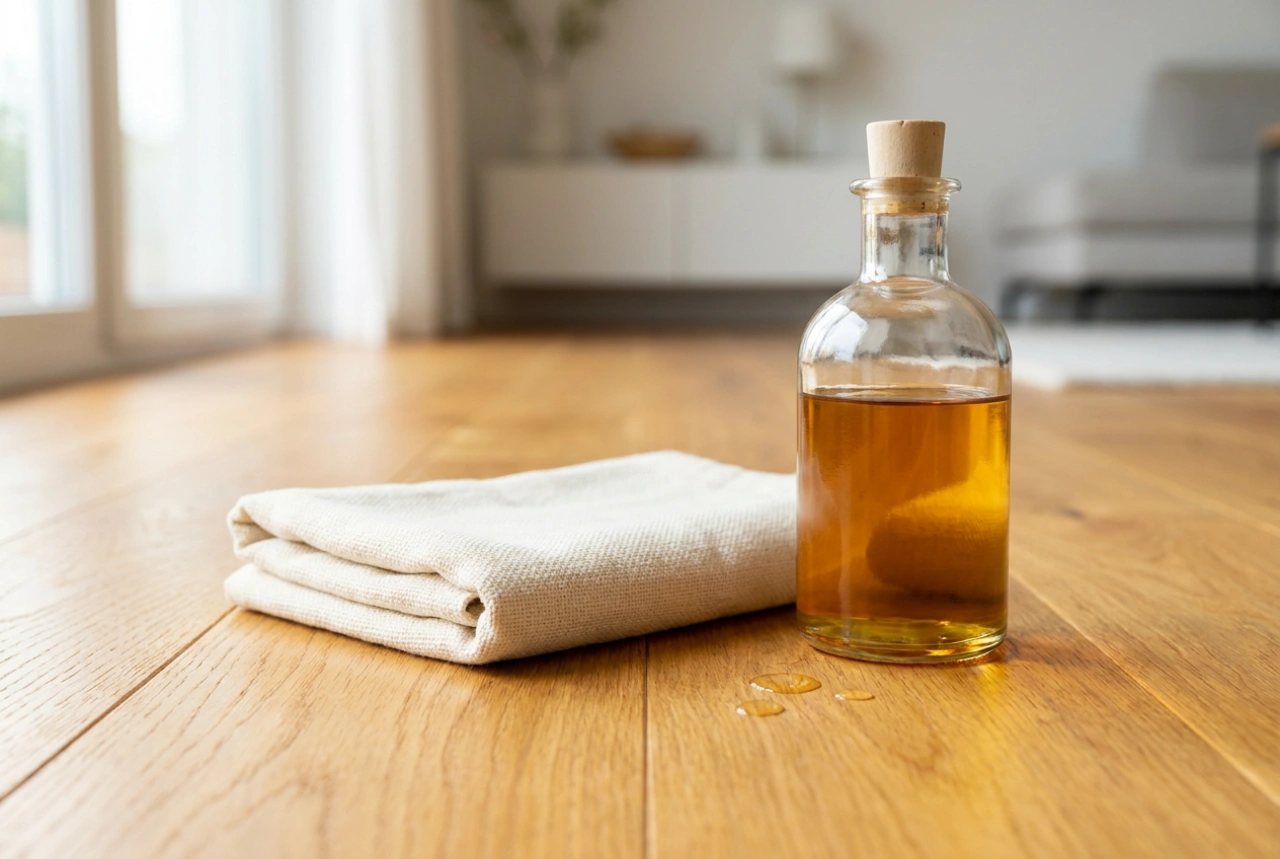
- Oiled and Waxed Parquet: These breathable surfaces require lipid-replenishing agents. A dedicated cleaner for oiled wood contains natural plant-based soaps and water-soluble conditioning oils. During the wiping process, these lipids integrate into the open pores of the wood, reinforcing the hydrophobic barrier and preventing the timber from drying out and cracking.
The Correct Cleaning Motion and Application Technique
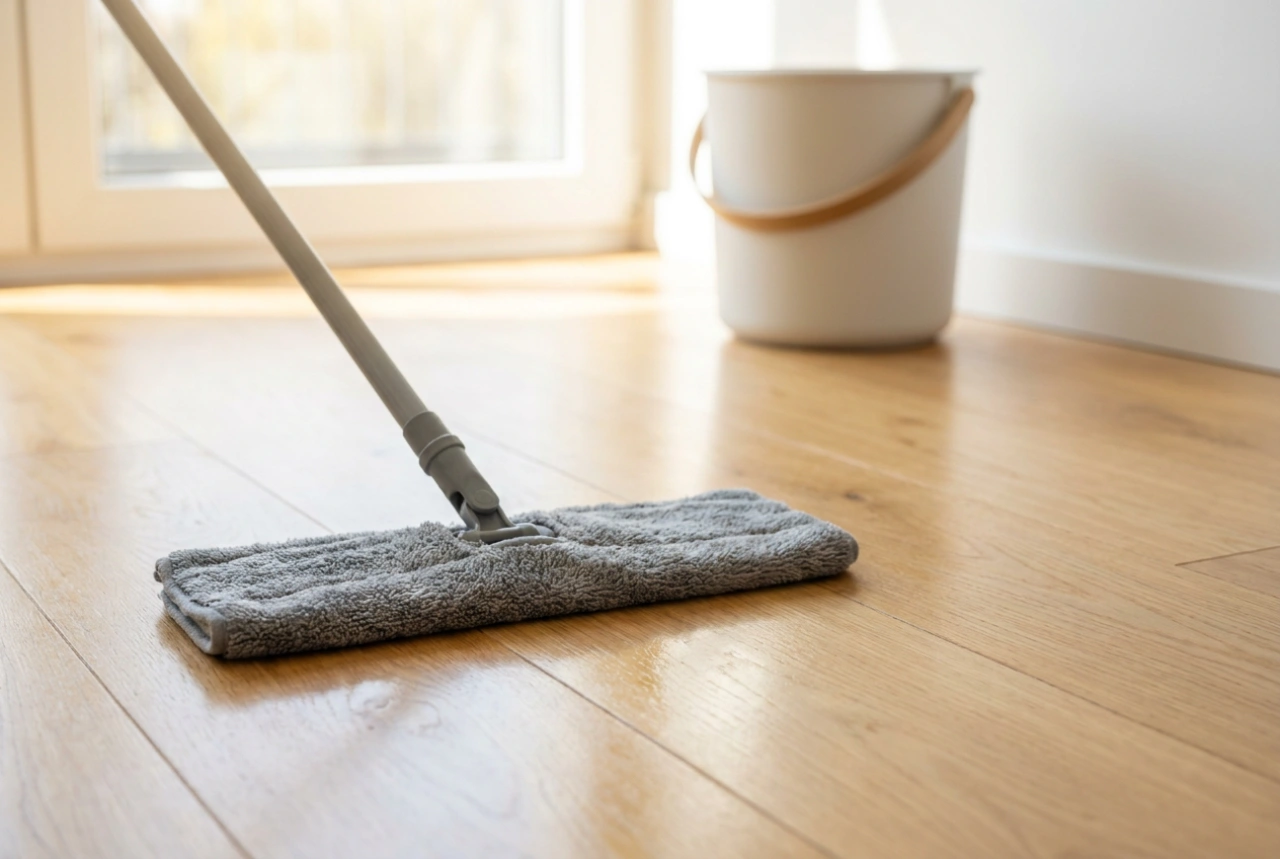
Even the best chemical formula fails without correct physical application. To clean parquet safely, avoid saturated mops. The cloth or microfiber pad should only be damp to the touch. When wiping, work in the direction of the wood grain. This mechanical movement ensures that dirt is lifted out of the natural texture rather than being pushed deeper into the grain. For stubborn spots, apply a concentrated drop of neutral cleaner directly to a damp cloth and rub gently in a circular motion, immediately drying the area with a dry microfiber cloth to prevent localized swelling.