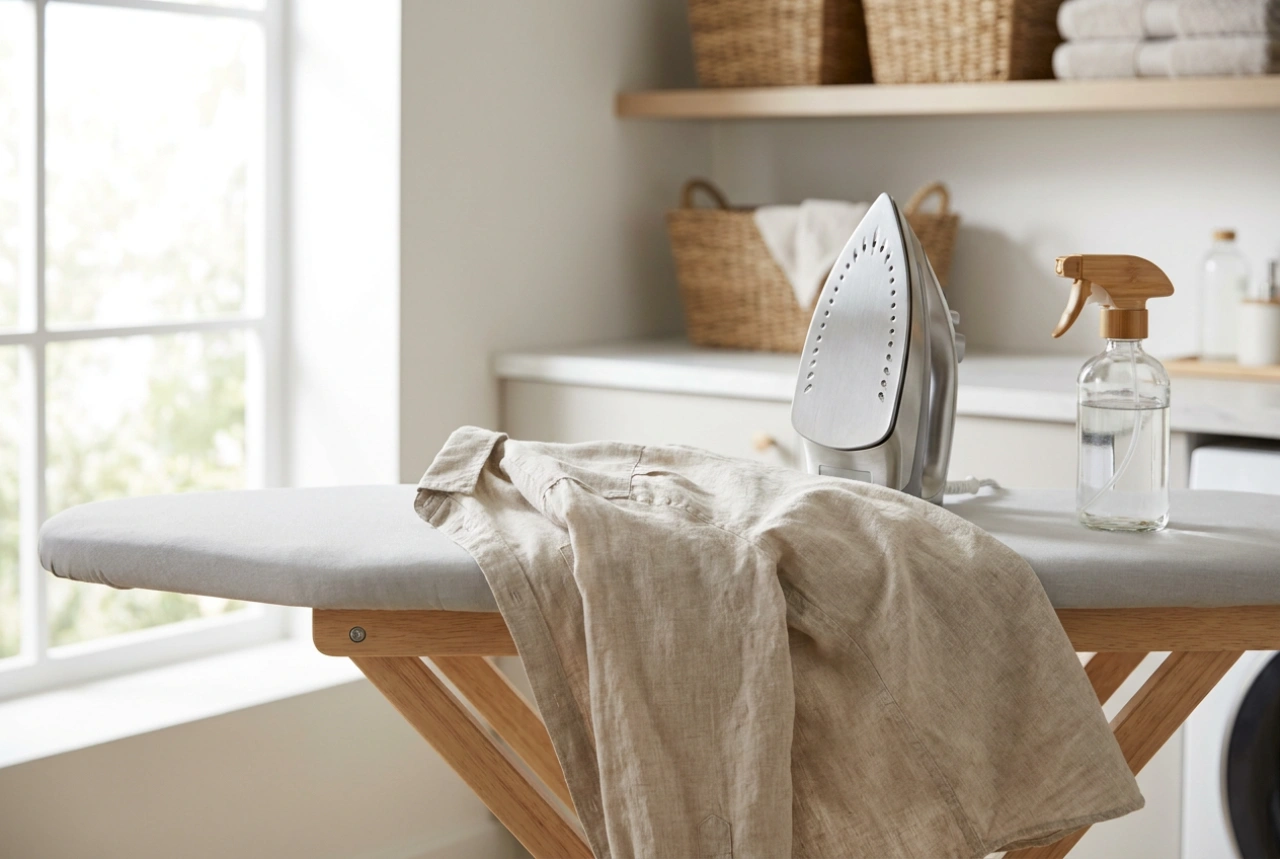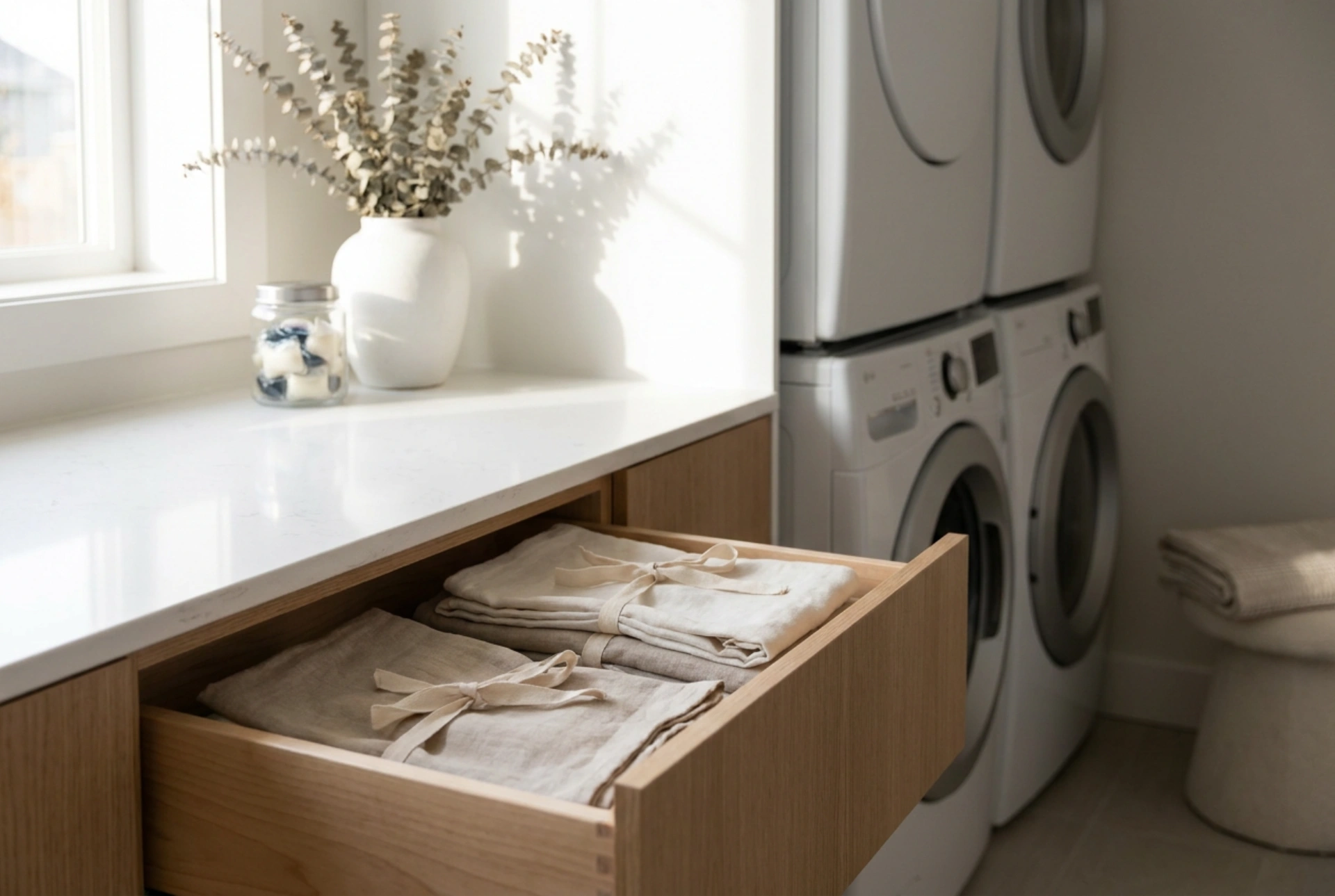


Managing dirty laundry efficiently relies on minimizing physical handling, controlling airflow, and establishing an intuitive pre-sorting system directly inside your cabinetry.
The Physics of Airflow and Odour Prevention in Enclosed Cabinets
Storing damp or dirty textiles in closed spaces accelerates the growth of anaerobic bacteria and mildew, which thrive in dark, stagnant environments. When integrating a pull-out laundry basket into your cabinetry, ventilation is the most critical design factor. Closed solid drawers trap residual moisture from sweat, damp towels, and humidity, leading to musty odours that are difficult to wash out of fabrics.
To prevent this, opt for pull-out systems featuring wire mesh baskets, perforated metal frames, or heavy-duty linen insert bags. These materials allow continuous air circulation, facilitating the evaporation of surface moisture. If your cabinet door is solid, ensure the back of the cabinet carcass is left partially open or install a ventilation grille at the base and top of the unit to create a natural chimney effect, drawing fresh air through the drawer cavity.
Pre-Sorting Mechanics: The Multi-Compartment Strategy
Efficiency on wash day is determined by how little time you spend sorting garments on the floor. A well-designed pull-out system should feature at least two, and ideally three, separate compartments. This physical division allows for immediate sorting at the point of disposal, separating textiles by wash temperature and colour profile.
- Light Fabrics: White and pastel cottons, linens, and light synthetics requiring warm or hot water cycles to prevent grey dinginess.
- Dark Fabrics: Black, navy, dark grey, and deep colours washed at lower temperatures to preserve dye stability.
- Delicates and Wool: High-protein fibres (silk, wool) and synthetic activewear that require gentle cycles, specific neutral pH detergents, and zero friction.
By establishing this sorting routine at the moment you discard clothing, you eliminate the need to handle soiled laundry twice. This reduces dust mite dispersal and airborne allergens in your utility room.
Hardware and Structural Engineering of Pull-Out Systems
A laundry drawer must withstand significant dynamic loads. A single load of damp laundry can easily weigh between 10 to 15 kilograms. Therefore, standard drawer runners are insufficient. Your system should utilize heavy-duty, full-extension runners rated for at least 30 to 50 kilograms.
Full-extension runners are crucial because they allow the baskets to clear the edge of the countertop entirely, giving you unobstructed vertical access to the rear compartments. Look for runners equipped with soft-close fluid dampers. These dampers absorb the kinetic energy of a heavy, fully loaded drawer, preventing structural damage to the cabinet carcass and stopping the baskets from rattling or tipping inside the frame.
Optimizing the Order of Operations on Wash Day
To maximize efficiency, integrate your pull-out system into a logical workflow sequence: sorting, treating, washing, and drying. Position the pull-out cabinet directly adjacent to your washing machine or beneath a folding countertop. This minimizes the physical distance you must carry heavy loads.
When a compartment is full, lift the removable fabric liner or wire basket directly out of the runner frame and empty it straight into the washing machine drum. Removable canvas liners are highly recommended as they can be thrown into the wash periodically with your bed linen, keeping the laundry storage environment sanitised and free of dust build-up.