

Knowing the basic physical components of a dishwasher and how they interact allows you to resolve minor efficiency issues and blockages without calling for professional assistance.
The Core Hydrological Circuit and Spray Arms
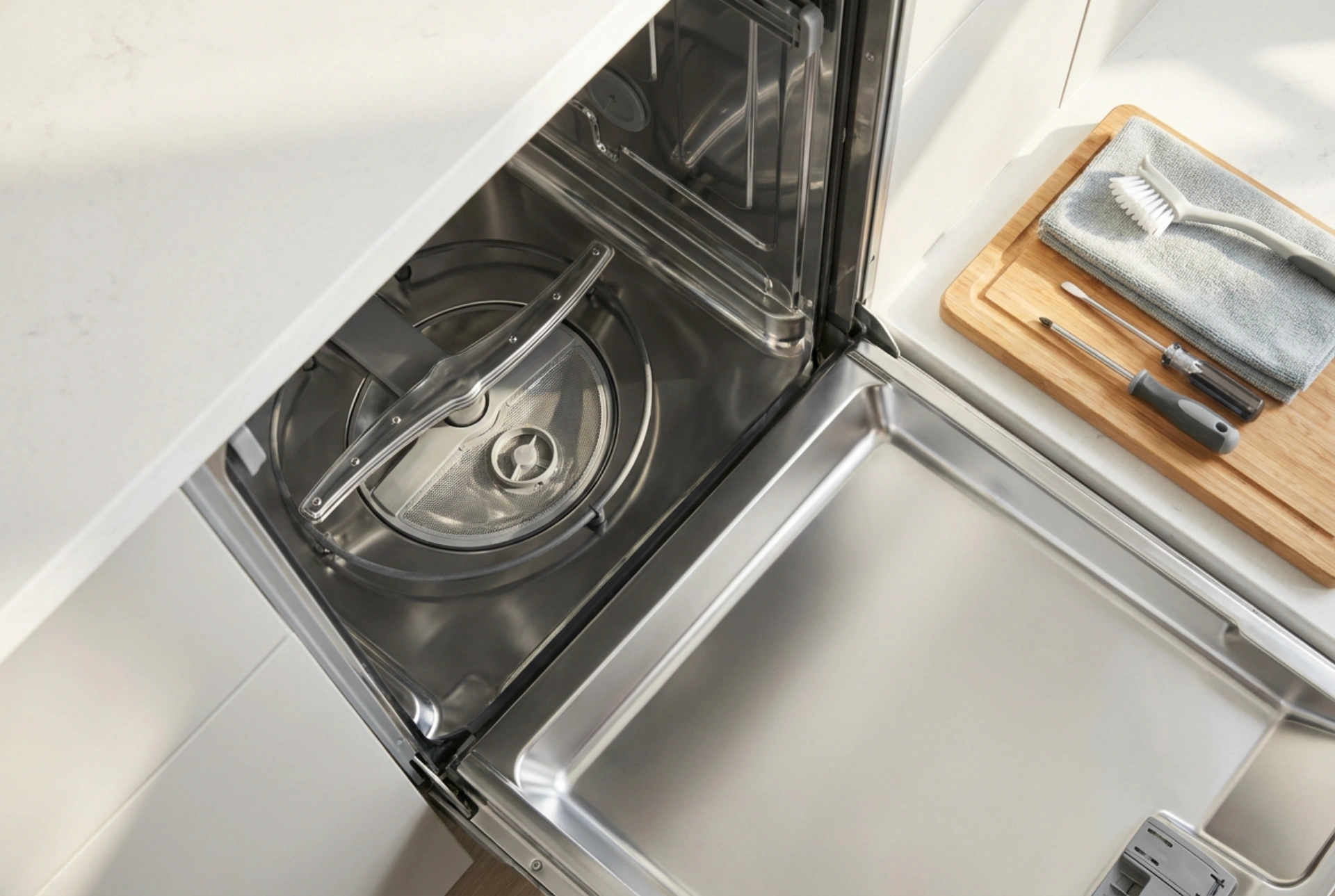
At the heart of every dishwasher is a closed-loop water circulation system. Water enters through the inlet valve at the base, but it is the circulation pump that drives the cleaning process. This pump forces water up through the spray arms, spinning them using purely mechanical water pressure. The spray arms feature angled nozzles that direct high-velocity jets at specific angles to cover all rack areas.
When dishes remain dirty, the cause is often physical blockages in these nozzle jets. Small food particles, calcium carbonate deposits (limescale), or seed debris can lodge in the openings. This disrupts the pressure balance, preventing the spray arm from rotating. To fix this, manually unscrew the retaining nut of the spray arms, remove them, and flush water through them in reverse. Use a thin wooden toothpick to dislodge any mineral deposits from the nozzles.
The Filtration System: Preventing Recirculation of Soil
To prevent food particles from being sprayed back onto clean plates, dishwashers utilize a multi-stage filtration system located at the bottom of the tub. Typically, this consists of a coarse mesh cylindrical filter and a flat fine-mesh micro-filter plate. Water drains through these barriers before reaching the recirculation pump.
If these filters become saturated with fats and organic waste, water flow is restricted. This starvation of the pump leads to low water pressure and poor cleaning results. To maintain optimal flow dynamics, rotate the cylindrical filter counterclockwise to lift it out. Wash both the cylinder and the flat mesh screen under warm running water, using a soft-bristled brush to dissolve accumulated grease without damaging the delicate mesh fibers.
The Drainage Mechanism and Anti-Siphon Loops
After the wash cycle, the drain pump takes over, actively pushing wastewater out of the machine. This pump relies on a small impeller to force water through the drain hose and into your household waste pipe. A common point of failure is a blocked impeller, often caused by small bones, broken glass, or hard fruit seeds that slip past a damaged filter.
If water remains in the bottom of the tub at the end of a cycle, first ensure the drain hose is installed with an elevated anti-siphon loop. This loop must rise higher than the connection point to your under-sink drain to prevent sink wastewater from back-flowing into the dishwasher. Next, access the drain pump chamber by removing the filters and detaching the small plastic pump cover (often secured by a single screw or clip) to inspect the impeller blades for physical obstructions.
The Heating Element and Thermostat Calibration
Modern dishwashers rely on precise temperature control to activate detergents and sanitize dishes. Water is heated either by an exposed immersion element at the bottom of the tub or an inline flow-through heater integrated into the pump housing. The thermostat monitors this temperature, ensuring it reaches the necessary range to melt animal fats and activate enzymes.
If dishes emerge wet and cold, or if the detergent tablet fails to dissolve, the heating loop is not functioning correctly. Limescale buildup acts as an insulator on exposed heating elements, reducing heat transfer efficiency. Regular descaling cycles using citric acid can dissolve these calcium deposits, restoring heat conductivity and ensuring the thermal sensor reads temperatures accurately.