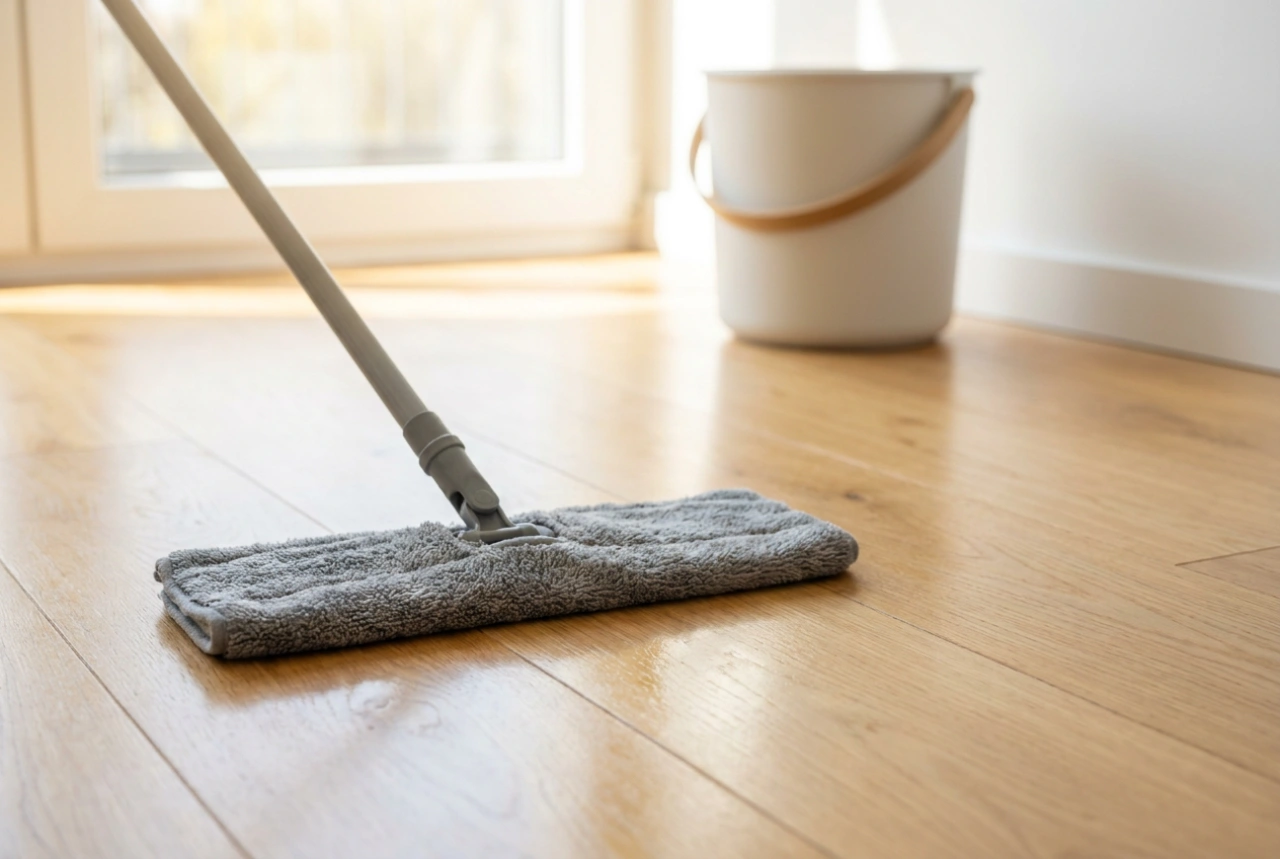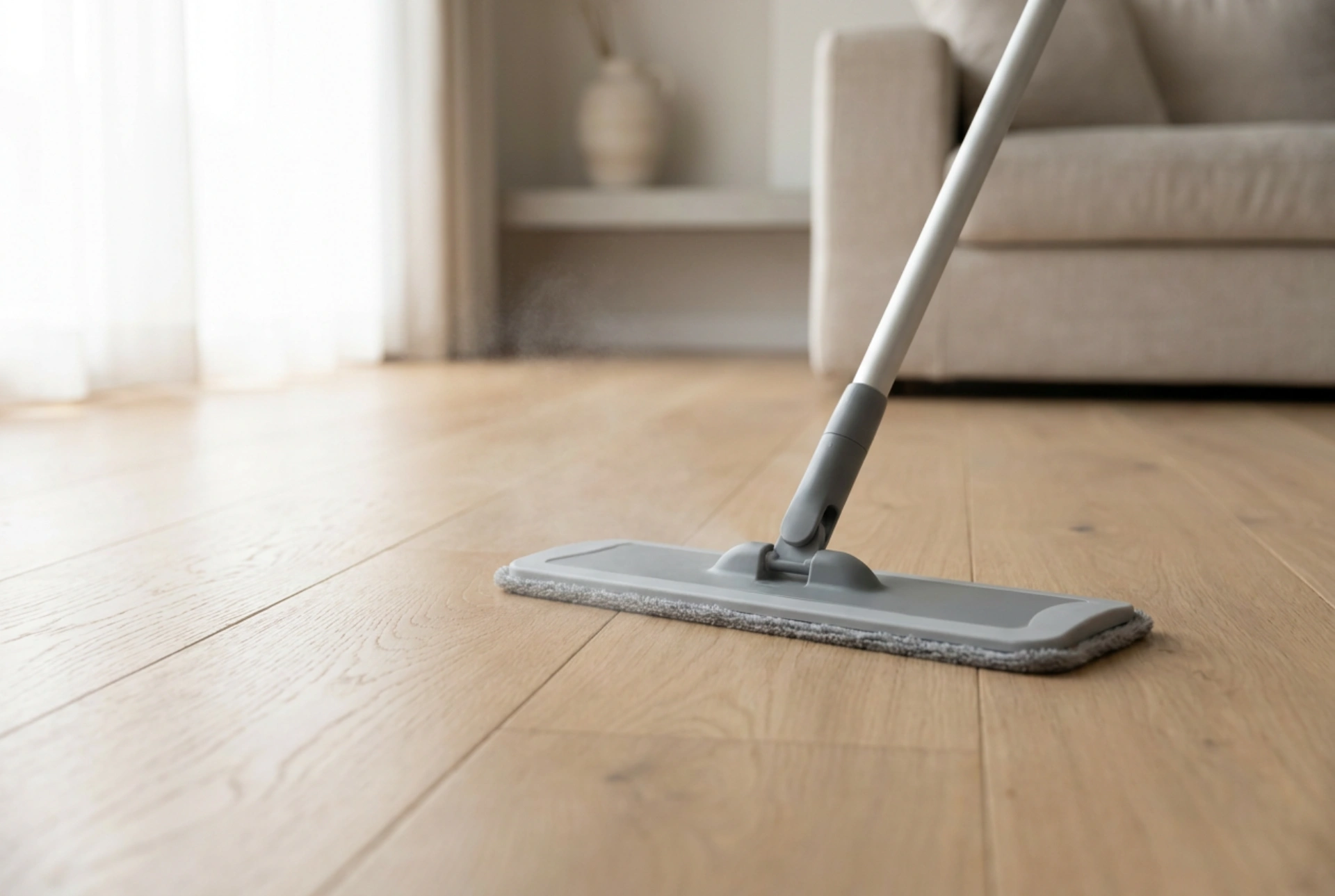


Laminate flooring requires a delicate balance of mechanical action and moisture control to prevent the core fibers from absorbing water, swelling, and warping at the joints.
The vulnerability of laminate to water
Laminate floors consist of a high-density fiberboard (HDF) core topped with a photographic layer and a clear wear layer. While the surface is highly resistant to water, the joints where the planks lock together are vulnerable. When excess water seeps into these micro-gaps, capillary action draws the liquid into the wood fiber core. Once absorbed, the wood fibers expand permanently, leading to raised edges, buckling, and irreversible structural damage. Managing the water volume is the most critical aspect of preserving your floor's integrity during automated cleaning.
Pre-treatment and dry preparation
Before introducing any moisture, you must remove all loose particulate matter. Tiny grains of quartz dust and sand act as abrasives under the pressure of spinning or vibrating mop pads, scratching the protective polyurethane wear layer. Use a high-efficiency particulate air (HEPA) vacuum with a soft brush attachment or a dry microfiber sweep pad. Ensure you clean along the bevels and joints where abrasive grit tends to settle, preventing micro-scratches that allow water to penetrate more easily later.
Calibrating moisture levels on electric mops
Modern electric mops utilize either rotary pads, cylindrical rollers, or sonic vibration plates. To keep the moisture levels safe for laminate, you must understand and control the wetting mechanism of your specific device.
- Manual spray triggers: If your machine features an active spray trigger, use a pulsating misting technique rather than a continuous spray. Apply a single misting burst every three to four feet, allowing the microfiber pad to distribute the dampness evenly.
- Automatic dampening systems: For units with continuous water feed, always select the lowest water-flow setting. The pad should feel slightly cool and damp to the touch, not saturated or dripping.
- Dry-start pad priming: Always start with a slightly damp, thoroughly wrung-out pad rather than dry microfibers. Dry microfiber is highly hydrophobic initially and will not absorb the sprayed water efficiently, leading to puddling on the floor surface. Prime the pad under a tap, wring it out until no water can be squeezed out, and then attach it to the machine.
The physical mechanics of safe mopping
The speed and path of your cleaning motion directly impact how much moisture is left behind on the laminate. Move the electric mop at a steady, continuous pace of about one foot per second. Remaining stationary while the cleaning head is active concentrates water dispersion in one spot, leading to pooling. Always work in the direction of the wood grain to ensure the spinning fibers lift dirt out of the textured surface rather than pushing moisture deep into the transverse seams.
The role of chemical surface tension
Pure water has high surface tension, causing it to form droplets that linger on the surface and take longer to evaporate. Adding a small amount of surfactant-based cleaner reduces this surface tension, allowing the thin film of moisture to spread evenly and evaporate much faster. Use a neutral pH cleaner specifically formulated for laminate surfaces, diluted precisely according to the manufacturer's guidelines. Excess detergent leaves a tacky residue that attracts dirt and traps moisture, compromising the floor's finish over time.
Post-clean moisture extraction
After completing a pass with the electric mop, inspect the floor behind you. The moisture left on the laminate should evaporate completely within ninety seconds. If you notice damp streaks or standing water droplets, immediately run a dry microfiber pad over the area to absorb the excess. Increasing ventilation by opening windows or running a ceiling fan accelerates drying times, minimizing the duration the laminate is exposed to moisture.