

Fine construction dust like plaster or drywall residue can quickly clog or destroy standard industrial vacuum filters if the correct preparation and extraction techniques are not applied.
The physical nature of plaster dust
Plaster dust consists of microscopic gypsum particles that behave differently than standard household dirt. When these particles meet the airflow of a vacuum cleaner, they do not simply settle in the canister. Because of their tiny size and static charge, they migrate directly to the pores of the filter material. Once there, they create a dense, impermeable barrier known as filter blinding. If any moisture is present in the air or the machine, the gypsum undergoes a chemical hydration process, curing directly inside the filter fibers and rendering the cartridge permanently useless. Protecting the filter requires understanding how to arrest these particles before they reach the main filtration media.
The wet-separation method: water as a barrier
One of the most effective mechanical methods to protect your industrial vacuum is using a water separator. By routing the suction hose through an external container partially filled with water before it reaches the vacuum inlet, you force the dusty air to pass through a liquid barrier. Gypsum particles are highly hydrophilic; they bind with water instantly, increasing their mass and settling at the bottom of the container as a harmless slurry. This simple physical law of gravity and surface tension ensures that only clean, moisture-controlled air reaches the vacuum filter, preventing clogging entirely.
Setting up a bypass separator
- Connect the primary suction hose to an airtight intermediate bucket filled with water.
- Run a secondary hose from the bucket lid to the vacuum inlet.
- Ensure the inlet tube in the bucket is submerged beneath the water level, while the outlet tube remains high above it.
Using sacrificial pre-filters and fleece bags
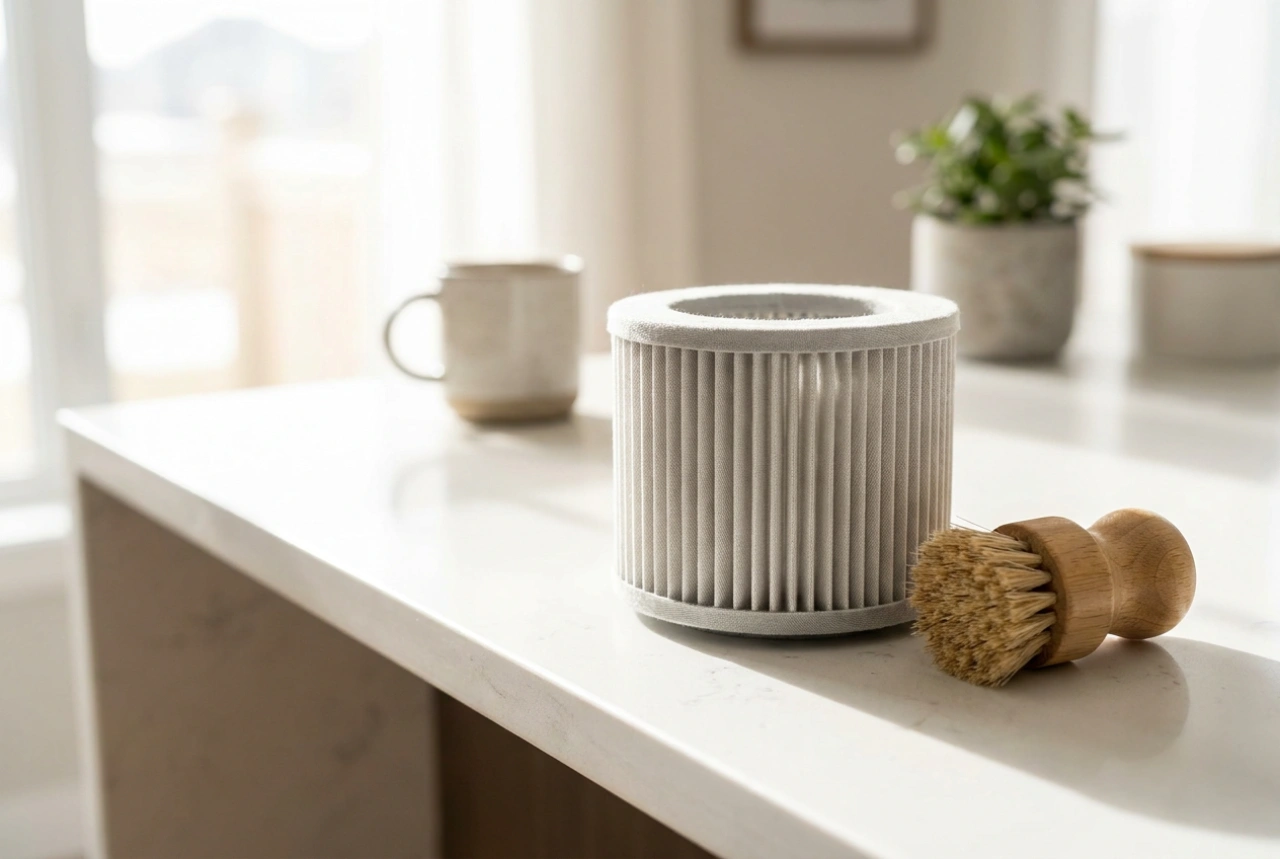
If a water separator is not practical for your workspace, the hierarchy of physical barriers is your next defense. Never vacuum plaster dust using only the pleated cartridge filter. Standard paper dust bags should also be avoided, as plaster dust easily penetrates the thin paper fibers and tears them under high suction pressure. Instead, equip your machine with high-density, multi-layered fleece filter bags. Fleece acts as a three-dimensional depth filter, trapping the microscopic dust within its complex fiber network while maintaining high airflow. For added protection, you can wrap a washable nylon pre-filter sleeve over the main cartridge filter, which catches any stray particles that escape the bag.
Airflow management and mechanical shaking
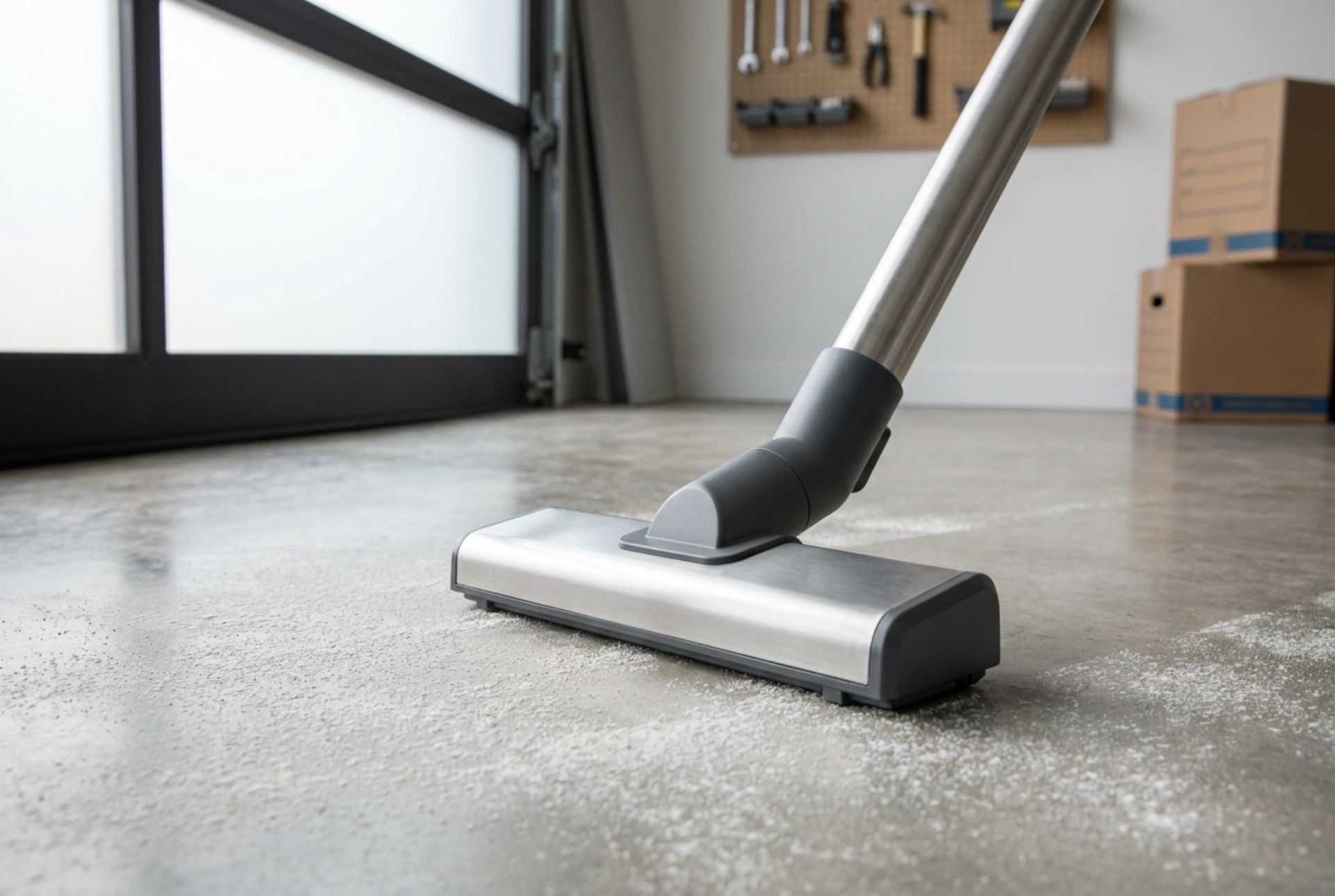
How you operate the vacuum nozzle directly impacts filter longevity. Avoid burying the nozzle directly into piles of plaster dust. When a vacuum sucks up a concentrated mass of fine dust without sufficient air, the pressure drop inside the canister spikes, pulling the fine particles deeper into the filter pores. Instead, use a sweeping motion to skim the surface, allowing a continuous stream of ambient air to mix with the dust. This maintains high velocity and prevents static accumulation. If your industrial vacuum features a semi-automatic or automatic filter cleaning button, activate it every two to three minutes. This mechanical pulse reverses the airflow temporarily, dislodging the dust cake before it can compact into the filter pleats.