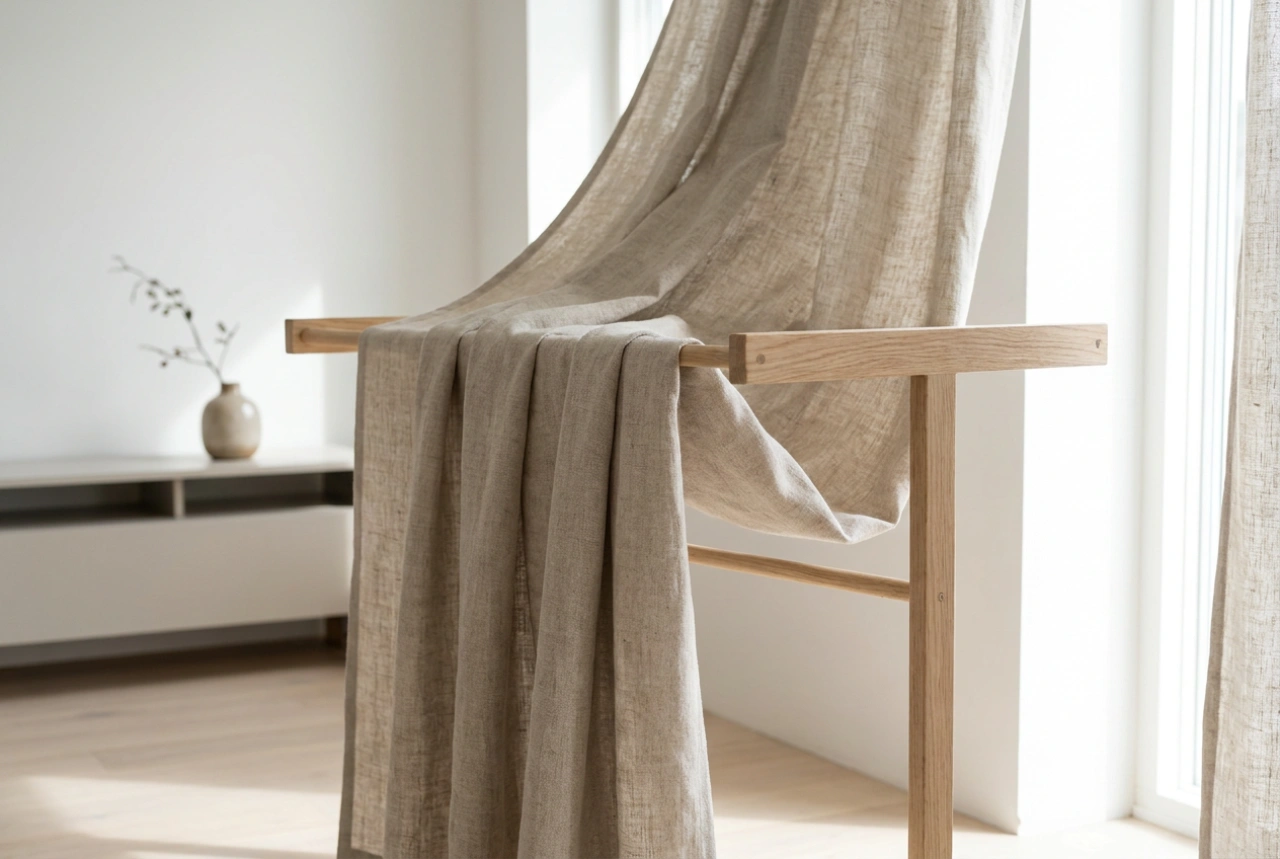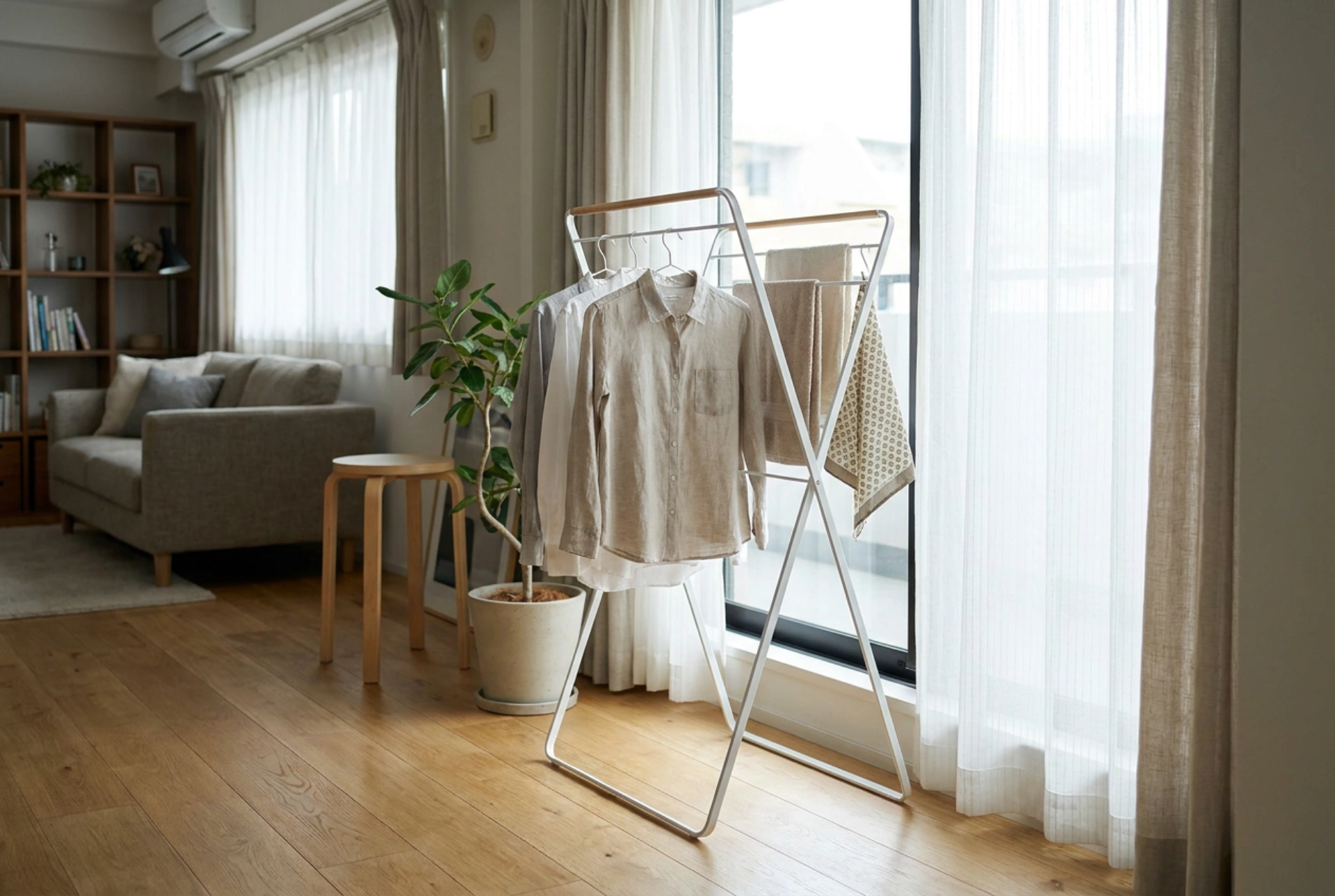


Maximizing limited floor space while ensuring laundry dries quickly and without musty odors requires a strategic approach to vertical air circulation and physics.
Understanding the Physics of Vertical Drying
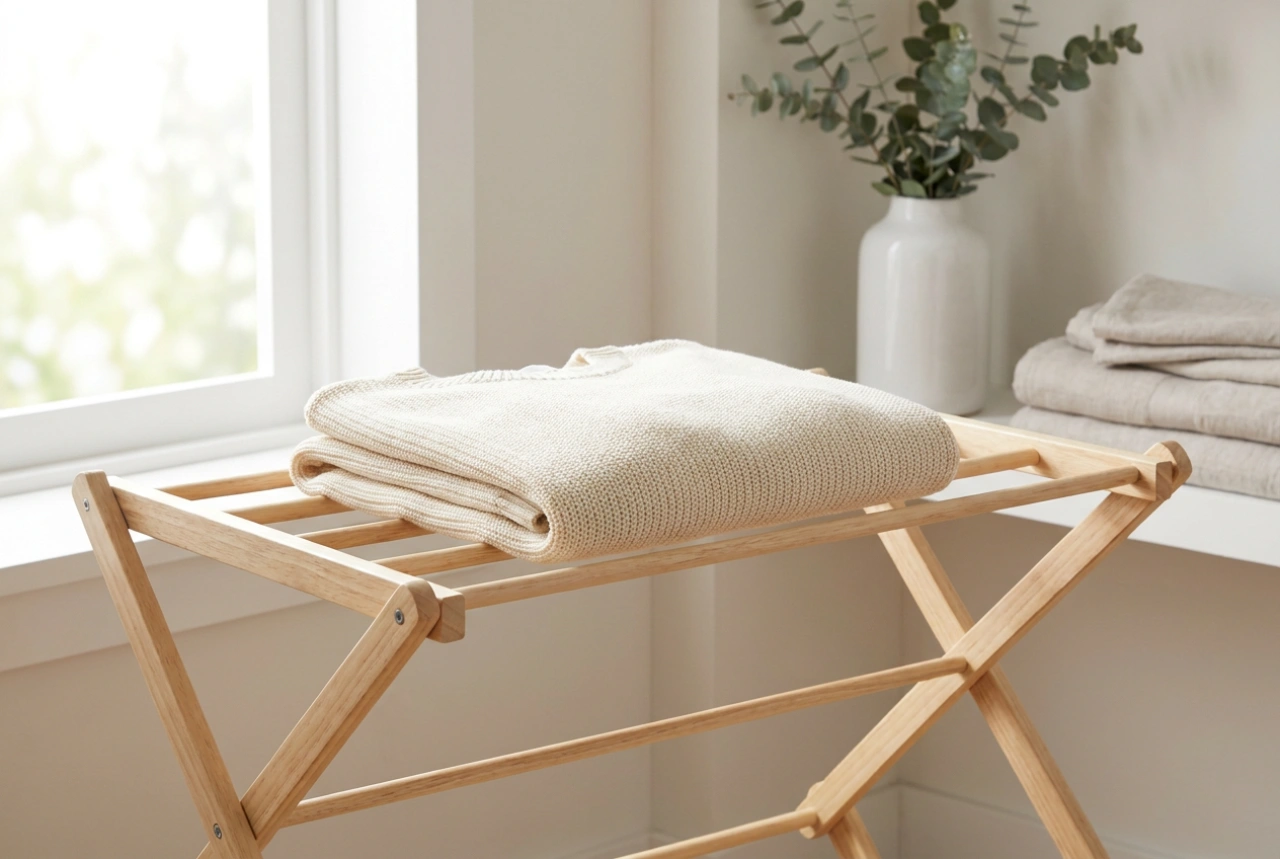
Vertical drying racks are highly efficient space-savers because they exploit the natural movement of air currents. Warm air naturally rises, creating a subtle but continuous convective flow. To make the most of this process, place your vertical rack near a heat source or a window where natural thermal currents are active. When positioning the rack, ensure it is not pushed flush against a wall; leaving a gap of at least 30 centimeters allows air to circulate around all sides of the wet fabric, preventing moisture pockets from forming.
The Hierarchy of Wetness: How to Hang Garments
To optimize drying times and maintain the balance of the rack, you must arrange your laundry according to weight and fabric density. Heavier items should always be placed at the top of the rack. This is because dry air in a room is typically warmer and less humid near the ceiling, which accelerates the evaporation of moisture from thick materials like denim and heavy cotton. Conversely, lighter synthetic garments, which dry rapidly under almost any conditions, should be hung on the lower tiers. Always leave empty spaces or thin gaps between hung items; overlapping fabrics trap humidity and significantly prolong drying times.
Managing Indoor Humidity and Airflow
As water evaporates from your clothes, the relative humidity in a small room increases rapidly. Once the air reaches saturation point, drying stops entirely, and mold risks rise. To combat this, use the cross-ventilation method. Open two windows on opposite sides of the apartment slightly to create a pressure differential that forces damp air out and pulls dry air in. If natural ventilation is limited, positioning a standard mechanical fan at the base of the vertical rack, pointing upward, will mechanically assist the convective process and slash drying times in half.
Proper Tension and Gravity Techniques
To minimize wrinkles and eliminate the need for intensive ironing, utilize gravity during the hanging process. Shake each garment vigorously before draping it to release tense fibers. Hang shirts and delicate blouses on plastic hangers suspended from the outer frame of the vertical rack rather than draping them over the flat bars. This preserves the natural shape of the shoulder seams and allows air to flow freely through the interior of the garment. For trousers, hang them by the cuffs using peg attachments to let the weight of the waistband pull the fabric taut as it dries.
Post-Drying Routine and Rack Maintenance
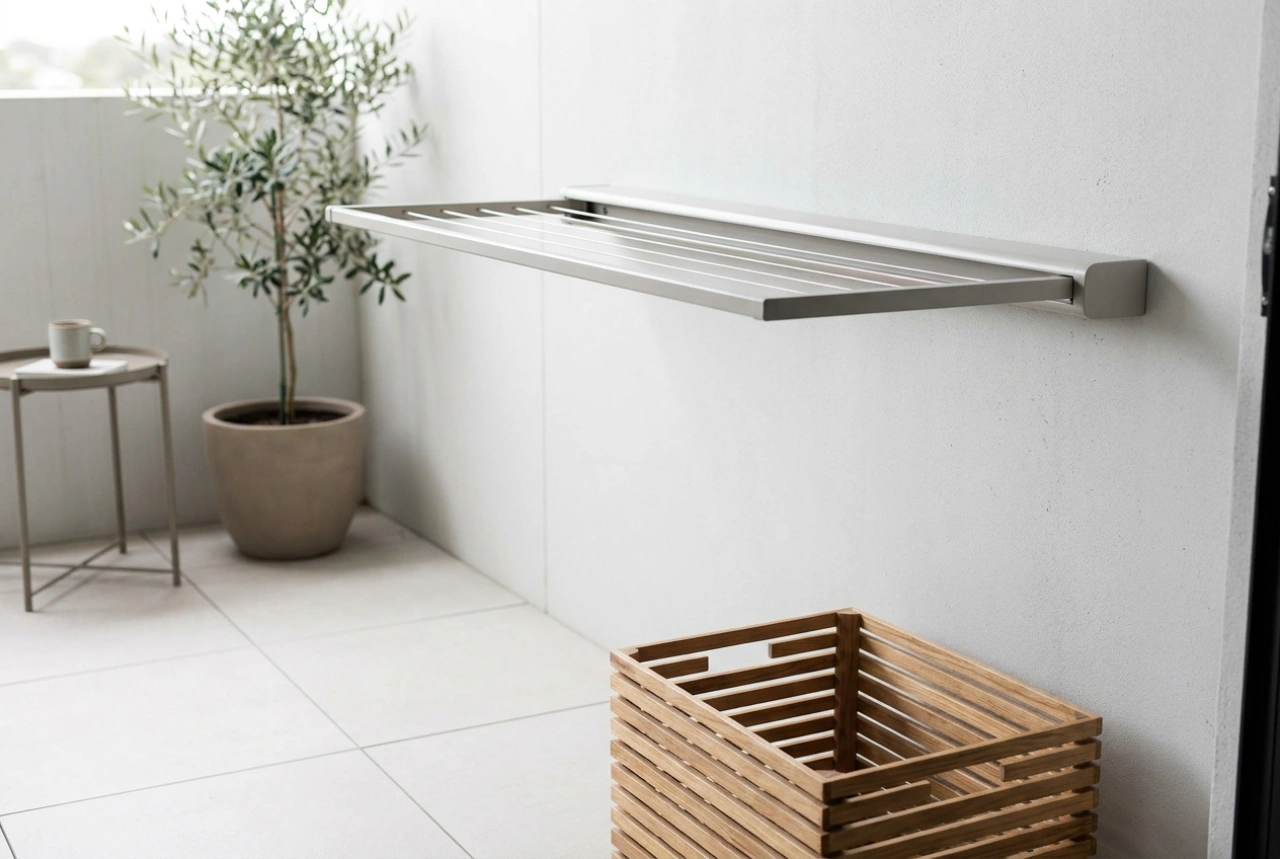
Once your clothes are dry, remove them promptly to prevent them from absorbing cooking odors or dust. Before folding the vertical rack and storing it away, wipe down the metal or plastic bars with a dry microfiber cloth. Residual moisture combined with dust can create a grimy film over time, which may transfer to clean laundry during the next cycle. Store the collapsed rack in a dry utility closet or behind a wardrobe to keep your living space uncluttered.