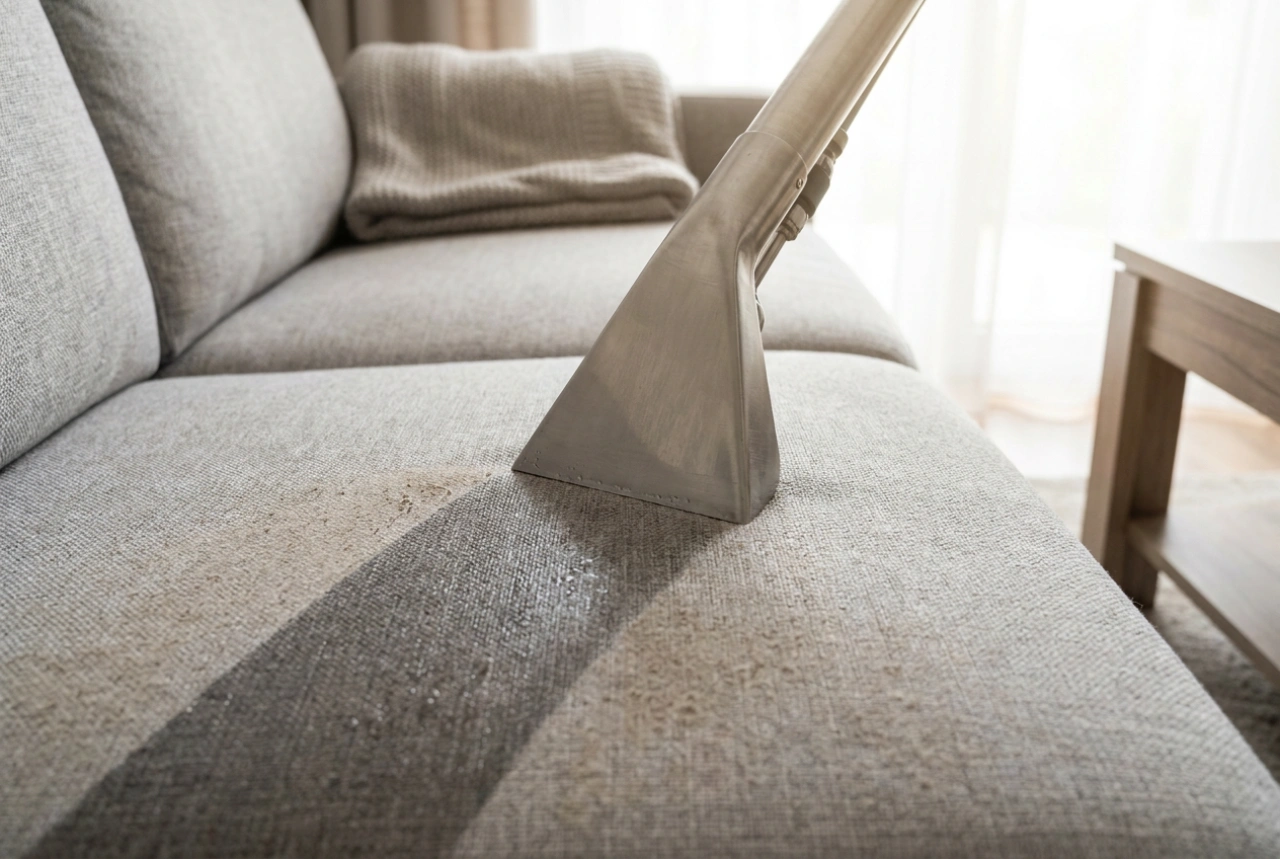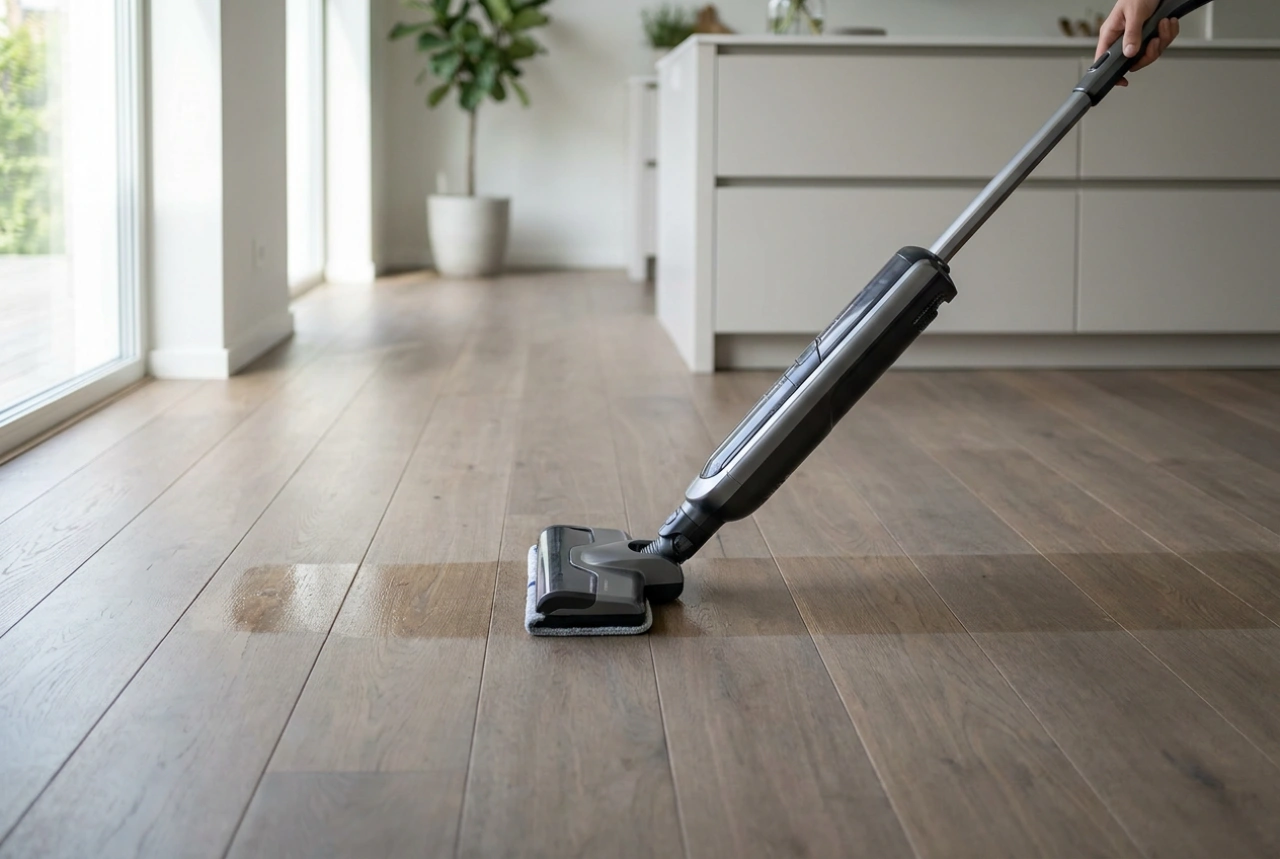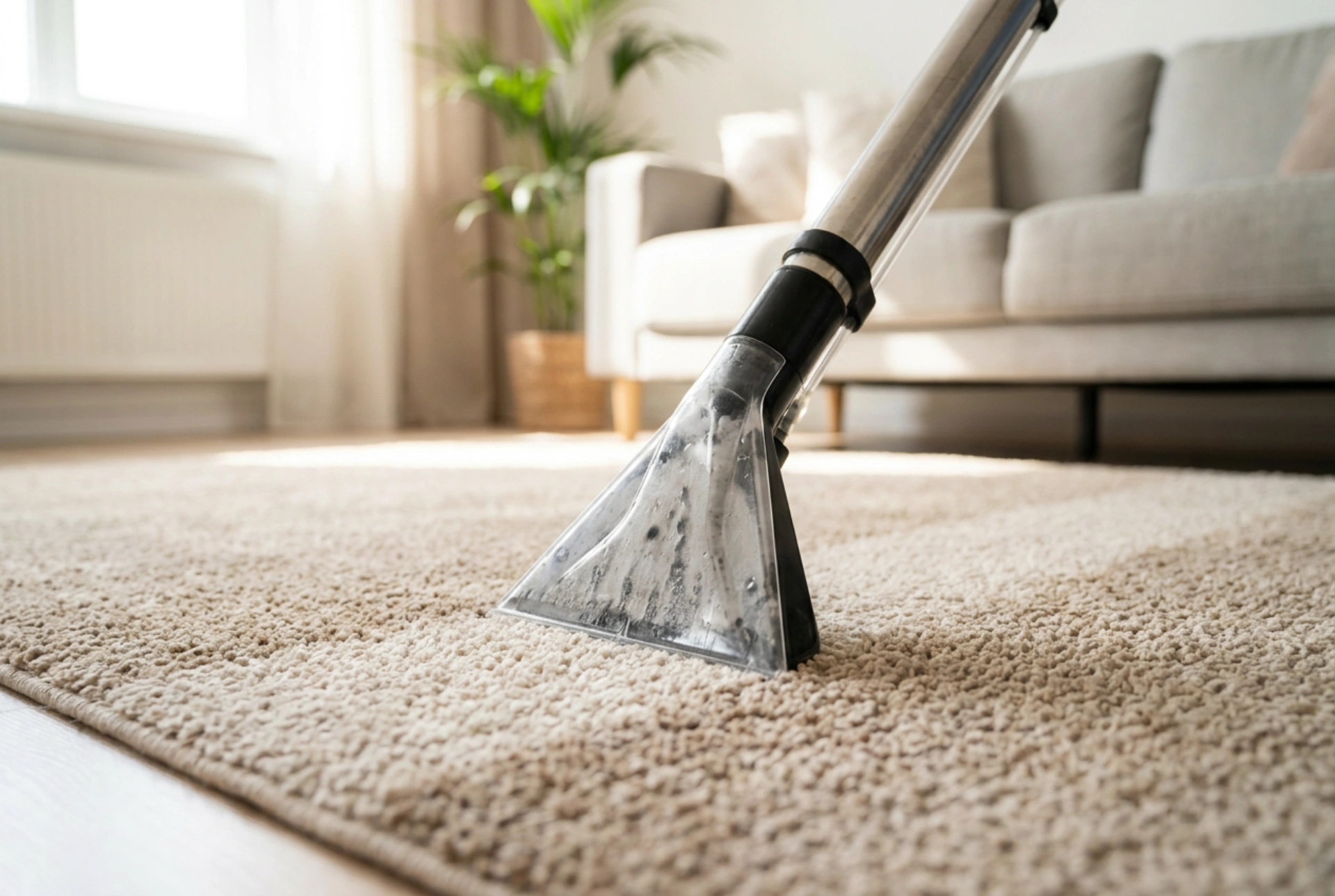


Extraction cleaning uses pressurized water mixed with a cleaning agent to penetrate deep into fibers, followed immediately by powerful suction to lift dissolved dirt and moisture.
The physics of extraction cleaning
Standard vacuuming only removes loose, dry soil from the surface of carpets and upholstery. Over time, oily residues, skin flakes, and fine dust bind to the fibers, creating a sticky layer that dulls the material and harbors odors. An extraction vacuum, or carpet extractor, solves this through the simultaneous application of hydraulic pressure and negative air pressure. The machine sprays a cleaning solution deep into the pile, breaking the chemical bonds between the dirt and the fibers. Crucially, the narrow suction nozzle immediately draws this liquid back out, lifting the suspended soil before it can settle back into the backing material.
Preparing the textile surface
Successful extraction cleaning depends heavily on thorough dry preparation. Skipping this step risks turning loose dust into mud, which penetrates deeper into the weave and causes streaking. Follow this sequence for the best results:
- Deep vacuuming: Use a vacuum cleaner equipped with a rotating brush head to agitate the fibers and extract loose grit, hair, and sand from the base of the pile.
- Pre-treatment of heavy stains: Highly trafficked areas or specific spills require a targeted pre-spray. Apply a mild alkaline pre-treatment agent and allow it to dwell for five to ten minutes to loosen stubborn grease.
- Colorfastness test: Apply a small amount of the diluted extraction cleaner to an inconspicuous area using a white cloth. Press firmly; if any dye transfers to the cloth, the textile is not colorfast and should not be wet-cleaned.
Mastering the extraction technique
The movement and speed of the extraction nozzle dictate the efficiency of the cleaning process. Moving too fast leaves dirt behind, while moving too slowly overwets the backing, which can lead to mold, fiber shrinkage, or browning. Connect the appropriate nozzle—a wide wand for carpets or a narrow hand tool for upholstery. Pull the nozzle toward you in slow, steady, overlapping passes, holding the spray trigger open. Ensure the nozzle head remains completely flat against the surface to maintain maximum suction seal. Immediately follow every wet pass with one or two dry passes (suction only, without pulling the spray trigger) to extract as much residual moisture as possible.
Managing water temperature and chemistry
Water temperature plays a vital role in chemical activation. Warm water (between 30°C and 40°C) accelerates the cleaning reaction and helps dissolve oily binders. However, never use boiling water, as high temperatures can permanently set protein stains (like blood or milk) and damage synthetic fibers or wool. Use only low-foaming detergents specifically formulated for extraction machines. High-foaming soaps will quickly fill the recovery tank with foam, bypassing the float shut-off valve and potentially damaging the vacuum motor. For wool or delicate synthetic upholstery, always select a pH-neutral formula.
Drying and post-cleaning care
Proper drying is critical to prevent musty odors and fabric distortion. A successfully extracted carpet should feel slightly damp, not wet, and dry completely within six to twelve hours. Open windows or run a household fan to promote air circulation across the cleaned surfaces. Avoid walking on the carpet or sitting on the upholstery until it is completely dry. Once dry, vacuum the surface one final time with a standard dry vacuum to lift the fibers, restoring the original soft texture and removing any crystallized cleaning residue.