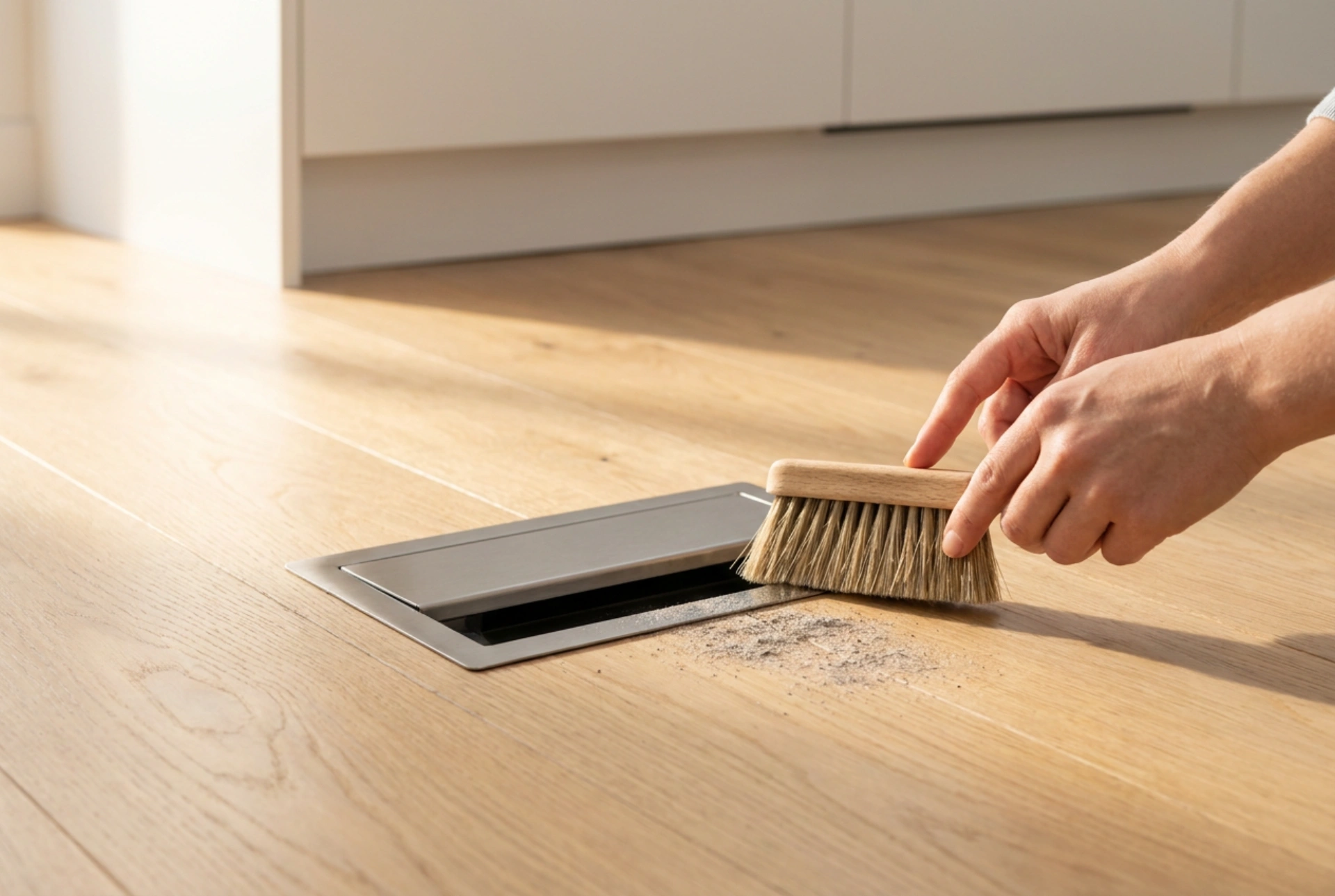


An automatic dustpan sweep inlet, installed at floor level, is one of the most practical features of a central vacuum system, allowing you to sweep dirt directly into the wall without carrying a heavy hose.
The physics of suction: understanding the airflow
To maximize the efficiency of your central vacuum sweep inlet, it is crucial to understand how suction pressure works at floor level. Unlike a standard vacuum nozzle that concentrates airflow through a narrow, sealed opening, an open sweep inlet relies on a localized low-pressure zone. When you activate the inlet—usually via a spring-loaded toe switch—air is drawn rapidly into the opening from the immediate surrounding area. Because the suction force drops off significantly just a few centimeters away from the inlet, the mechanical action of sweeping must be synchronized with this airflow to prevent dust from scattering.
Optimal sweeping techniques for maximum collection
Achieving a clean sweep without leaving a residue line requires a specific physical technique rather than relying solely on the machine's suction power. Always sweep debris toward the inlet in a controlled, fluid motion. Avoid aggressive flicking actions with the broom bristles, which launch microparticles into the air before the vacuum stream can capture them. Instead, gather the dirt pile about ten centimeters in front of the inlet, activate the valve with your foot, and use a slow, pushing motion to guide the pile directly into the suction path. For fine dust, hold the broom bristles flat against the floor right at the mouth of the inlet to create a temporary seal, forcing the air to pull through the bristles and clean them simultaneously.
Managing different debris sizes and avoiding blockages
Central vacuum piping systems are designed with sweeping bends to prevent clogging, but the physical limits of the sweep inlet throat must be respected. The inlet opening is narrow to maintain high static pressure. Only sweep dry, loose particles such as dust, crumbs, pet hair, and small dry spills like salt or sugar. Avoid sweeping large, rigid items like wooden toothpicks, large coin-sized debris, or wet clumps of dirt. These objects can become wedged in the short 90-degree transition elbow directly behind the wall plate, creating a structural anchor point where hair and dust will subsequently collect, eventually choking the suction line.
Routine maintenance of the inlet seal and valve mechanism
To ensure your sweep inlet maintains its airtight seal when closed, periodic maintenance of the mechanical parts is necessary. A leaking sweep inlet hissed during general vacuum use, which bleeds system pressure and reduces suction at your primary hose outlets. Every few months, inspect the rubber gasket lining the sweep door. Wipe away micro-dust and pet dander from the seal using a damp microfiber cloth, as dry grit prevents a perfect airtight closure. If the spring-loaded kick-switch feels stiff or squeaks, apply a dry PTFE-based lubricant to the hinge mechanism. Avoid wet oils or grease, as they attract dust particles and create a sticky paste that will eventually jam the switch.