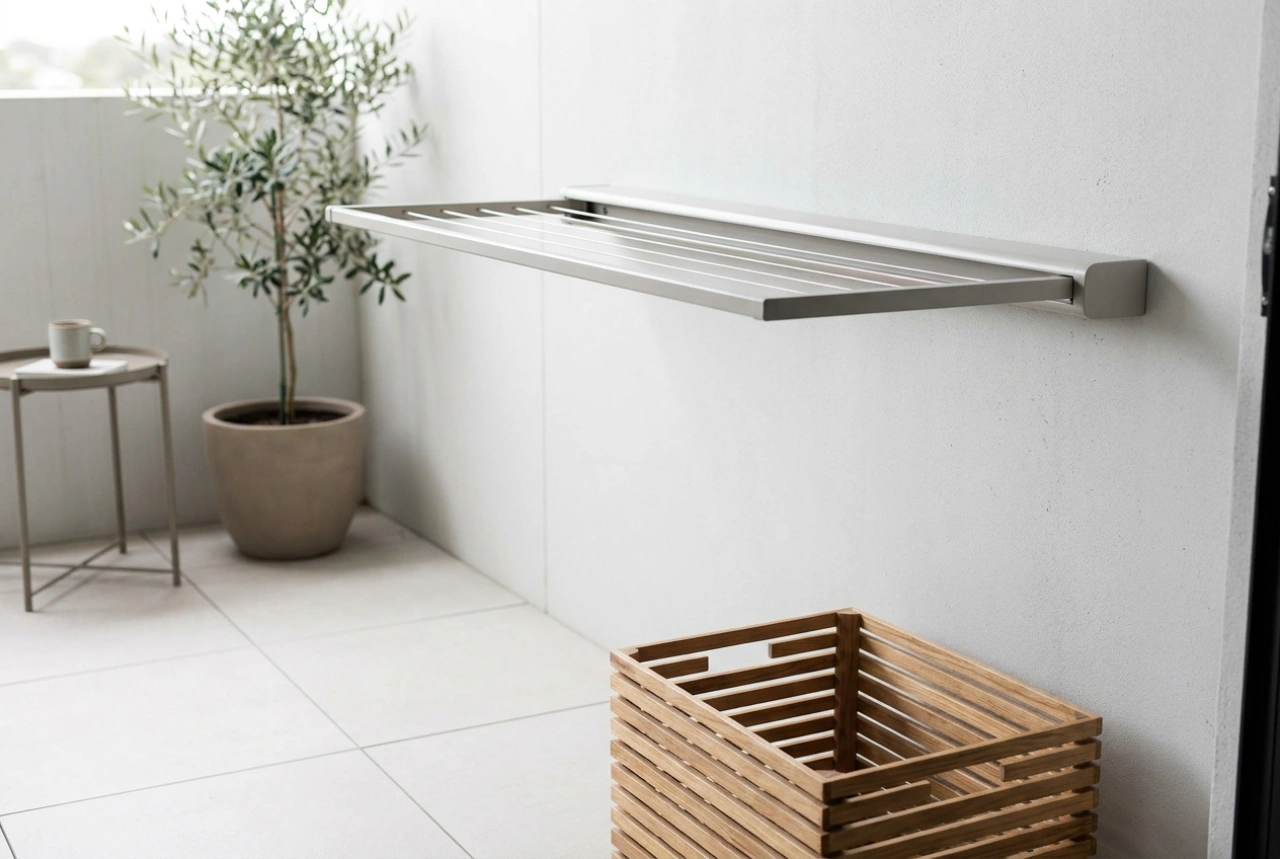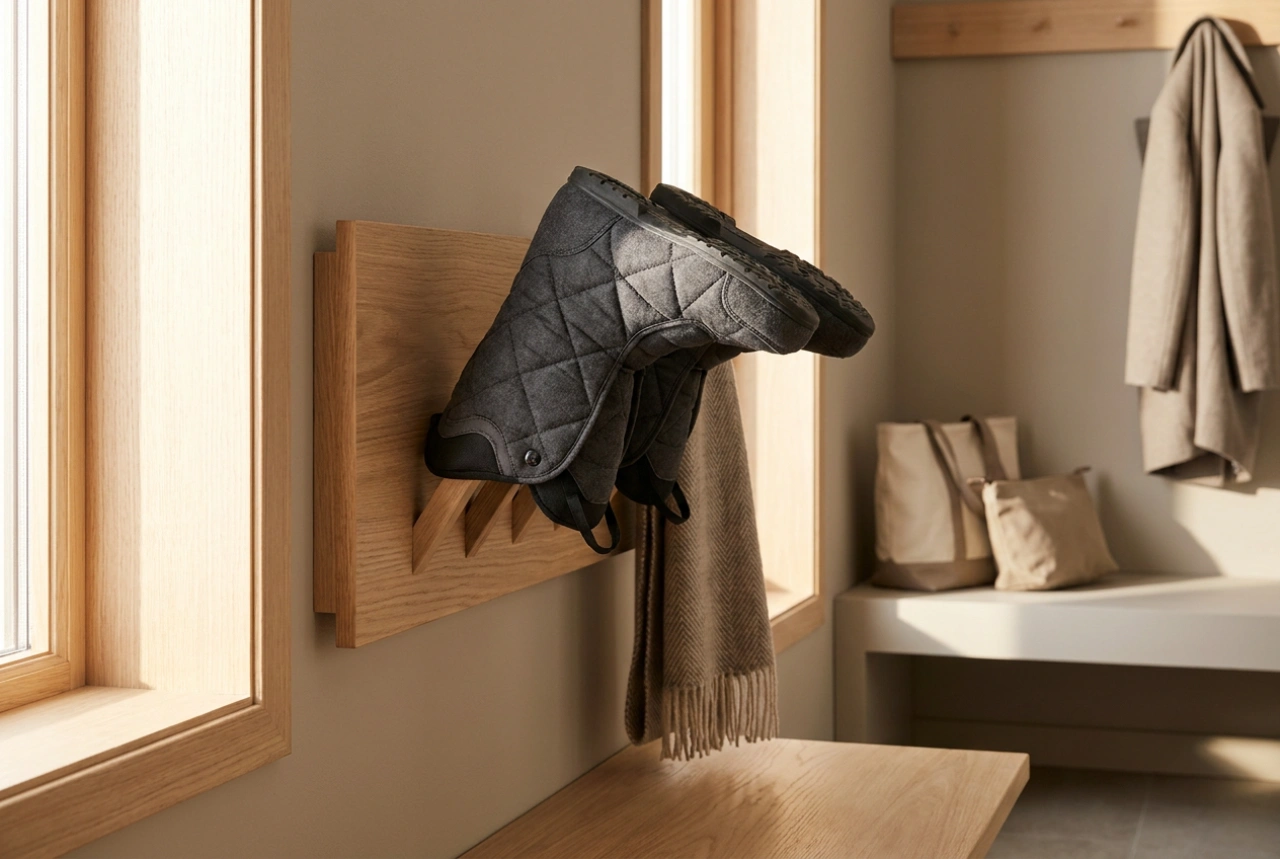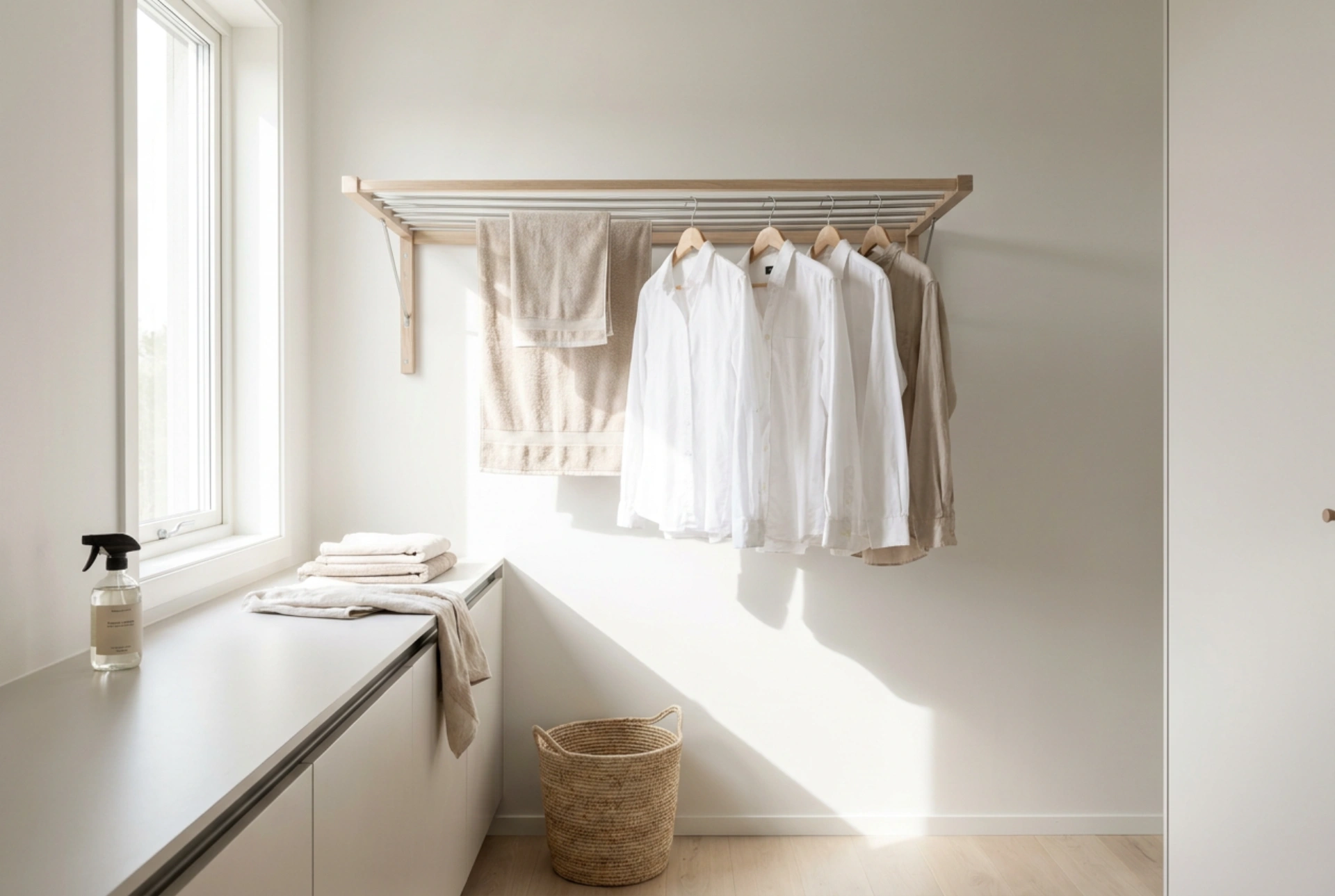


Drying laundry indoors on a wall-mounted rack requires a balance of physics, airflow, and ambient temperature to prevent the development of a damp, musty smell.
The Chemistry of the Musty Odour
The unpleasant, stale smell often associated with indoor-dried laundry is caused by the rapid proliferation of environmental bacteria and fungi, particularly Moraxella osloensis. These micro-organisms thrive in damp, dark, and stagnant conditions. When textiles remain wet for more than ten to twelve hours, these bacteria digest the organic residues from sweat, sebum, and detergents left on the fibres, producing volatile organic compounds as a byproduct. To stop this process, you must accelerate the evaporation rate so the textile fibres reach a dry state before the bacterial spores can colonise and multiply.
Optimising the Mechanics of a Wall-Mounted Rack
A wall-mounted drying rack is an excellent space-saving solution, but its placement and utilization directly impact drying efficiency. Because warm air naturally rises due to lower density, mounting the rack higher on the wall exposes the wet laundry to warmer air zones within the room. However, air close to the ceiling can quickly become saturated with moisture, halting further evaporation. To counteract this, always utilise the full extension of the rack and maintain a minimum gap of five centimetres between hung garments. Hanging items too closely creates a microclimate of high humidity, trapping moisture between the layers of fabric.
The Roles of Air Circulation and Temperature
Evaporation is a cooling process that requires energy and air movement. In a sealed room, the boundary layer of air directly surrounding wet fabric quickly reaches one hundred percent relative humidity, stopping the drying process entirely. You must disrupt this boundary layer. Opening windows to establish a cross-breeze introduces drier air and flushes out the moisture-laden air. If natural ventilation is limited, positioning a simple mechanical fan to blow air horizontally across the lower path of the rack creates turbulent airflow, significantly lowering the drying time. Keep the room temperature at a consistent eighteen to twenty degrees Celsius to provide the necessary thermal energy for the water molecules to transition from liquid to gas.
Techniques for Hanging and Material Preparation
How you prepare and hang the laundry determines how quickly the water can escape the fabric structure:
- Maximise Surface Area: Shake out every garment vigorously before hanging to release folded layers and align the fibres. Hang heavy items, like jeans or thick cotton sweaters, on the outer rails of the wall rack where air circulation is strongest.
- Gravity and Water Pooling: Water naturally migrates downward through the fabric due to gravity. Hang garments upside down by their hems using non-marking clips. This prevents moisture from pooling in thick waistbands, pockets, and shoulder seams, which are traditionally the slowest parts to dry.
- Optimise the Spin Cycle: Effective drying begins in the washing machine. Select a spin speed of at least one thousand to twelve hundred revolutions per minute to mechanically extract the bulk of the water before the clothes ever reach the wall rack.
Maintaining the Drying Environment
Regular maintenance of the drying area prevents latent humidity build-up in the surrounding walls and furniture. Always wipe down the metallic or wooden rails of your wall-mounted rack after use to prevent moisture from pooling in the joints. If drying large loads in a confined space, running a compressor-based dehumidifier nearby will actively extract moisture from the air, maintaining a low relative humidity and ensuring a fast, odour-free drying cycle every time.