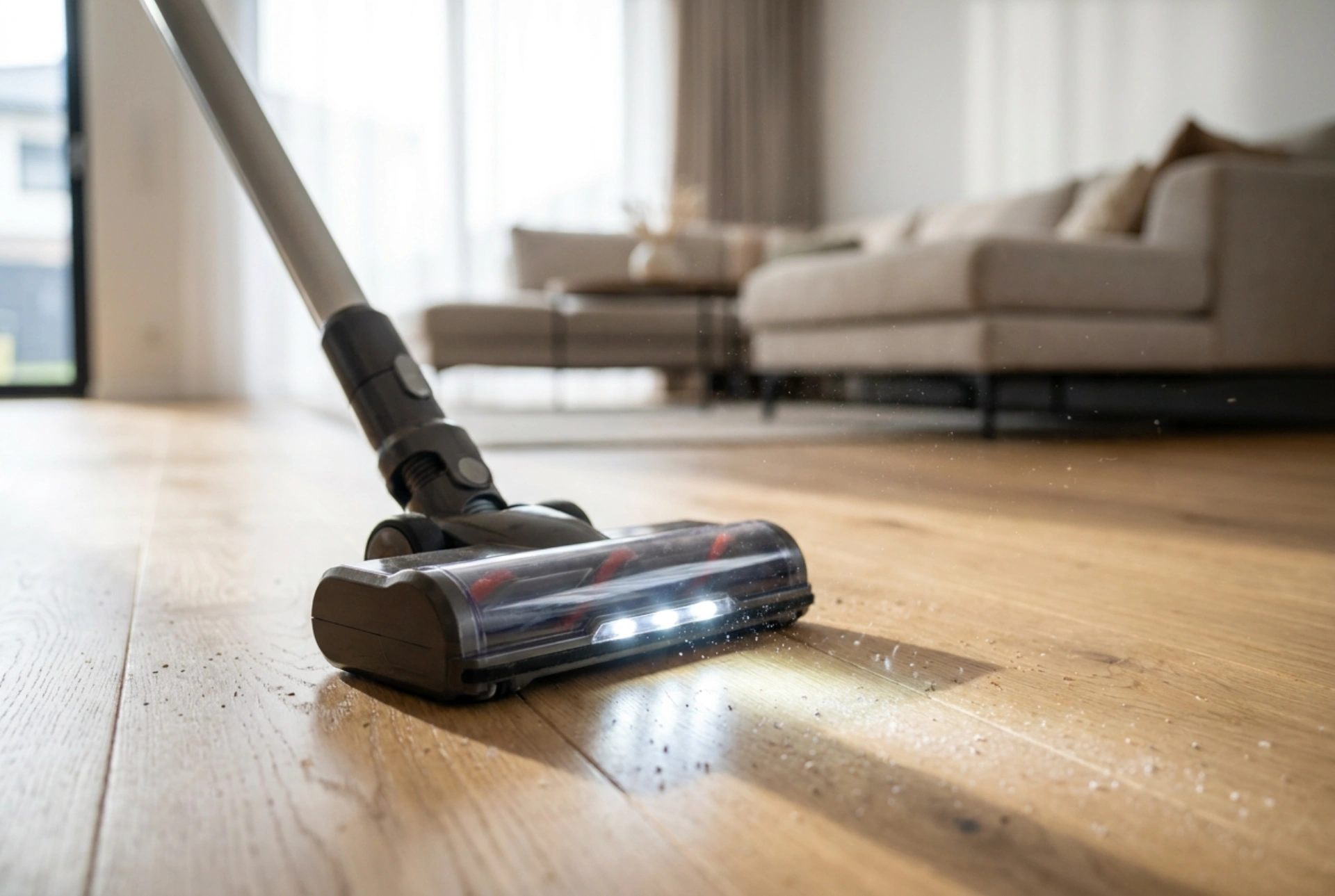


Low-angle LED headlights on a vacuum cleaner are not just a design trend; they use precise optical physics to expose microscopic dust particles that remain invisible under normal overhead lighting.
The Physics of Grazing Light and Contrast
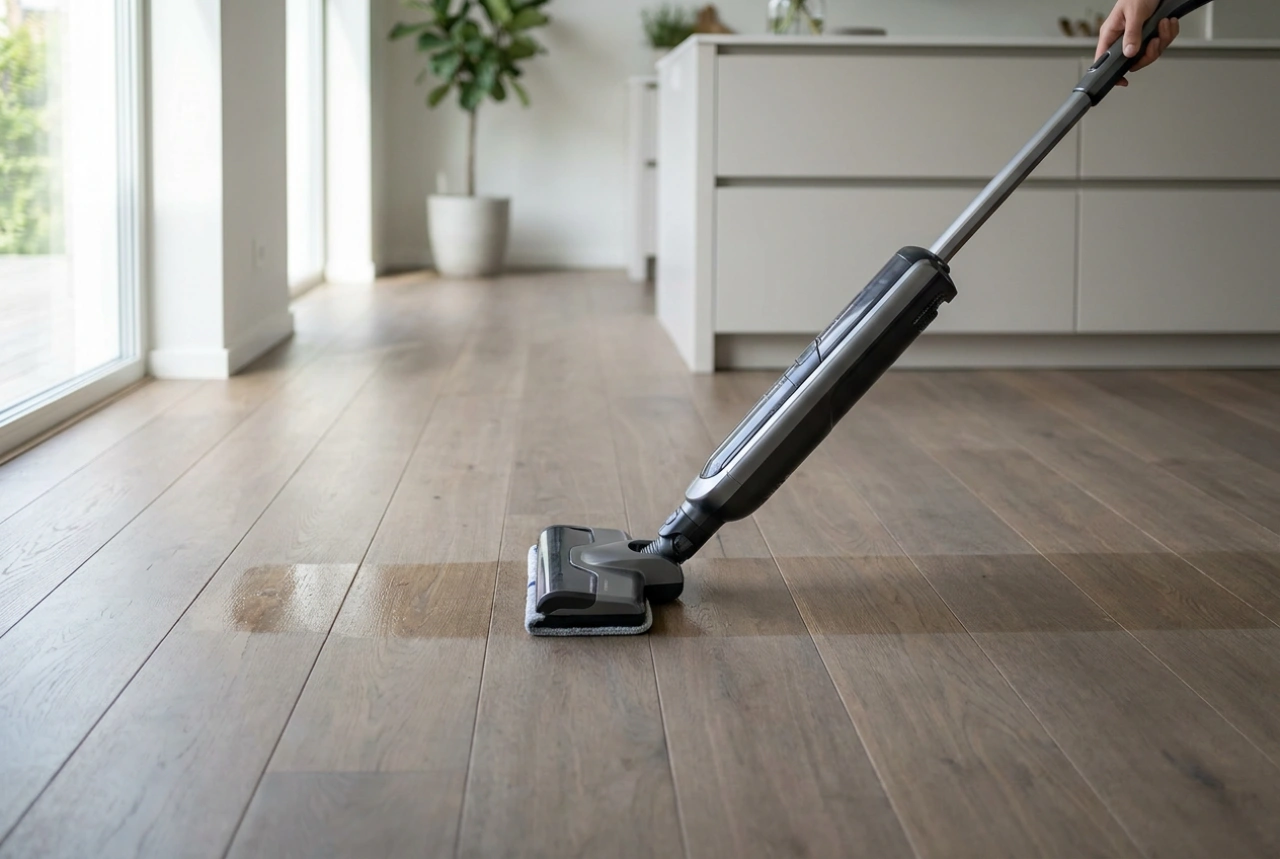
Our eyes struggle to detect fine dust, pet dander, and hair on flat surfaces when light comes from above. Overhead fixtures distribute illumination evenly, which minimizes the shadows cast by tiny particles. When you position a light source mere millimeters from the floor, you introduce grazing illumination. This low angle of incidence causes even the smallest speck of dust to cast a long, high-contrast shadow. These elongated shadows make the particles appear significantly larger and more defined against the floor surface, allowing you to target dirt with absolute precision.
Revealing Microscopic Particles and Hidden Allergens
The human eye is highly sensitive to contrast, and LED light operating in a cool white spectrum (around 5000 to 6500 Kelvin) maximizes this effect. This specific temperature range highlights fine organic matter, dust mite debris, and pollen on hard floors and low-pile carpets. Areas under furniture, dark corners, and deep closet spaces often harbor thick layers of unseen allergens. By casting a bright, focused beam directly ahead of the vacuum head, you eliminate guesswork, ensuring that every pass with the machine actually sanitizes the surface rather than merely redistributing debris.
Optimal Cleaning Techniques with Illuminated Vacuum Heads
To maximize the efficiency of an LED-equipped vacuum, you must adjust your physical technique and the sequence of your cleaning routine. Consider the following adjustments to your process:
- Dim the Ambient Room Lights: Reducing the brightness of overhead lamps enhances the contrast generated by the vacuum's low-angle LEDs, making hidden dust stand out vividly.
- Adjust the Speed of Your Strokes: Use slow, deliberate forward and backward movements. Rushing the vacuum head prevents the light from revealing areas you might have missed and reduces suction efficiency.
- Adopt a Systematic Grid Pattern: Move in overlapping parallel lines. The LED beam illuminates a specific width; keeping your passes slightly overlapping ensures no dark zones are left uncleaned.
- Prioritize Low-Clearance Zones: Use the illumination to guide the nozzle carefully around table legs, baseboards, and under sofas, where dust bunnies tend to accumulate due to static electricity and drafts.
Maintaining the Optical Integrity of Your Vacuum
An accumulation of fine dust on the LED lens itself will quickly scatter the light beam, reducing its contrast-enhancing capabilities. Periodically wipe the clear plastic cover of the light strip with a dry, anti-static microfiber cloth to prevent static attraction from pulling dust back onto the lens. Avoid using harsh chemical solvents on the lens casing, as these can cloud the plastic over time and permanently diffuse the light beam, rendering the grazing illumination effect ineffective.