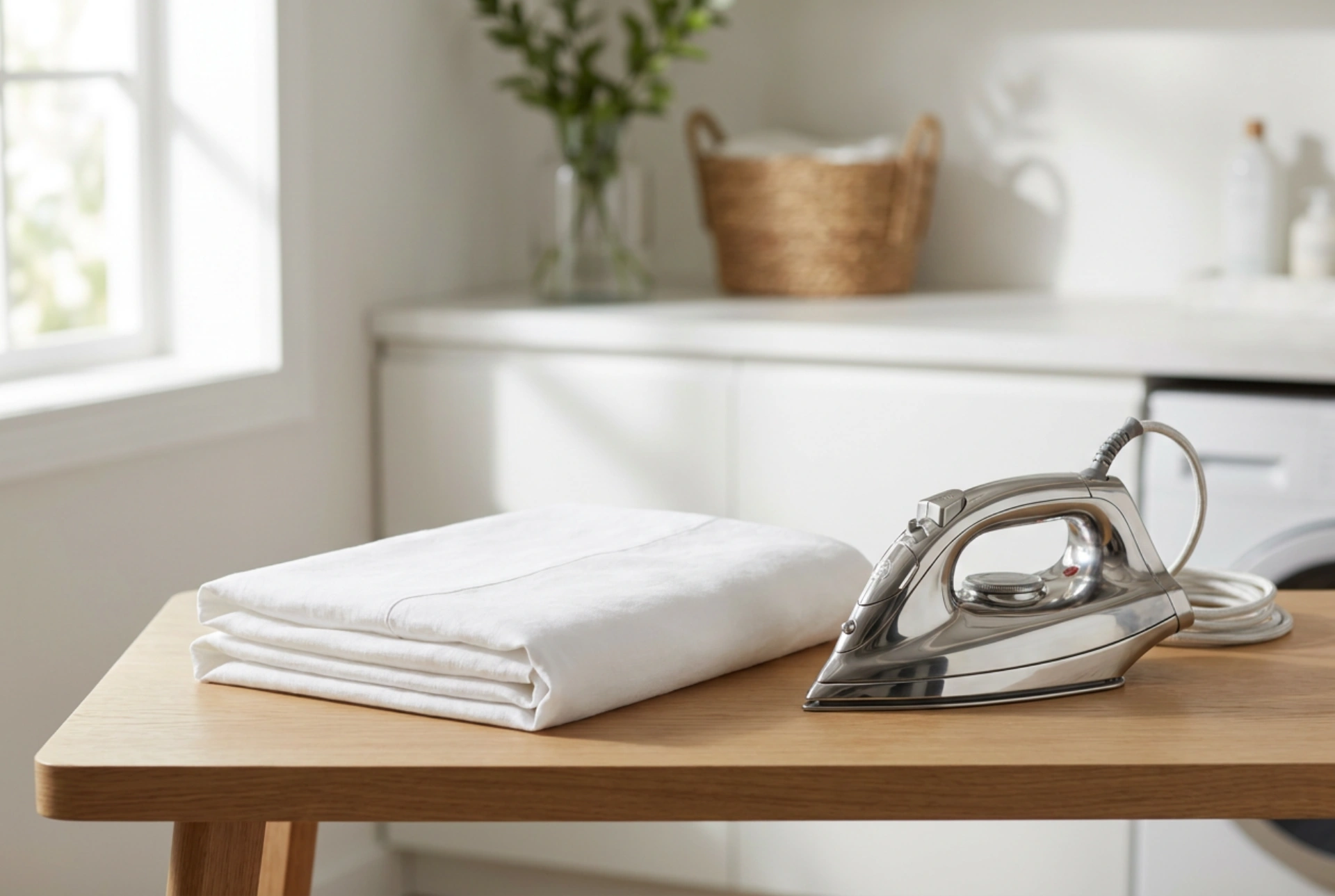


Wrinkled bed linen is more than just an aesthetic issue; crumpled fibres trap air unevenly and retain bodily moisture, reducing both sleep comfort and fabric lifespan. Achieving a perfectly flat, hotel-like finish requires understanding the physics of heat, moisture, and mechanical tension to reform molecular bonds within the fabric.
The Molecular Physics of Fabric Wrinkling
To understand how to flatten bed sheets effectively, one must look at the molecular structure of natural fibres like cotton and flax (linen). These materials consist of cellulose chains held together by hydrogen bonds. When bed sheets are washed, water molecules penetrate the crystalline structure of the cellulose, breaking these weak hydrogen bonds and allowing the polymer chains to slide past each other. As the fabric dries, new hydrogen bonds form in random, distorted positions, resulting in wrinkles.
Eliminating these wrinkles requires reversing this process. We must introduce moisture (to act as a plasticiser and loosen the bonds), apply heat (to increase molecular mobility), and apply physical tension (to align the chains parallel to each other). Once the fabric cools and dries under tension, the hydrogen bonds lock into a flat, smooth configuration.
The Home Rotary Ironer: Mechanical Efficiency and Pressure
A home rotary ironer, historically known as a mangle, is the most efficient tool for treating large flat textiles like bedsheets. It utilizes a heated shoe and a rotating padded roller to apply consistent mechanical pressure, heat, and tension simultaneously.
For the best results with a rotary ironer, preparation of the textiles is crucial. Never iron bone-dry sheets. The fabric should possess approximately 15% to 20% residual moisture. If the sheet is already dry, mist it evenly with demineralised water and roll it up for 30 minutes to allow the moisture to distribute evenly through the fibres. When feeding the sheet into the machine, hold the leading edge taut across its entire width. Feed the fabric strictly parallel to the roller threads. If the sheet enters at an angle, the rotational force will stretch the fabric diagonally, creating permanent diagonal creases along the seams.
Manual Ironing: The Layered Tension Technique
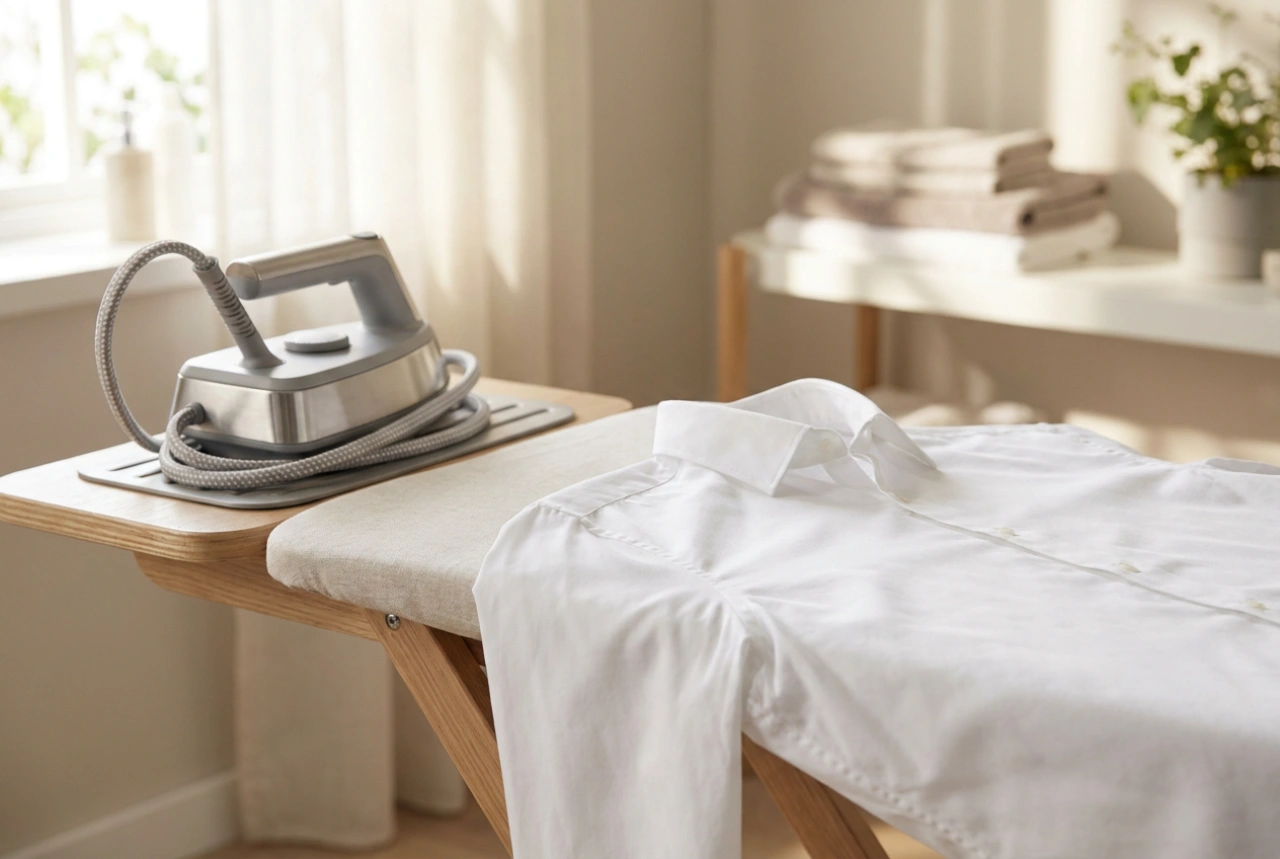
If you do not own a rotary ironer, you can achieve similar precision with a high-mass steam iron using the layered tension method. Ironing a double-sized sheet flat on a standard ironing board can be frustrating without a structured approach.
First, fold the damp sheet lengthwise into halves or quarters, ensuring the selvages (the self-finished edges) are perfectly aligned. Ironing through multiple layers is highly effective because high-pressure steam easily penetrates several millimetres of cotton. Always guide the iron in straight, longitudinal strokes parallel to the warp threads (the lengthwise yarns). Avoid circular or diagonal motions, as these stretch the weaker weft threads, leading to wavy edges and misshapen corners. Apply firm downward pressure, moving at a steady pace to allow the heat to dry the moisture before moving to the next section.
Temperature Guidelines for Different Fibres
The success of the pressing process depends heavily on matching the thermal energy to the specific polymer structure of the textile:
- Pure Linen: Requires the highest thermal energy (200°C to 220°C) and substantial moisture. Linen fibres are highly crystalline and stiff, requiring maximum heat to reform bonds.
- Pure Cotton: Opt for high heat (180°C to 200°C) with continuous steam. Cotton is slightly more pliable than linen but still requires significant energy to flatten.
- Polyester-Cotton Blends: Limit the temperature to 130°C to 150°C. Synthetic polyester fibres are thermoplastic; excess heat will melt the fibres, causing a permanent shiny glaze and weakening the fabric structure.
The Post-Ironing Curing Phase
A common error is folding and immediately storing freshly ironed bed linen in a closed cupboard. When fabrics emerge from a rotary ironer or steam iron, they are still warm and contain trace amounts of vaporised moisture. The cellulose fibres are highly susceptible to deformation at this stage. Storing them immediately will introduce new, deep fold creases.
Allow the sheets to cure. Drape the ironed sheets over a drying rack, a rail, or the back of a clean chair for at least 15 to 30 minutes. This allows the fibres to cool down completely and dissipate any remaining moisture, permanently locking the hydrogen bonds in their flat, smooth state.