

Steam cleaning offers a highly efficient way to sanitize garments and relax fibers, but improper application of high temperatures can lead to irreversible shrinkage and fiber degradation.
The Physics of Steam on Delicate Fibers
To safely apply steam to textiles, it is crucial to understand how heat and moisture interact with different fiber structures. Water vapor carries thermal energy that, upon contact with fabric, temporarily breaks the hydrogen bonds holding the polymer chains together in natural fibers like wool and silk. This process relaxes the tension in the threads, allowing wrinkles to fall away. However, excessive heat can cause permanent structural changes. For instance, protein-based fibers such as silk and wool will denature and shrink if exposed to temperatures above their tolerance thresholds. Synthetic fibers, such as polyester and nylon, are thermoplastic polymers that will glaze, melt, or deform permanently if the steam temperature exceeds their softening point.
Managing Distance and Flow Rate
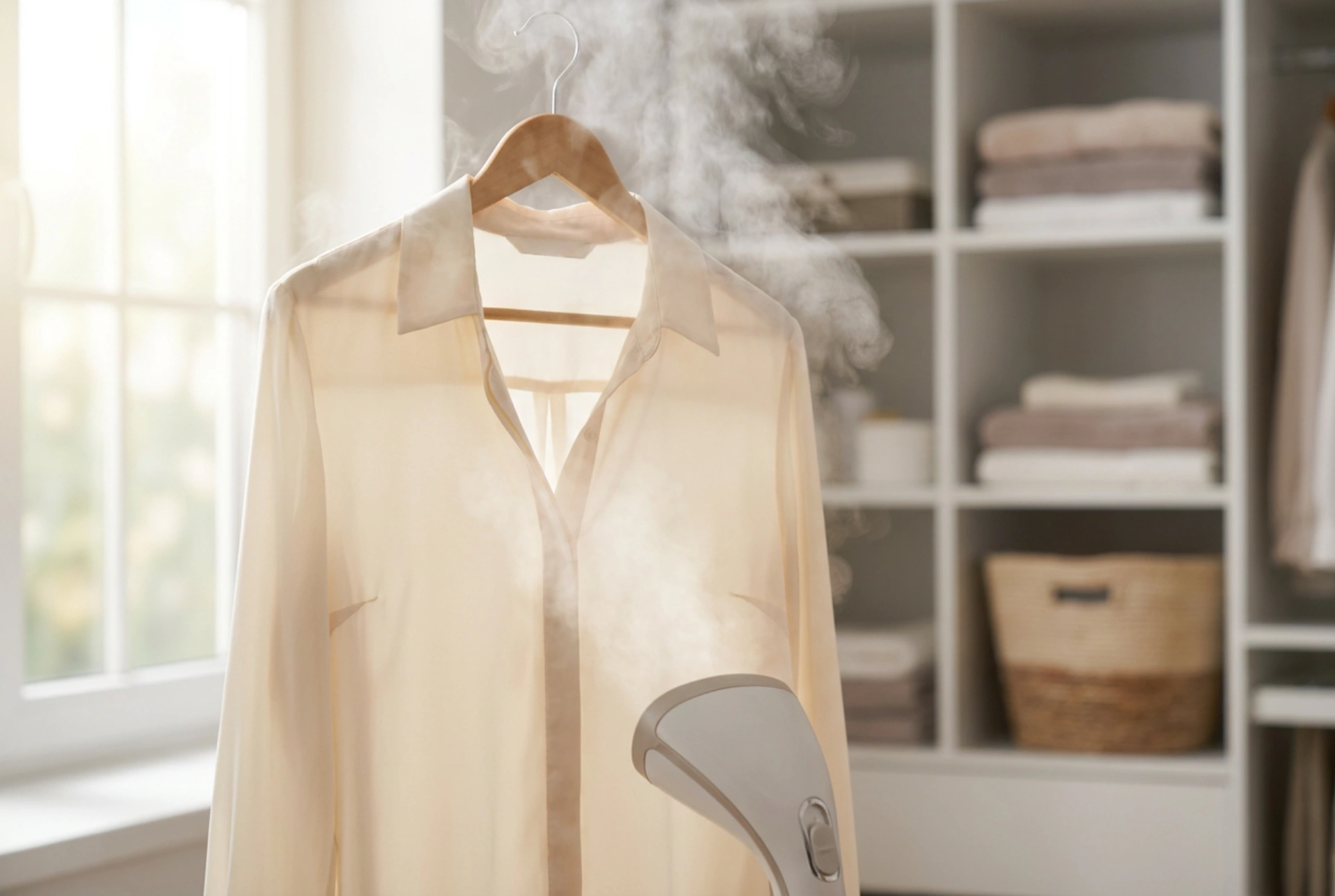
The key to safe steaming lies in controlling the distance between the steam nozzle and the fabric surface, as well as managing the intensity of the steam flow. For highly sensitive materials like silk, chiffon, and fine synthetics, you must maintain a physical gap of at least ten to fifteen centimeters. Never press the metal plate of a steamer directly against these materials. Instead of pushing the nozzle into the fabric, hang the garment securely and pull it taut from the bottom hem, applying steam in downward, sweeping motions. This technique allows the heated vapor to cool slightly as it travels through the air, delivering enough thermal energy to relax the fibers without reaching the threshold of thermal damage.
Steam Management by Fabric Type
Different materials require specific physical approaches to ensure safety and effectiveness:
- Silk and Chiffon: These delicate protein fibers are highly sensitive to heat and moisture spots. Always steam from the inside out (placing the nozzle inside the garment) to protect the visible outer face from water spotting or uneven fiber relaxation.
- Wool and Cashmere: These fibers are prone to felting when subjected to heat, moisture, and friction simultaneously. Avoid touching the fabric with the steamer head and never brush the fibers while they are hot and damp.
- Synthetics (Polyester, Acrylic): These materials have low melting points. Use the lowest steam setting possible and keep the nozzle moving constantly to prevent localized overheating, which causes a shiny, glazed appearance.
- Velvet and Textured Fabrics: Steam from the reverse side to prevent crushing the pile. Brushing or pressing the face of damp velvet will permanently flatten the raised fibers.
Avoiding Water Spotting and Mineral Deposits
A common issue when using steam is the formation of wet spots or mineral stains on light-colored delicate fabrics. This happens when the steam condenses too quickly or when the appliance spits water. To prevent condensation, ensure the steamer is fully preheated to its operating temperature before bringing it near the garment; if the heating element is too cold, it will emit water droplets instead of dry vapor. Additionally, always use distilled or demineralized water. Tap water contains calcium carbonate and magnesium, which build up inside the heating chamber and can be projected onto the clothing, leaving stubborn white or yellowish mineral rings that are difficult to remove without washing.