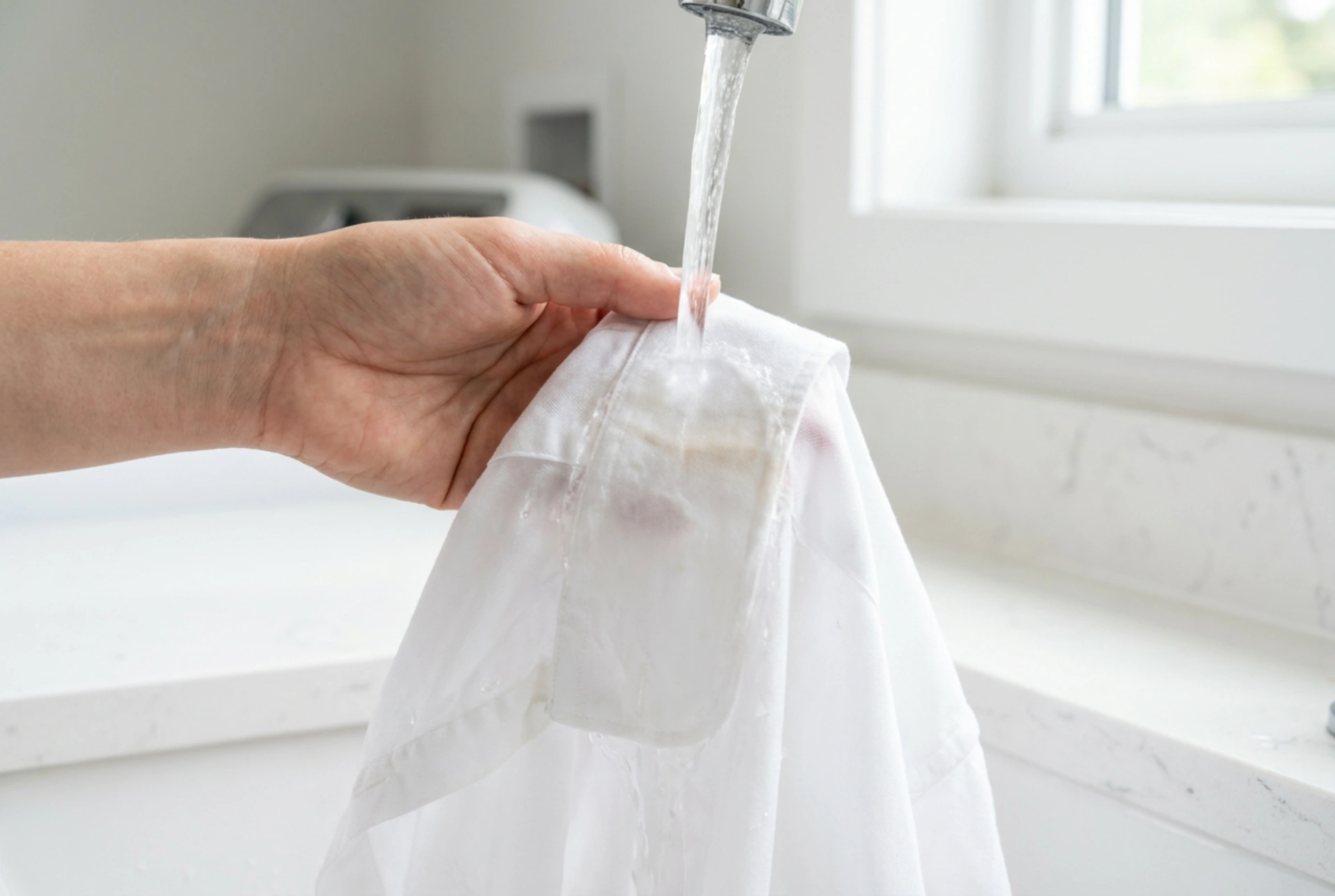


Spotting a fresh coffee stain on a cotton or linen blouse requires immediate action using physical and chemical principles to prevent the pigments from permanently bonding with the fabric fibres. The absolute secret to successful emergency removal lies in utilizing hydrostatic pressure by flushing the stain from the reverse side of the textile.
The Chemistry of Coffee Stains: Why Tannins Bind
Coffee is rich in tannins—highly complex, water-soluble organic compounds belonging to the polyphenol family. These molecules possess a natural affinity for natural fibres like cotton, linen, and silk. When hot coffee contacts a fabric, the thermal energy causes the textile fibres to swell and expand their molecular pore structure. This allows the dark, dissolved pigments to penetrate deep into the microscopic voids of the yarn.
As the fabric cools and dries, the fibres contract, trapping the tannin molecules within the internal matrix of the thread. Over time, these pigments undergo oxidation, forming stable chemical bonds with the cellulose or protein chains of the fabric. This process turns a temporary discolouration into a permanent dye. Therefore, the primary objective of emergency stain removal is to physically evacuate the pigments before this bonding and drying phase can take place.
The Physics of Reverse Rinsing: Hydrostatic Pressure
The most common mistake when dealing with a fresh stain is rubbing or dabbing it from the front. Applying pressure to the face of the fabric forces the suspended coffee particles deeper into the weave and spreads them outward through capillary action, drastically increasing the stained surface area. Instead, the mechanism of reverse rinsing leverages water pressure to reverse this path.
By turning the garment inside out, you align the water flow against the direction of the initial penetration. Running cold water through the backside of the fabric creates a micro-hydrostatic force. This force pushes the coffee molecules outward, freeing them from the fibre gaps and washing them away from the surface without allowing them to migrate into adjacent, clean areas of the garment.
Step-by-Step Protocol for Reverse Flushing
To execute this technique effectively, follow this structured physical process:
- Invert the fabric immediately: Turn the blouse completely inside out to expose the rear side of the stained threads. Do not fold or press the stained area against clean parts of the garment.
- Use high-flow, cold water: Adjust your tap to a steady, strong stream of cold water. Do not use warm or hot water, as elevated temperatures accelerate the chemical bonding of tannins and coagulate any proteins present if the coffee contained milk.
- Target the stream: Hold the inverted fabric directly beneath the tap so the water falls directly onto the back of the stain. Let the kinetic energy of the running water push the pigments out from the front. Continue this for at least sixty seconds or until the runoff water becomes completely clear.
Addressing Additives: Milk, Cream, and Sugars
If your coffee contained milk or cream, you are dealing with a complex stain composed of both organic pigments and lipids (fats). While cold water easily flushes away water-soluble tannins and sugars, it cannot dissolve hydrophobic fats. These lipids will remain trapped in the fibres, eventually turning yellow and rancid.
To break down these fats, apply a small drop of a neutral, surfactant-rich liquid detergent directly to the reverse side of the damp fabric. Surfactants feature a dual molecular structure: a hydrophilic (water-attracting) head and a lipophilic (fat-attracting) tail. The lipophilic tails bind to the milk fats, surrounding them to form micelles that can be easily suspended in water and flushed out during a second cold rinse.
Treating Dried Residues with Oxygen Bleach
If the stain has partially dried before you could access running water, physical flushing alone may not suffice. You will need to employ a mild chemical reaction to break the molecular bonds of the dried tannins. Prepare a solution of lukewarm water and a generic oxygen-based bleaching agent (sodium percarbonate). Unlike chlorine bleach, which damages fabric structure and strips colours, oxygen bleach releases hydrogen peroxide in water. This oxidises the chromophores—the colour-producing parts of the tannin molecules—rendering them colourless and soluble without degrading the cotton or linen fibres.