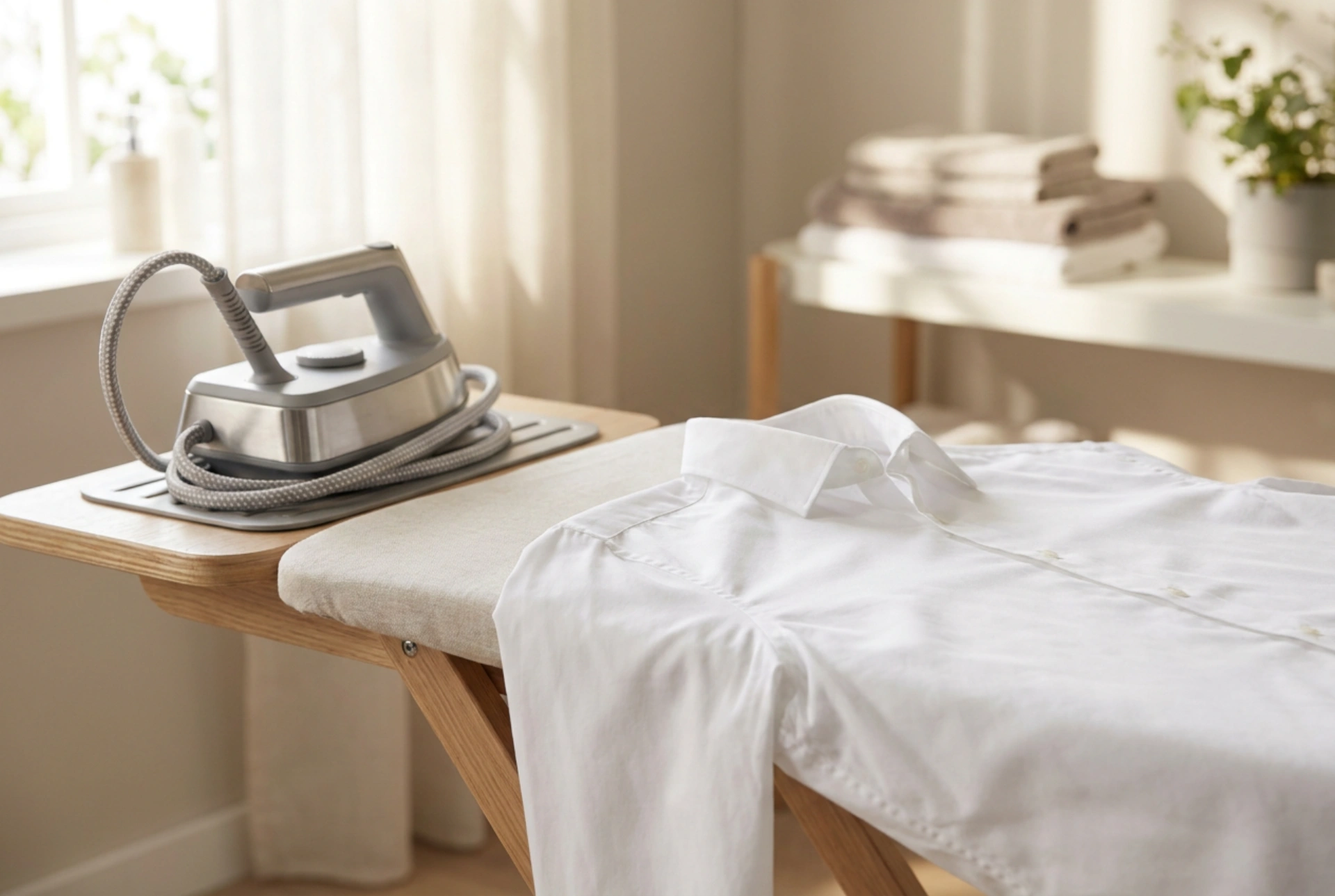


Professional shirt ironing relies on the precise application of high-pressure steam, thermal energy, and a structured mechanical sequence to relax cotton fibres and lock them into a perfectly smooth state. Mastering this process with a steam generator iron allows you to achieve crisp, wrinkle-free results that endure throughout the day.
The Physics of Steam and Cotton Fibre Relaxation
To understand why steam is superior to dry heat, one must look at the molecular structure of plant-based fibres like cotton and linen. Cotton consists of cellulose chains held together by hydrogen bonds. When a shirt creases, these bonds have locked the fibres into a bent, distorted shape. Heat alone can soften these bonds slightly, but it requires excessive temperatures that risk scorching the fabric.
Introducing high-pressure steam completely changes the dynamic. Water molecules from the steam penetrate deep into the amorphous regions of the cellulose, acting as a natural plasticiser. They temporarily break the weak hydrogen bonds between polymer chains. This makes the fibres highly pliable. As the heavy, heated soleplate of the iron passes over the damp fabric, it flattens the relaxed fibres. The heat then rapidly evaporates the residual moisture, allowing new hydrogen bonds to reform in a perfectly flat, aligned state.
Why Steam Stations Outperform Standard Irons
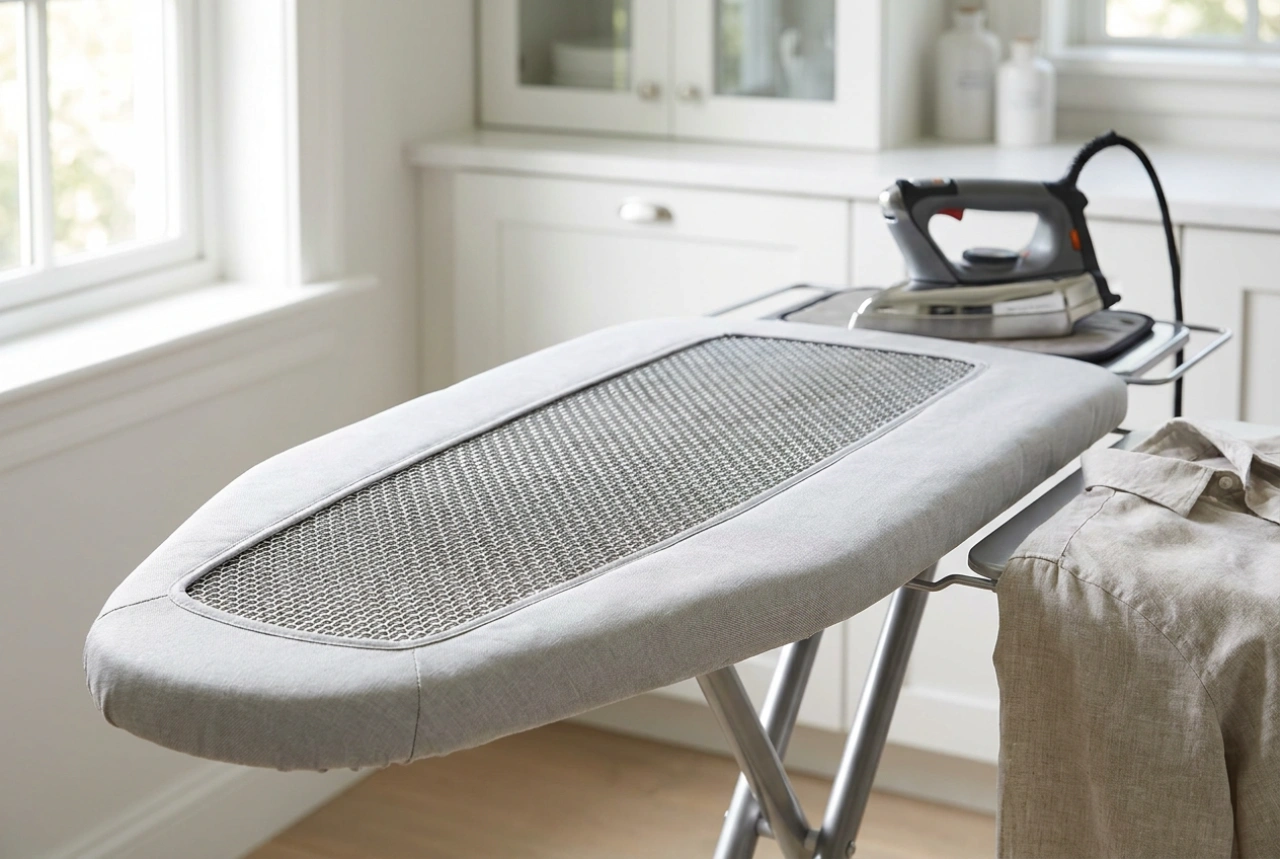
A dedicated steam generator station separates the water reservoir and the steam generation chamber from the iron itself. This design allows for a significantly larger volume of water and a more powerful heating element within the base. The result is continuous high-pressure steam, often rated between 5 and 8 bars, which can penetrate multiple layers of fabric simultaneously.
Standard steam irons rely on gravity-fed water dripping onto a hot soleplate, which often produces wet droplets and uneven steam distribution. Steam stations, conversely, supply dry, pressurized steam through a hose. This dry steam possesses higher thermal energy, which prevents the fabric from becoming overly saturated while ensuring rapid heat transfer. The lighter weight of the iron unit itself also reduces wrist fatigue, allowing for more precise mechanical pressure during long sessions.
The Sequential Ironing Method: Form Follows Function
The order in which you iron a shirt is critical. If you iron the large body panels first, they will inevitably crease while you manipulate the sleeves and collar. The golden rule of shirt ironing is to work from the smallest, most structured parts to the largest flat areas.
- The Collar: Start on the underside, working from the points inward toward the centre. This prevents fabric from bunching up at the visible outer corners. Flip the shirt and repeat on the outside. Never iron the fold of the collar directly, as this weakens the fibres and creates an artificial crease that ruins the natural roll of the collar.
- The Cuffs: Unbutton the cuff and lay it flat on the board. Iron the inside first, then the outside, moving from the edges inward to prevent puckering around the seams. Carefully iron around the buttons using the tip of the soleplate.
- The Sleeves: Lay the sleeve flat on the board, using the seam as a guide to align the fabric. Iron from the shoulder seam down to the cuff, smoothing out any double folds. If you prefer a seamless sleeve, position the fold slightly off the edge of the board to avoid setting a sharp crease.
- The Yoke: Place one shoulder of the shirt over the narrow tip of the ironing board. Iron from the outer shoulder seam toward the centre. Repeat on the other side.
- The Body: Finish with the main panels. Start with the buttonhole placket, then move to the back, and finish with the button placket. The high-pressure steam from your station allows you to glide quickly over these large sections without needing to apply heavy physical downward pressure.
Maintaining Soleplate Efficiency and Limescale Control
The efficiency of a steam station depends heavily on heat distribution and smooth gliding. High-quality soleplates utilize ceramic or anodized aluminium coatings to minimize friction. Friction creates drag, which can pull the fabric and introduce new micro-creases during the stroke.
Over time, minerals dissolved in tap water, primarily calcium and magnesium carbonates, precipitate inside the steam chamber when heated. This limescale buildup clogs the steam vents, reducing pressure and occasionally spitting brown mineral deposits onto clean fabrics. To prevent this, regularly run the manufacturer-recommended decalcification cycle. Never use chemical descalers intended for kettles, as they can corrode the internal linings of the pressurized boiler.