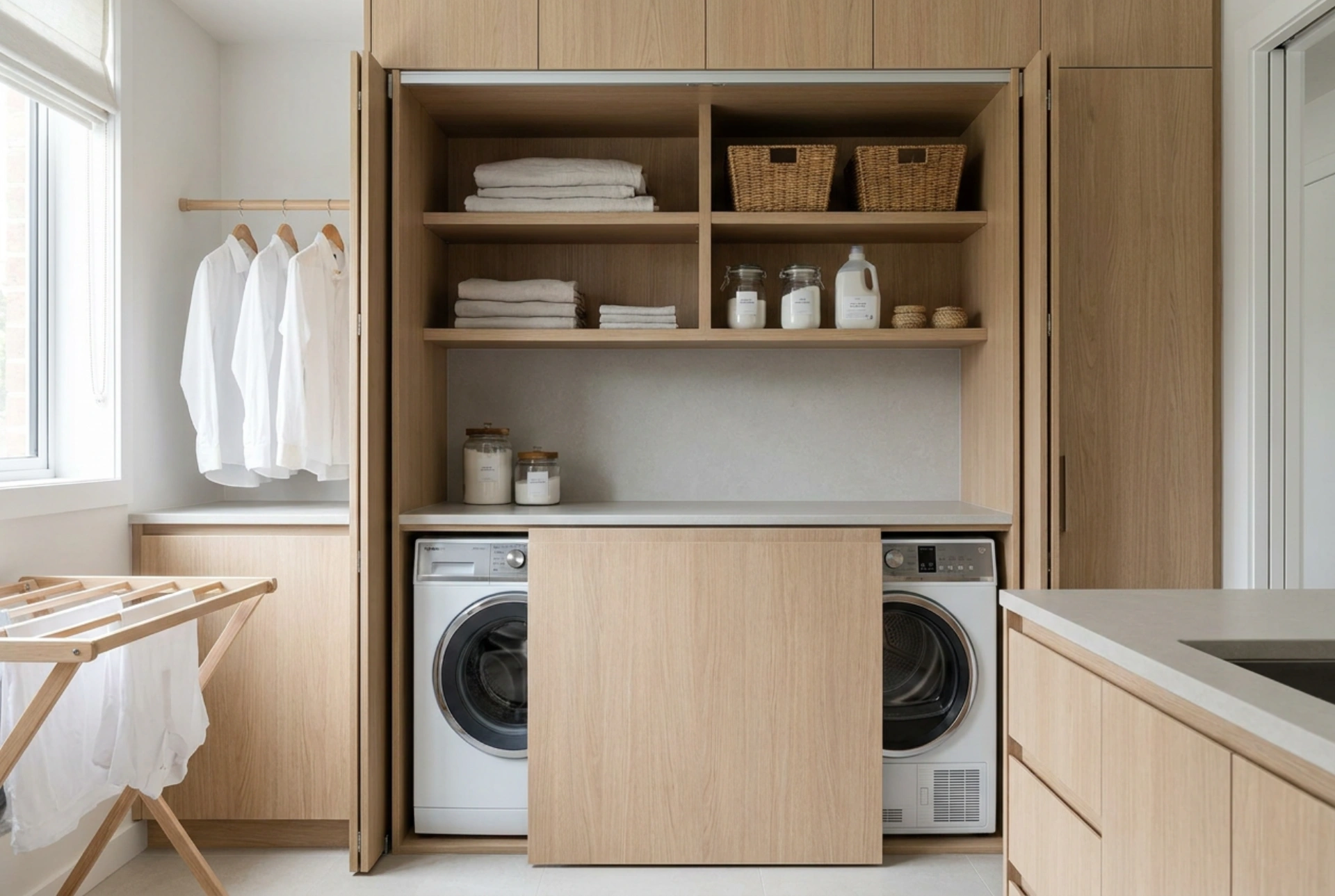


Integrating a washing machine and tumble dryer into custom cabinetry requires more than precise measurements; it demands careful planning for kinetic energy, heat, and moisture. Understanding the physical and thermodynamic requirements of these appliances ensures quiet operation, safety, and longevity for both the machines and your joinery.
Managing Kinetic Energy and Cabinetry Vibrations
During the spin cycle, a washing machine can reach speeds of up to 1400 RPM, generating significant kinetic forces. If the appliance is fitted too tightly within a carcass, these vibrations transfer directly to the timber, leading to structural fatigue, loosening joints, and amplified noise throughout the home. To prevent this mechanical transfer, follow these structural rules:
- Side Clearances: Maintain a minimum clearance of 20 mm on either side of the washing machine. This prevents the metal casing from making direct contact with the wooden side panels when the drum suffers from temporary imbalance.
- Sub-base Stability: Place the appliances on a solid, level floor. If the cabinetry rests on a timber subfloor, reinforce it from below to prevent flexing. A high-density rubber anti-vibration mat (typically 10 mm to 20 mm thick) should be placed under the machine to absorb shock waves and convert kinetic energy into heat.
- Freestanding Carcass: Ensure that the cabinetry housing the appliances is securely anchored to the structural masonry wall behind it using heavy-duty L-brackets, rather than relying solely on floor stability.
Thermodynamic Clearance and Ventilation
Tumble dryers—particularly condenser and heat pump models—generate significant ambient heat and moisture during their cycles. A heat pump dryer works by extracting moisture from clothes and condensing it, a process that requires a continuous supply of cool intake air. Without proper circulation, the temperature within the cabinet will rise, forcing the appliance to run longer, consume more electricity, and potentially overheat.
To ensure adequate thermodynamic exchange, design a dedicated airflow path. The base plinth of the cabinetry must feature an integrated ventilation grille with a minimum free airflow area of 200 cm². Leave a rear gap of at least 50 mm between the back of the appliance and the wall. This allows cooler air to be drawn in from the floor level, rise as it absorbs heat from the appliance casing, and escape through a corresponding vent or open channel at the top of the utility column.
Structural Integrity of Vertical Stacked Configurations
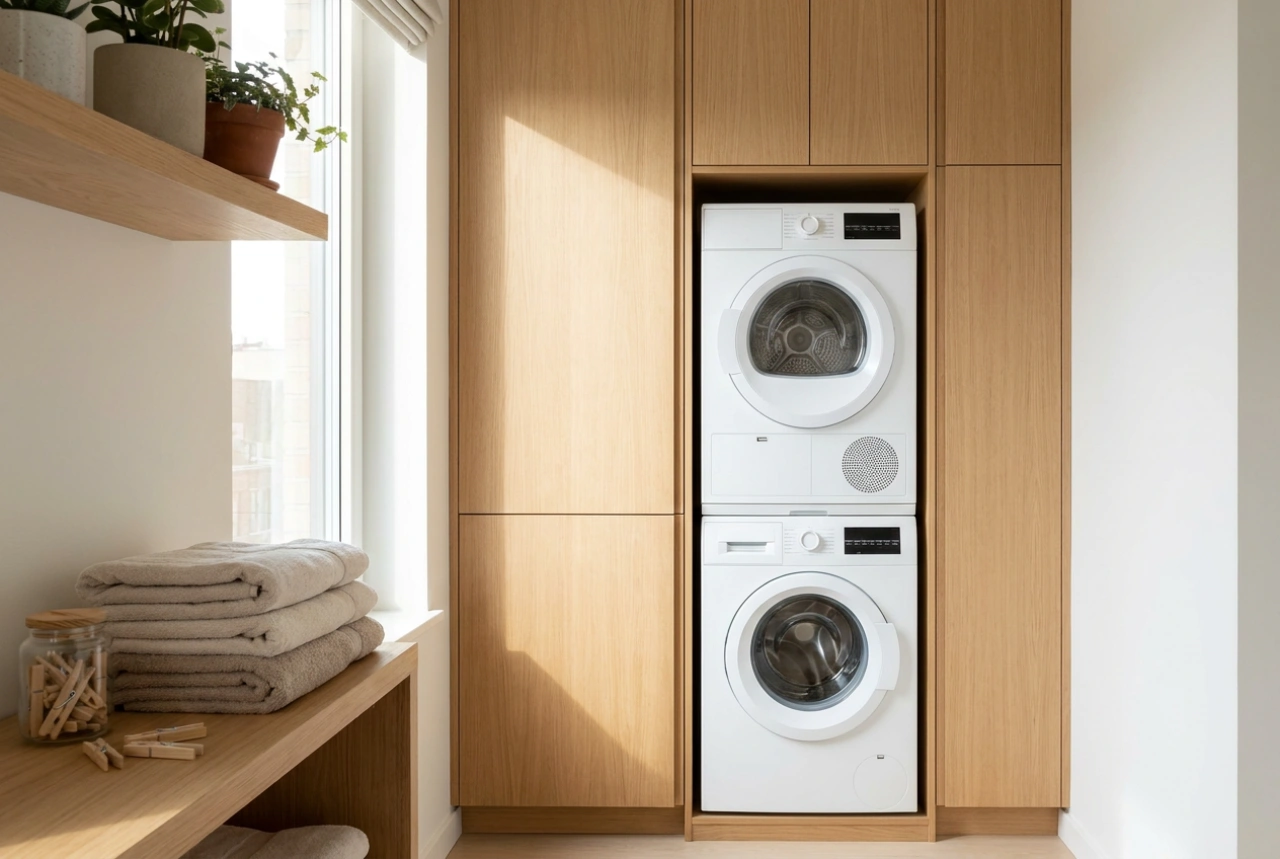
When floor space is limited, stacking a dryer on top of a washing machine is a highly efficient solution. However, the physical forces involved dictate a strict vertical order. The washing machine must always remain at the base because of its weight (often exceeding 70 kg when empty due to internal concrete counterweights) and the dynamic forces generated during spinning.
Never rest a dryer directly on top of a washing machine without a dedicated stacking kit. These kits act as a stabilizing physical interface, absorbing micro-vibrations and distributing the vertical load evenly across the washing machine\'s structural steel frame. If you prefer to house the dryer on an independent shelf within the cabinet carcass to avoid contact with the washer, use 25 mm thick marine plywood or moisture-resistant MDF. This shelf must be supported by heavy-duty steel shelf supports anchored directly into the vertical side panels of the carcass to resist shear forces.
Ensuring Access to Utilities and Maintenance Zones
An elegant built-in design must not compromise practical accessibility. Appliances require regular maintenance and must be easily disconnectable in the event of an emergency. When planning the layout, ensure that access to water valves, electrical sockets, and waste pipes is positioned in an adjacent cupboard or behind a easily removable back panel. Never place sockets directly behind the appliances, as this prevents the machines from sitting flush and blocks emergency access.
Furthermore, consider the physical mechanics of using the appliances. The doors of both machines must be able to swing open at least 135 degrees, preferably 180 degrees, to allow for unobstructed loading and unloading. If you install cabinet doors to completely hide the appliances, choose 110-degree or 170-degree zero-protrusion hinges so the inner washing doors can open fully without colliding with the outer cabinet joinery.