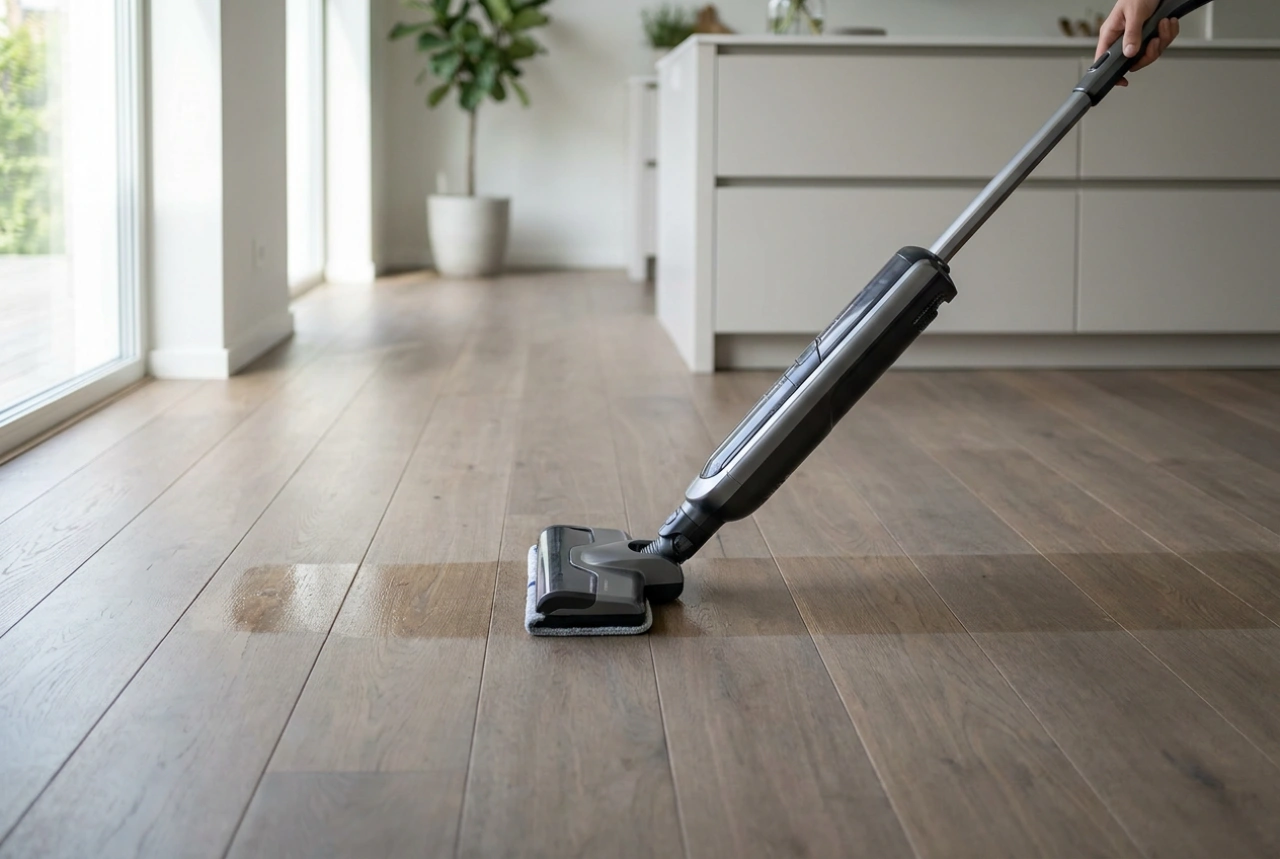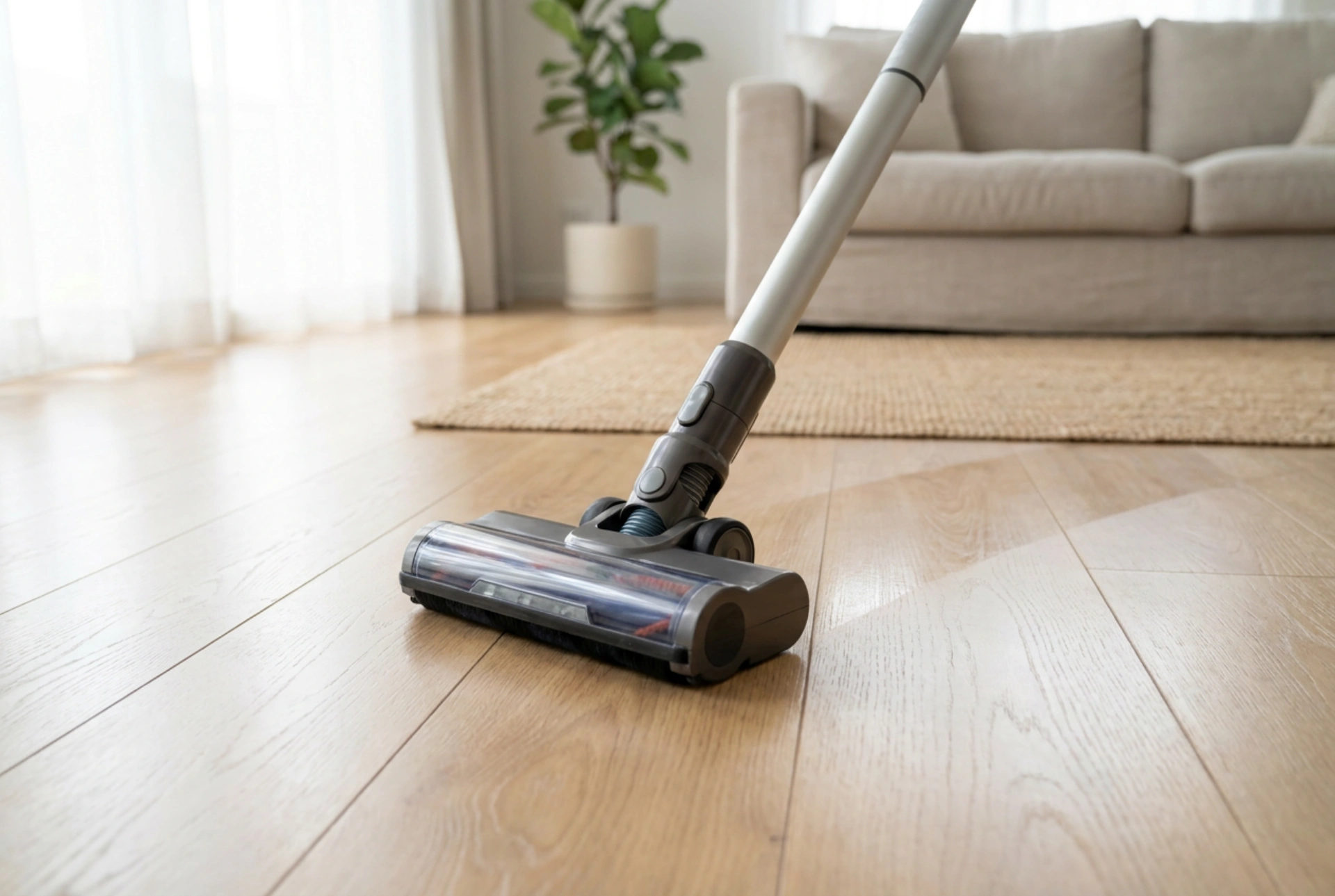


Achieving a streak-free finish with a cordless vacuum mop requires understanding the delicate balance between surface chemistry, water hardness, and the mechanical extraction limits of your device.
The Science of Streaks: Why Residue Forms
Streaks on hard floors are rarely caused by the floor being dirty; instead, they are the result of suspended solids drying on the surface. When you wash a floor, water acts as a carrier for dirt and cleaning agents. If the water evaporates before the vacuum mop can physically extract it, the dissolved minerals and surfactants (detergents) are left behind as visible microscopic deposits.
Two main culprits drive this phenomenon: water hardness and surfactant overload. Hard water contains high concentrations of calcium and magnesium ions. When the water evaporates, these minerals crystallise into a dull white film. Surfactants, on the other hand, are designed to lower the surface tension of water to trap grease. If you use too much cleaning solution, these molecules form a sticky, non-volatile layer that attracts dust and reflects light unevenly, creating unsightly smudges.
Optimising Water Quality and Dilution Ratios
To eliminate mineral deposits, the quality of the water you put into the clean water tank is critical. If your household tap water is moderately to highly hard, switching to demineralised or distilled water will immediately resolve calcium-based cloudiness. Because demineralised water lacks dissolved minerals, it has a higher capacity to dissolve and hold dirt particles during the brief contact time with the floor.
Furthermore, detergent dosing must be precise. Traditional mop buckets allow for heavy dilution, but vacuum mops use highly concentrated, low-moisture delivery systems. You should only use specialized low-foaming formulas designed specifically for machine use. Standard dish soaps or heavy multi-surface cleaners create excessive foam inside the dirty water tank, which impairs the suction motor and leaves a sticky surfactant layer on the floor. A safe rule of thumb is to use half the manufacturer-recommended amount of cleaning agent; the mechanical action of the spinning roller is usually sufficient to lift dirt without heavy chemical assistance.
The Physics of the Stroke: Speed and Suction
Unlike traditional manual mopping, where speed and pressure are driven by arm strength, a vacuum mop relies on controlled velocity and suction pressure. Moving the device too quickly prevents the suction motor from reclaiming the dirty water before it begins to evaporate on the floor surface.
- The Forward Pass: Push the machine forward slowly. This allows the water jets to pre-wet the floor and the rotating microfiber brush to scrub and break the bond between the soil and the surface.
- The Backward Pass: Pull the machine back along the exact same path even slower. The extraction squeegee located behind the roller must make tight contact with the floor to guide the dirty liquid into the suction inlet.
- Overlapping: Overlap each parallel path by roughly 10 percent. This ensures that the edges of the roller, which receive slightly less downward pressure, do not leave thin, wet lines that dry into streaks.
Maintenance of the Extraction System
A vacuum mop can only clean as effectively as its internal airpath and scrubbing components allow. If the microfiber roller is saturated with grease or hair, it will smear oils across the floor instead of absorbing them. After every cleaning session, the roller must be removed, rinsed in warm water without fabric softeners (which clog microfiber pores), and allowed to dry completely to prevent anaerobic bacteria from forming.
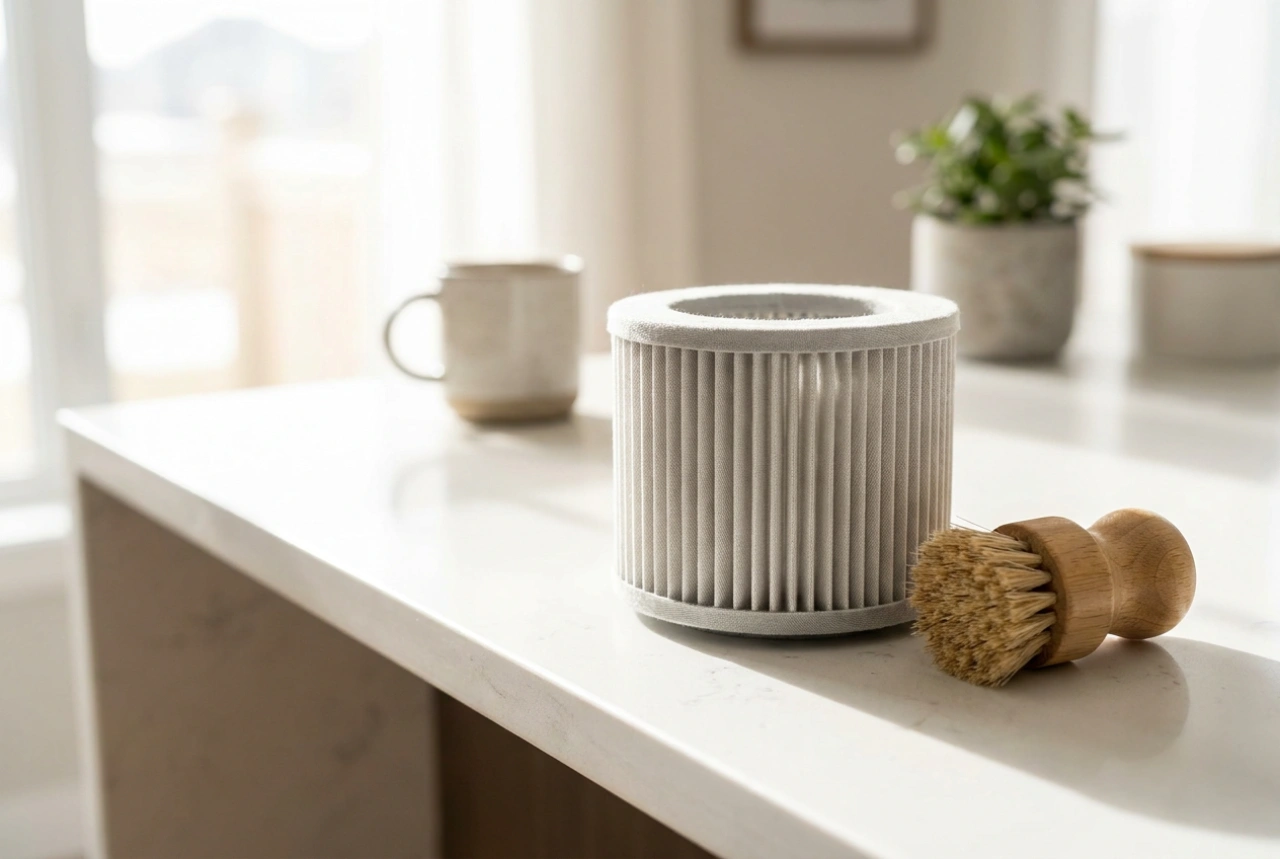
Equally important is the squeegee blade and the dirty water channel. Micro-debris like lint and pet hair can get trapped under the rubber squeegee, creating tiny gaps in suction. When these gaps occur, thin strips of water escape extraction, drying into prominent streaks. Regularly wipe down the rubber blades and clear the suction neck with a small brush to maintain an airtight seal against the floor.