

Maintaining an electric burr coffee grinder is essential for preserving the flavour integrity of your brew and extending the mechanical lifespan of the appliance. Over time, coffee beans release volatile lipids and microscopic particulates that accumulate within the grinding chamber, leading to rancid off-flavours and mechanical strain.
The Chemistry of Coffee Residue and Why Cleaning is Critical
Coffee beans contain a high concentration of lipids, specifically triglycerides and free fatty acids. During the grinding process, mechanical friction generates localized heat, causing these oils to migrate to the surface of the burrs. When exposed to atmospheric oxygen, these lipids undergo a chemical process called oxidation. This reaction produces volatile organic compounds, such as butyric acid, which impart a bitter, stale taste to fresh coffee grounds.
In addition to chemical degradation, physical accumulation presents a significant challenge. Microscopic coffee particles, known as fines, combine with the released oils to form a dense, paste-like crust inside the burr teeth and the exit chute. This buildup restricts the flow of coffee, forces the motor to draw more electrical current, and increases heat generation during operation. Elevated grinding temperatures further accelerate oil oxidation and can even alter the physical properties of the beans during the grind cycle.
The Dry Mechanical Cleaning Protocol
To safely clean a burr grinder without damaging its internal components, a strict dry-cleaning protocol must be followed. Water is the primary enemy of steel burrs, as it initiates rapid oxidation (rust), which permanently degrades the sharp cutting edges of the teeth.
- Disconnect the Power: Always unplug the appliance from the mains to eliminate any risk of accidental motor activation during disassembly.
- Empty and Remove the Hopper: Remove all remaining beans and detach the hopper. Clean the plastic hopper with a dry microfibre cloth to remove surface oils. If washed with mild dish soap, ensure it is completely bone-dry before reattachment.
- Expose the Burrs: Carefully remove the upper burr carrier. Pay close attention to the thread alignment and take note of the current grind setting to simplify reassembly.
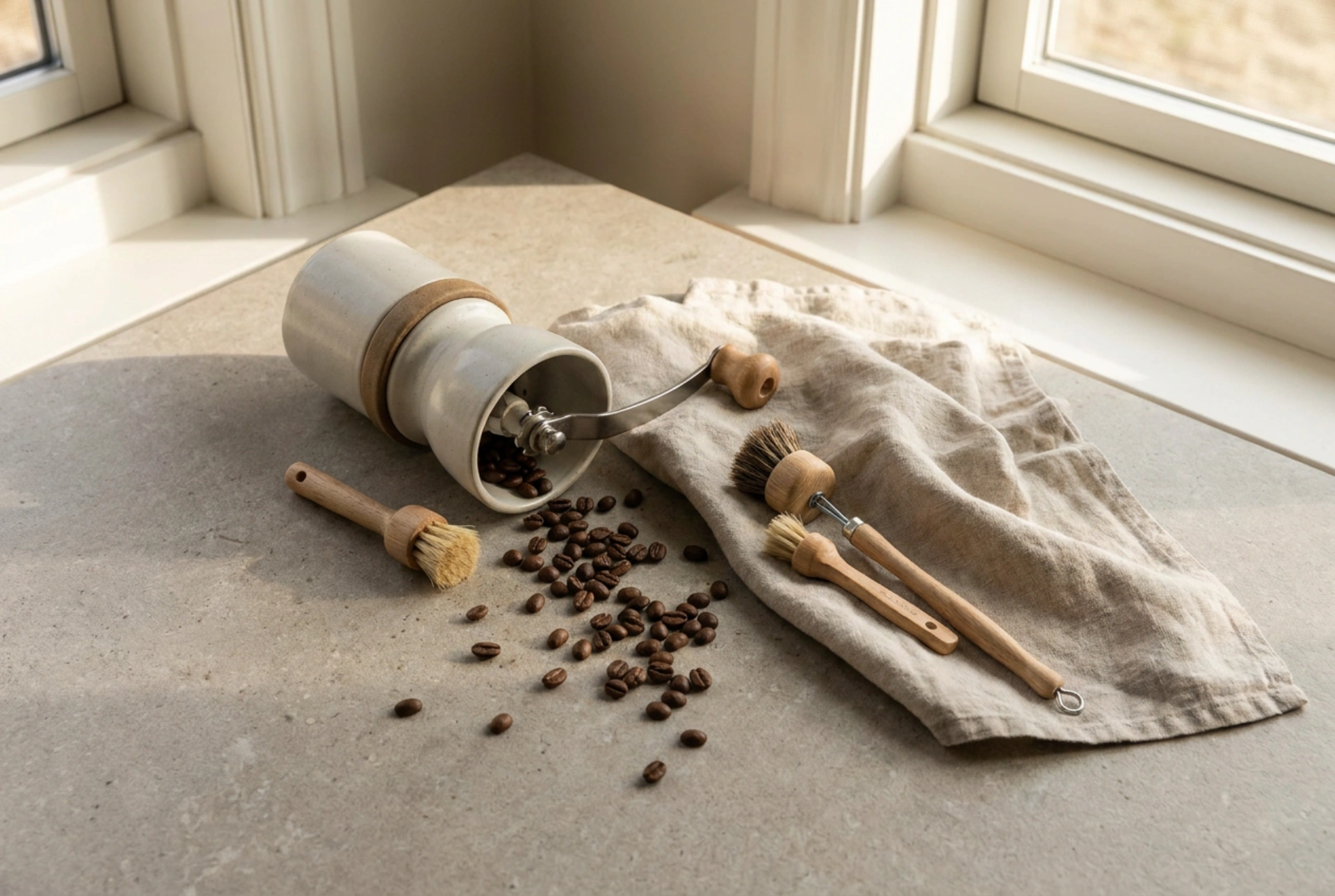
- Manual Brushing: Use a stiff, natural-bristle brush to sweep away compacted grinds from the upper and lower burrs. Work the bristles deep into the cutting channels of the burrs. Do not use metal wire brushes, as they can dull the precision-engineered edges of ceramic or steel burrs.
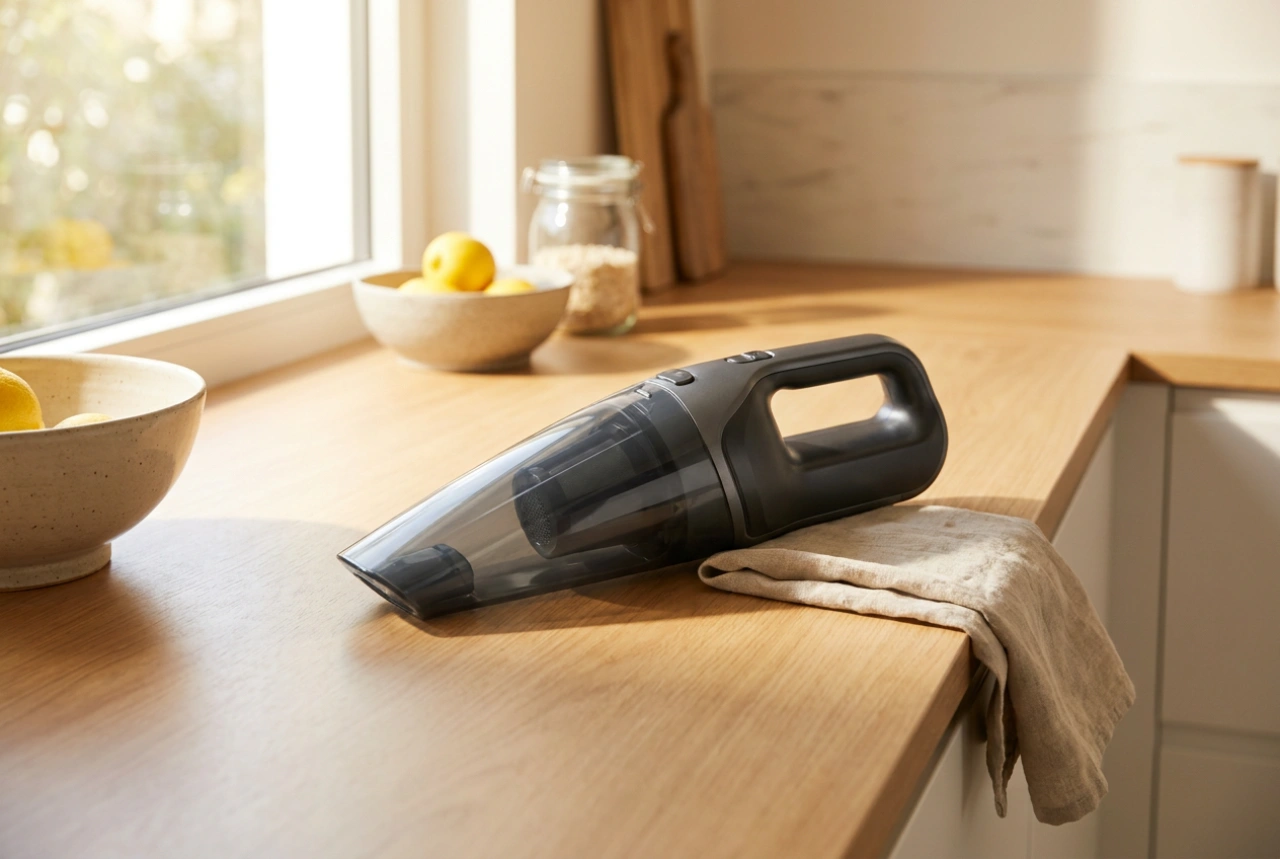
- Clear the Chute: Use a wooden skewer or toothpick to gently dislodge packed debris from the exit chute where ground coffee falls into the receptacle. Use a vacuum cleaner nozzle to extract the loosened dust.
Using Absorbent Cleaning Grinds
For a deeper clean that targets bonded surface oils without disassembly, use specially formulated, food-safe grinder cleaning tablets. These tablets are typically composed of compressed starches and gluten-free grains, engineered with a highly porous structure designed to absorb hydrophobic lipids.
When passed through the grinder, these tablets act as a mechanical scrub and a chemical sponge. The abrasive texture of the compressed grains sweeps away residual coffee dust, while the starch matrix binds to the sticky oils on the burrs via capillary action. Run a single dose of cleaning tablets through the machine on a medium grind setting, then discard the resulting powder.
To complete the process, run a sacrificial handful of whole coffee beans through the grinder. This purges any remaining starch dust from the chamber, ensuring your next actual brew is entirely free of cleaning residues.
Reassembly and Mechanical Alignment
When reassembling the grinder, precision is paramount. Thread the upper burr carrier back into place slowly to prevent cross-threading, which can permanently damage the brass or plastic collar. Once secured, rotate the adjustment collar to its finest setting until you feel slight resistance, then back it off to your desired setting. This process recalibrates the zero point of the burrs, ensuring consistent particle size distribution for your next extraction.