

Maintaining a coffee machine with a steel grinder requires a precise balance between removing stale, oxidised coffee oils and protecting the metal components from moisture. Standard wet cleaning techniques fail here because water triggers oxidation on steel burrs, while synthetic detergents leave soapy residues that ruin future extractions.
The Chemistry of Rancid Coffee Oils
Coffee beans contain up to fifteen percent lipids. During the grinding process, frictional heat warms these oils, causing them to coat the steel burrs and the grinding chamber. When exposed to oxygen, these unsaturated fatty acids undergo lipid oxidation, breaking down into volatile compounds like aldehydes and ketones. This chemical reaction is responsible for the sour, stale odour that corrupts fresh espresso. Removing these oils is not just a matter of hygiene, but of physical chemistry; hydrophobic lipids require specific dry solvents or highly absorbent materials to be dislodged without introducing water.
Why Water Must Be Avoided on Steel Burrs
Steel, even stainless varieties, remains susceptible to electrochemical corrosion when exposed to moisture and oxygen. Water trapped in the micro-crevices of a grinder burr initiates an oxidation reaction, creating iron oxide, commonly known as rust. This process dulls the sharp cutting edges of the burr, increasing friction and heat during subsequent grinds, which further degrades coffee flavour. Additionally, wet coffee grounds form a dense, cement-like paste that can seize the electric motor or clog the discharge chute. Dry maintenance is the only scientifically sound approach to preserving both the mechanical integrity and the hygiene of the system.
Step-by-Step Dry Cleaning Protocol
To safely clean the grinder, follow a strict sequence of operations designed to minimise physical wear and eliminate static cling:
- Disconnect and Access: Always unplug the appliance to isolate the electrical circuits before attempting any internal maintenance. Access the grinding chamber according to the manufacturer design, exposing the stationary and rotating burrs.
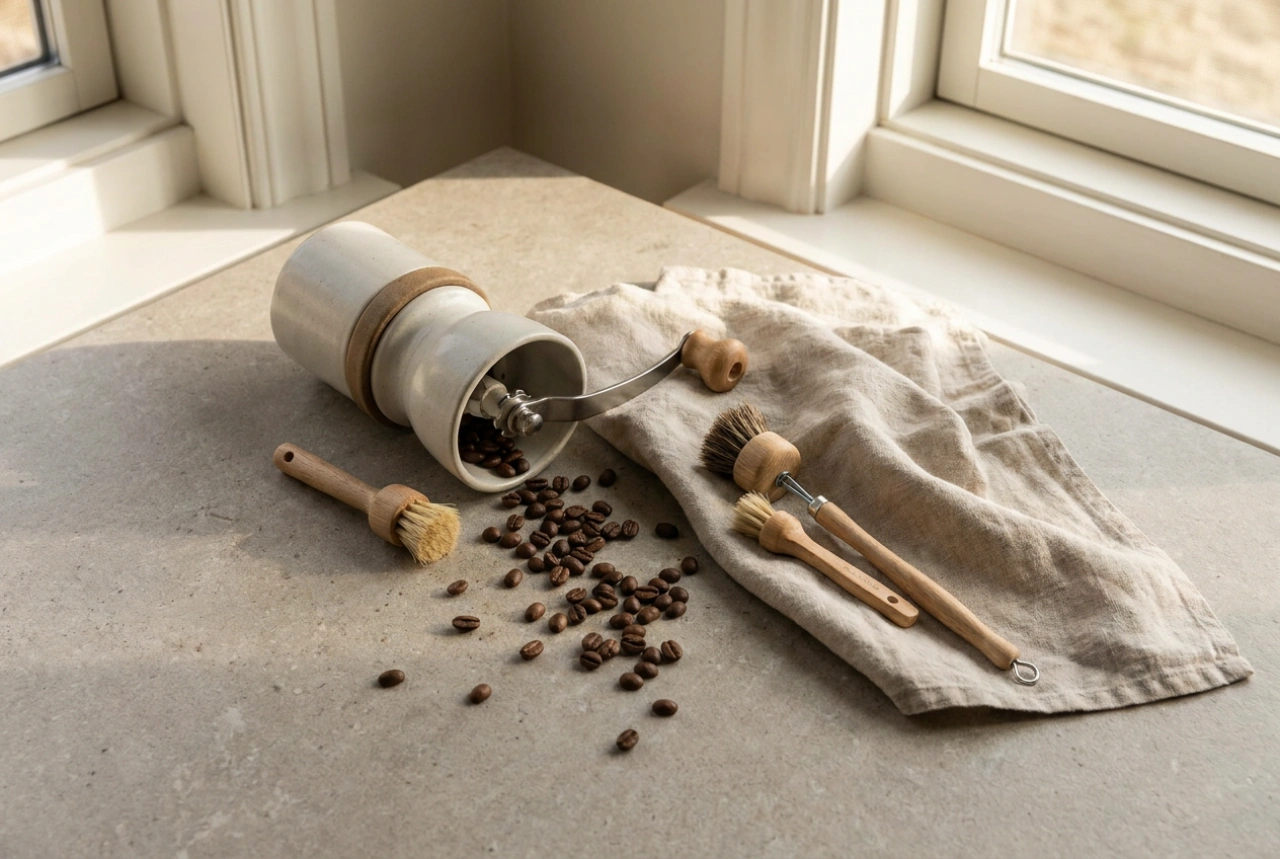
- Mechanical Brushing: Use a stiff-bristled, natural fibre brush to sweep away compacted coffee fines. Natural bristles are superior to synthetic ones as they generate less static electricity, preventing fine dust from re-clinging to the steel surfaces.
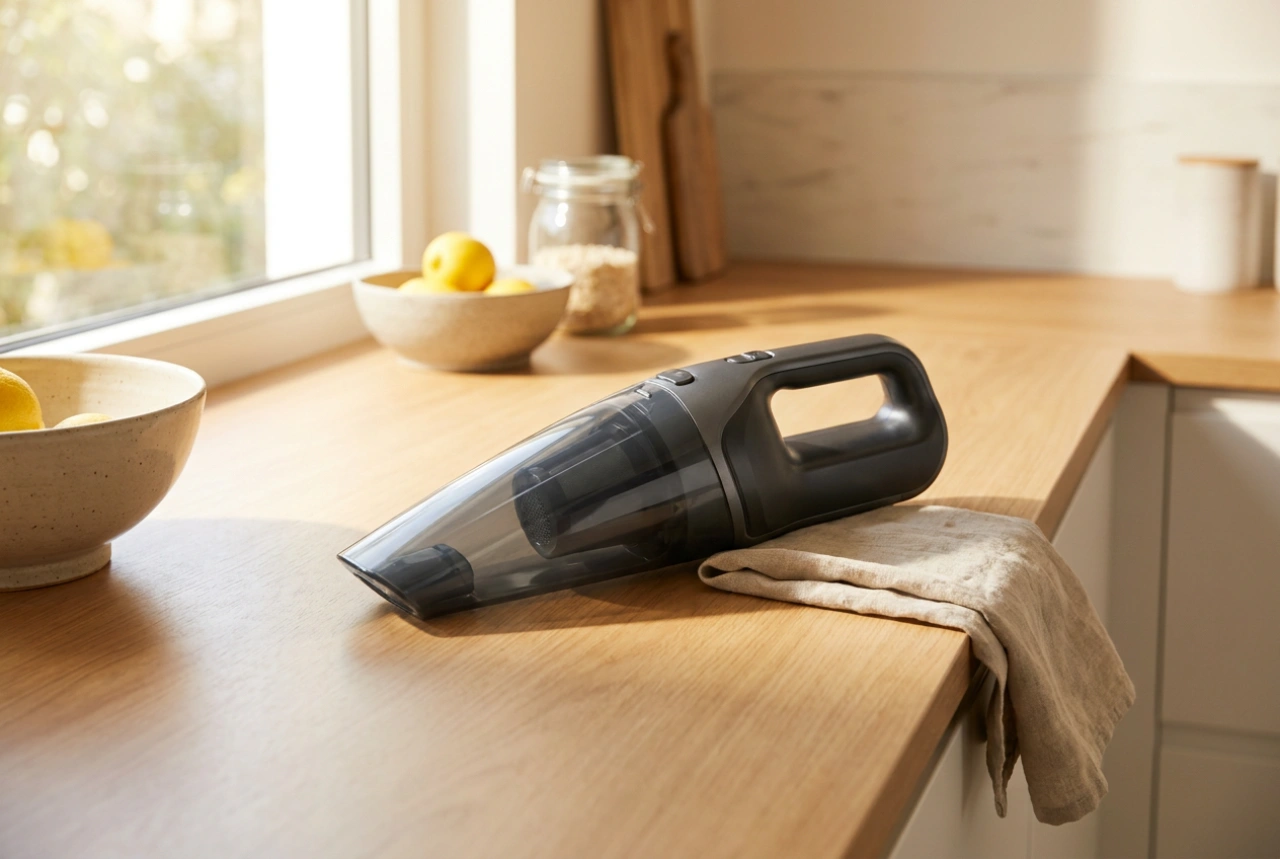
- Vacuuming: Direct a narrow vacuum nozzle into the chamber to extract the loosened particles from the threadings and the chute, ensuring no debris falls deeper into the motor housing.
Utilising Starch-Based Absorbent Pellets
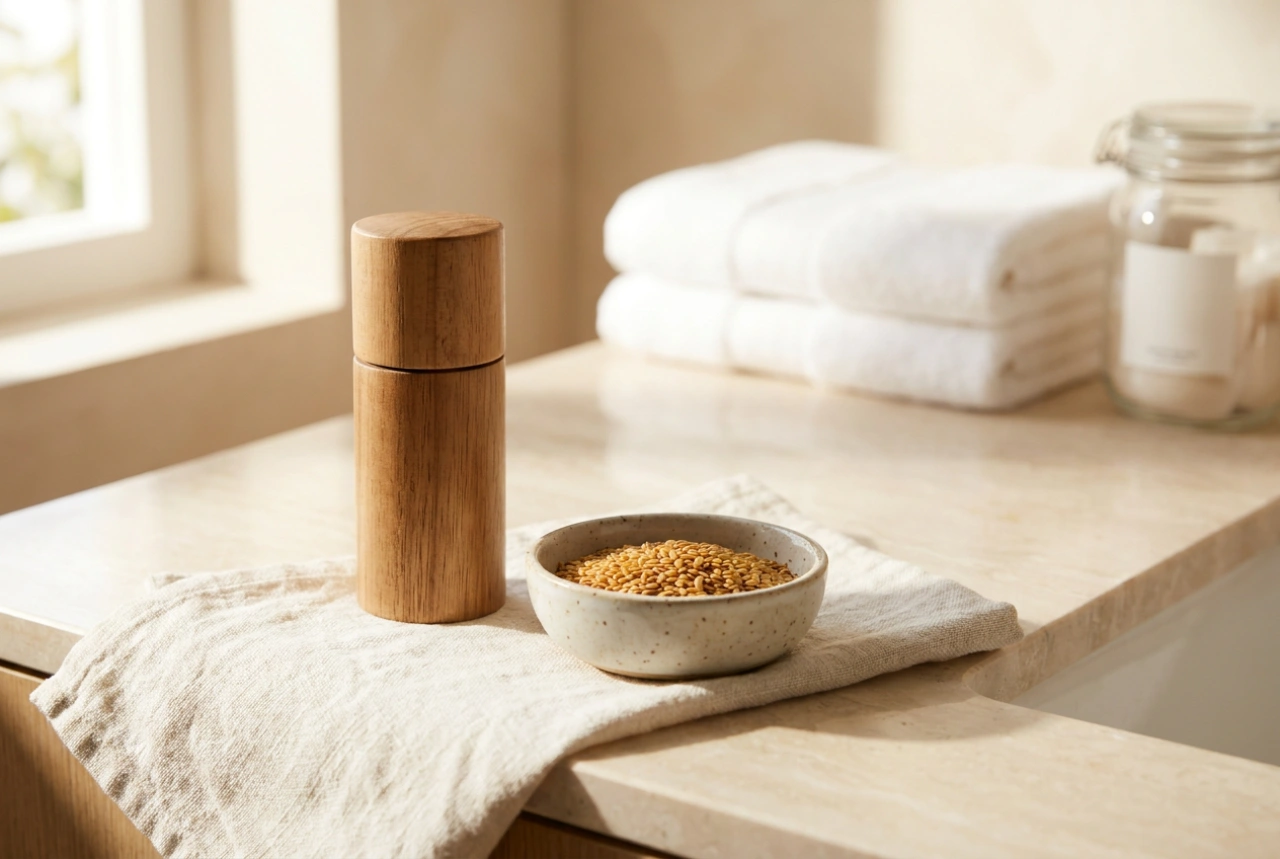
To strip the microscopically thin layer of oil from the steel burrs without disassembly, utilise generic starch-based cleaning pellets. These pellets are engineered from organic, gluten-free grains compressed under high pressure. When passed through the grinder, they act as a mechanical scrub and a chemical sponge. The porous structure of the starch particles absorbs the hydrophobic oils through capillary action, pulling them away from the steel surfaces. Run a small dose of these pellets through the medium-grind setting, followed by a handful of sacrificial coffee beans to purge any remaining powdery residue.
Eliminating Residual Odours Safely
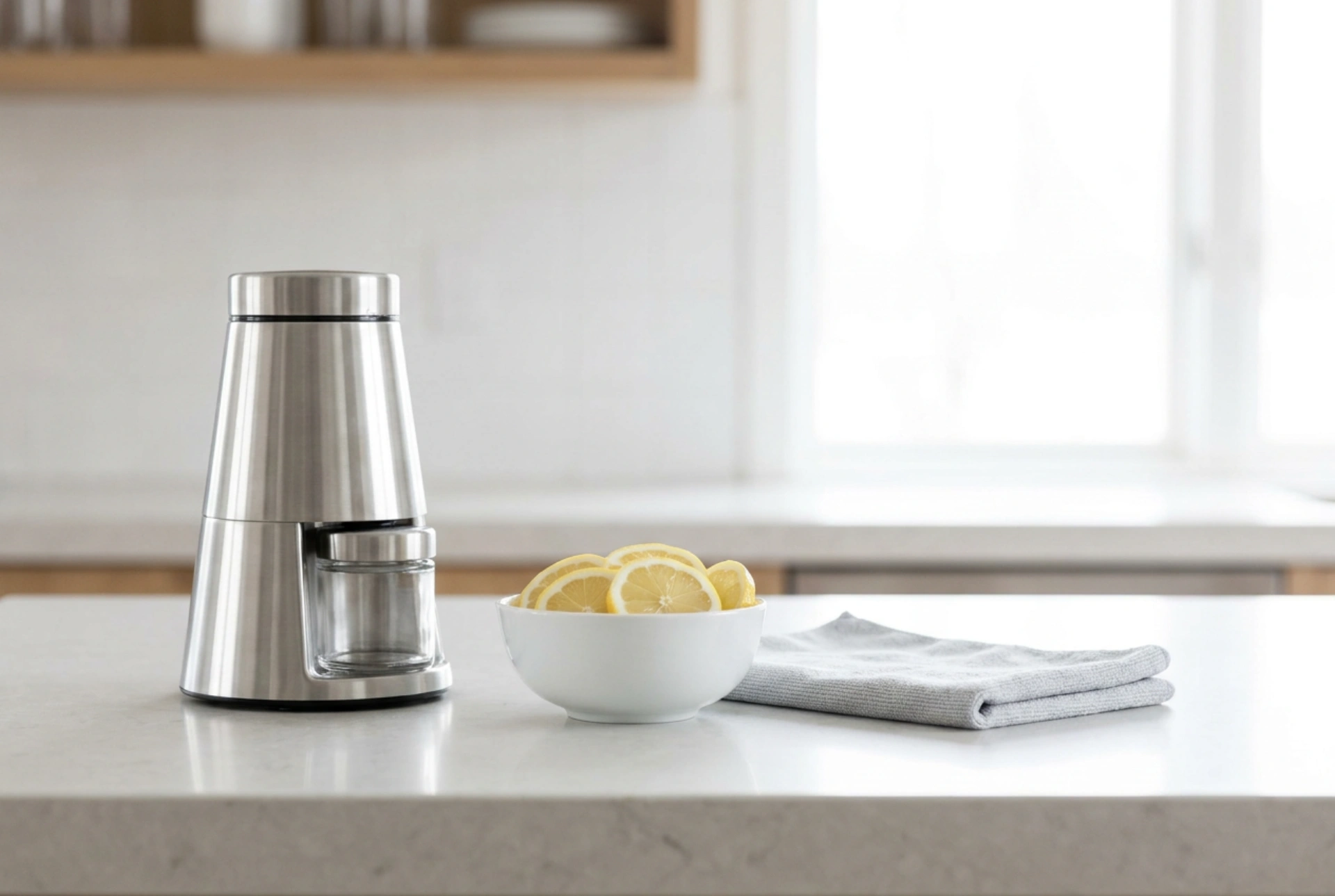
To neutralise any remaining stale odours without introducing moisture, rely on dry material science. Wipe the accessible hopper and chute areas with a dry, clean microfibre cloth. The split fibres of polyester and polyamide in microfibre possess a natural electrostatic charge that attracts both fine dust and lipid traces. Avoid using vinegar or bicarbonate of soda solutions inside the grinding chamber, as these introduce moisture and can chemically react with steel components. Regular purging with fresh beans naturally coats the clean steel with a fresh, volatile layer of protective, non-oxidised oils, resetting the flavour profile of your machine.