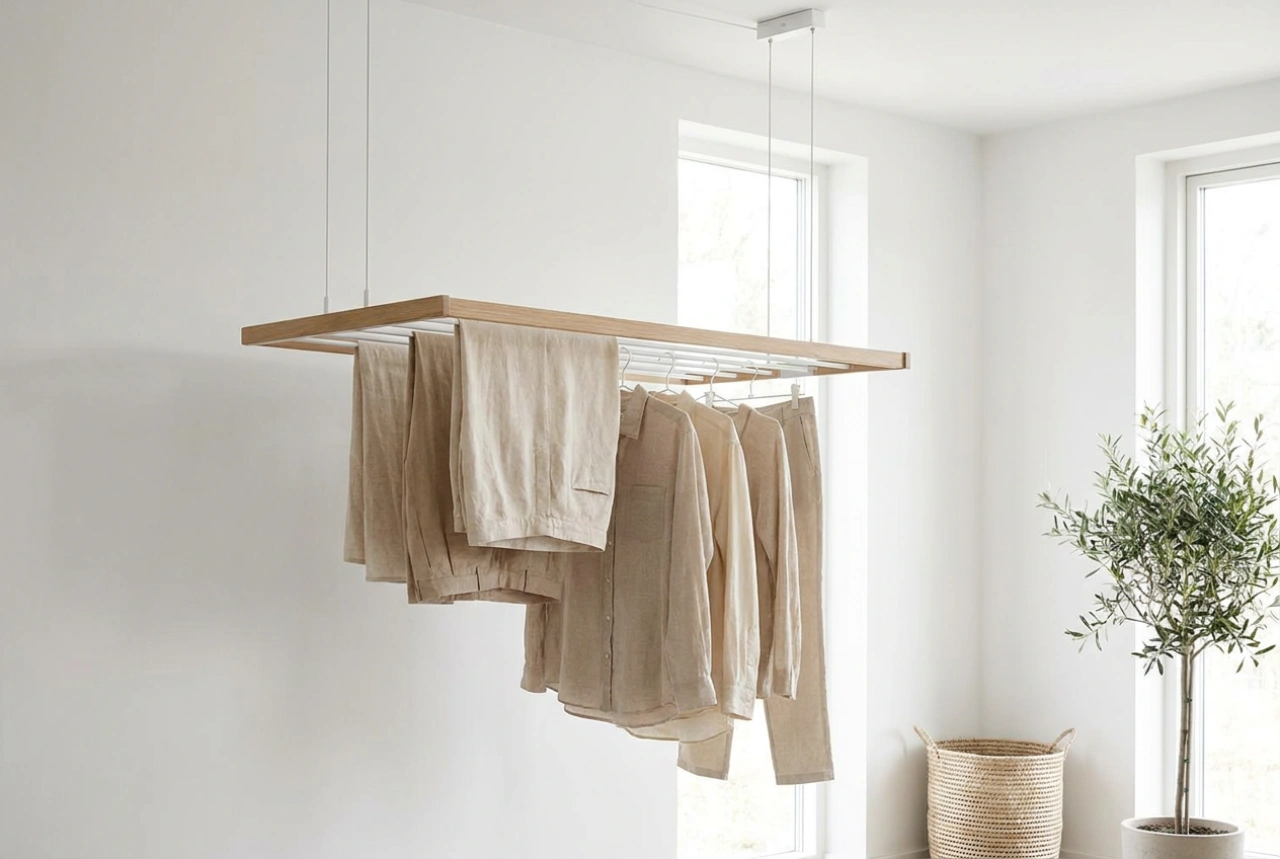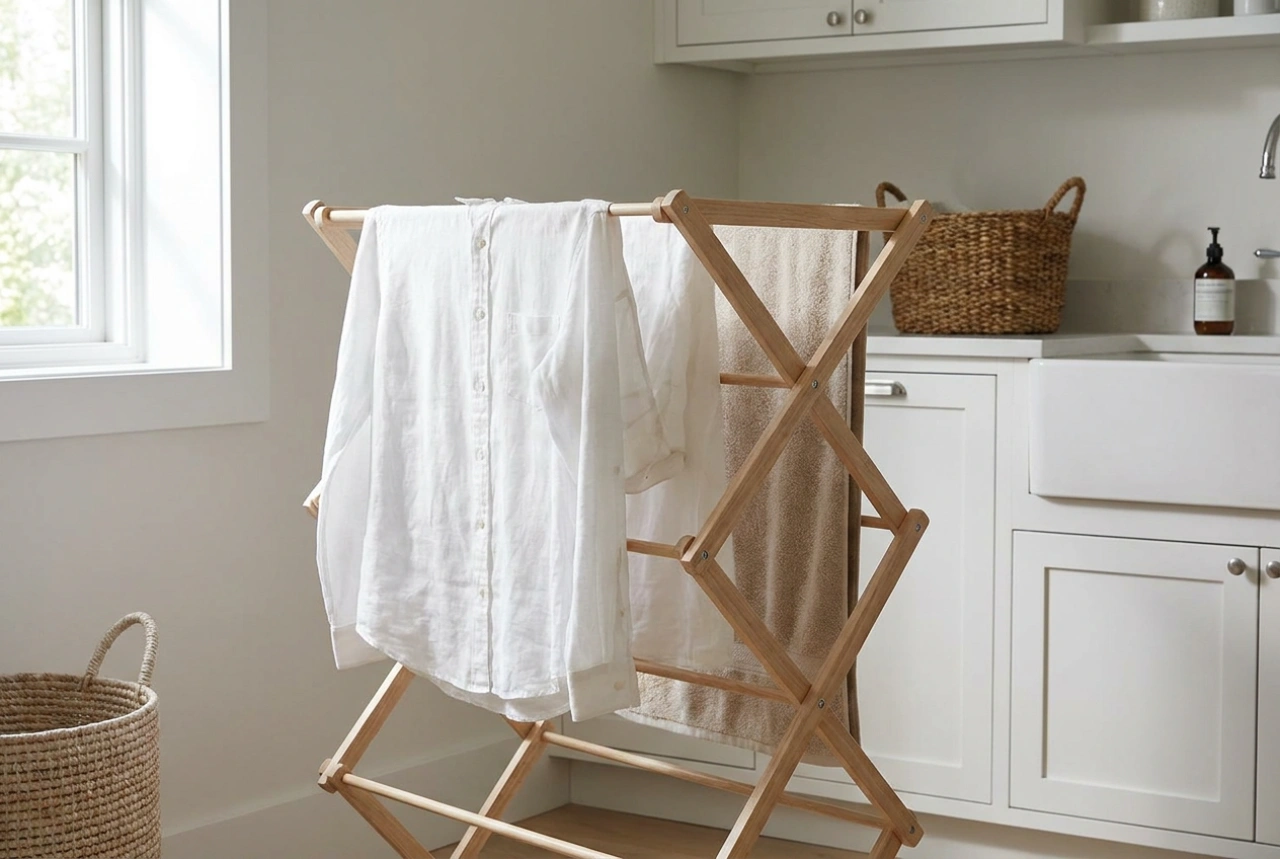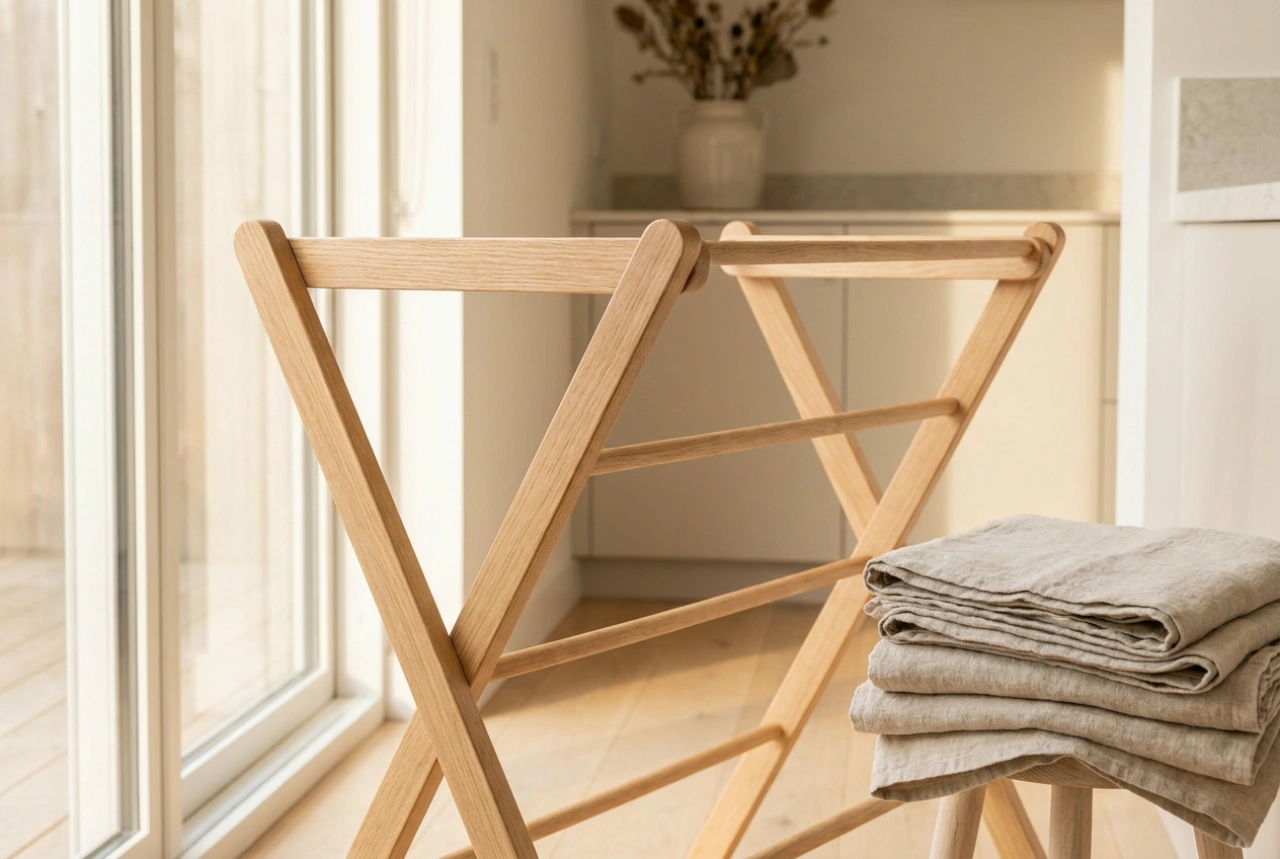


The speed at which laundry dries on a standing drying rack depends directly on thermodynamics, room airflow, and the boundary layer of saturated air surrounding wet fabric. By applying basic physical principles to the placement of your drying rack and the arrangement of your clothes, you can significantly accelerate the evaporation process without relying on mechanical tumble dryers.
Understanding the Boundary Layer and Air Movement
When wet clothes are hung up, water evaporates from the textile fibres into the immediate surrounding air. This creates a micro-envelope of highly saturated, cool air around each garment, known as the boundary layer. If this layer remains stagnant, the local relative humidity reaches 100%, halting further evaporation regardless of how warm the room is.
To break this boundary layer, you must introduce air movement. Placing your standing drying rack in a path of active cross-ventilation is the most effective way to strip this saturated air away. Ideally, position the rack between an open window and an open door, or between two opposite windows. This establishes a continuous draught that carries away the moisture-laden air, allowing drier room air to continuously take its place and maintain a high rate of evaporation.
Optimising Rack Orientation to Air Currents
Simply placing the rack in a draughty room is not enough; its physical orientation relative to the airflow matters. For maximum efficiency, position the drying rack perpendicular to the direction of the air current rather than parallel to it. When the broad side of the rack faces the oncoming air, the wind passes through the gaps between the hanging clothes, effectively stripping moisture from all garments simultaneously.
If the rack is aligned parallel to the airflow, the first garment acts as a windbreak, shielding the remaining clothes behind it. This creates a dead zone of trapped, humid air down the line, resulting in uneven and significantly slower drying times for the garments situated in the middle and rear of the rack.
Harnessing Thermal Convection
Warm air has a higher moisture-holding capacity than cold air due to the kinetic energy of water molecules at higher temperatures. To leverage this, position your standing rack near passive heat sources, such as a domestic radiator or a sunlit window. However, there are strict rules to prevent mold and heat damage:
- Never drape wet clothes directly over radiators, as this blocks heat distribution, causes local condensation, and raises indoor humidity too quickly.
- Place the rack approximately one to two metres away from the heat source. This allows the rising warm air to circulate under and through the hanging clothes, driving convective currents.
- Utilise solar radiation by placing the rack in direct sunlight behind a window, which heats the fabric directly and speeds up the phase transition of water from liquid to vapour.
The Geometry of Hanging: Spacing and Fabric Density
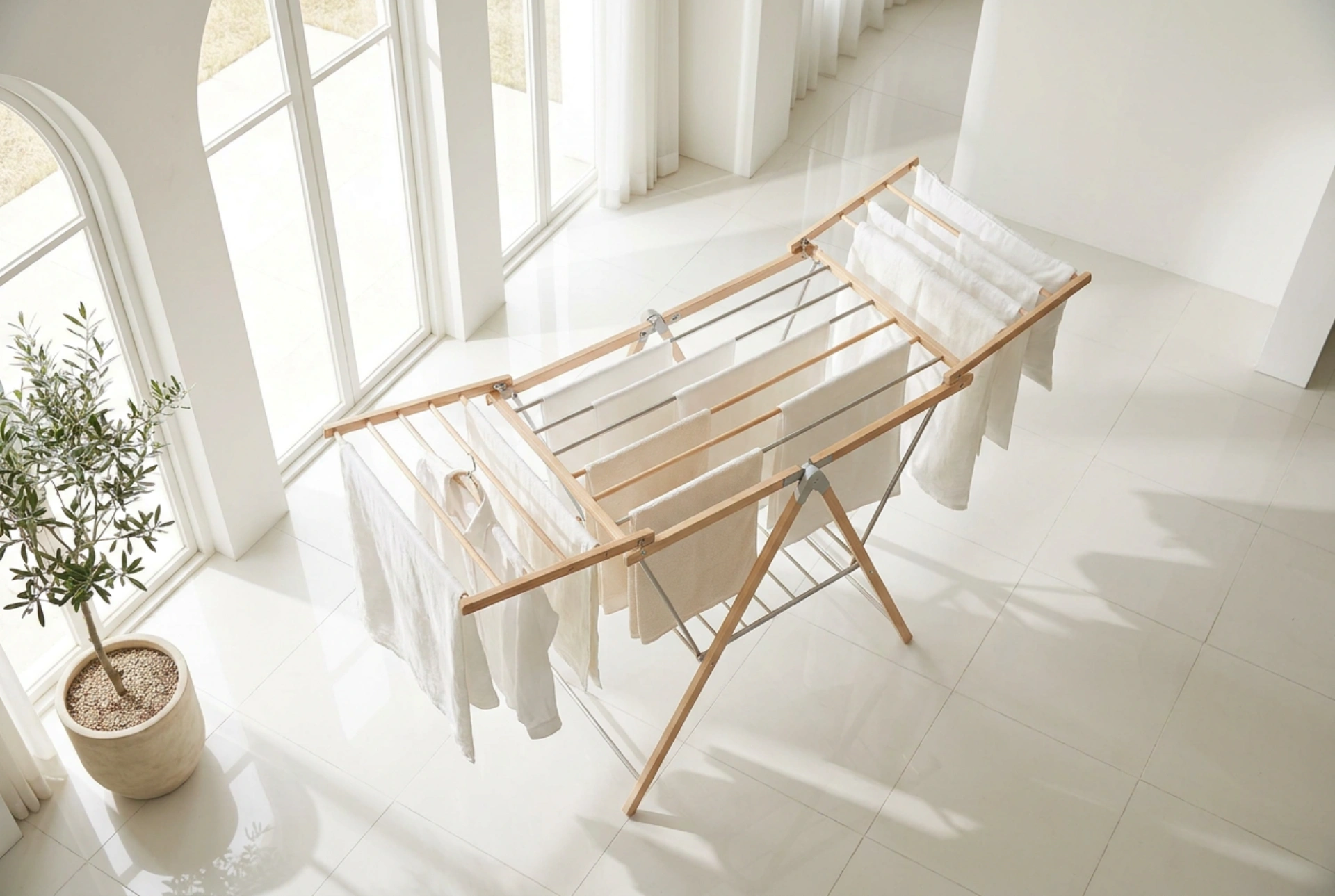
How you arrange your garments on the rack determines the internal microclimate of the drying setup. Packing clothes too tightly restricts air passages, mimicking a solid wall that air cannot penetrate. To prevent this canopy effect, follow a systematic hanging protocol:
- The Alternating Rung Rule: Avoid using every single rod on the rack. Instead, hang items on every second rung, especially when dealing with thick materials like denim or heavy cotton. This doubles the air gap between fabrics.
- Fabric Density Gradient: Hang thicker, heavier garments on the outer wings of the rack where air exposure is greatest. Place thin, synthetic fabrics which release water quickly towards the center.
- Vertical Staggering: Hang longer items on the outer edges and shorter items in the middle. This creates an inverted arch that promotes natural convective airflow upwards through the center of the rack.
Preparing the Fabric for Faster Evaporation
Drying efficiency begins before the clothes even touch the rack. Ensure your washing machine's spin cycle is set to the maximum safe speed for the fabric type to mechanically extract as much liquid water as possible. Before hanging each item, give it a vigorous snap-shake; this unrolls the compacted fibres, increasing the active surface area exposed to the air and aligning the fabric threads for optimal ventilation.