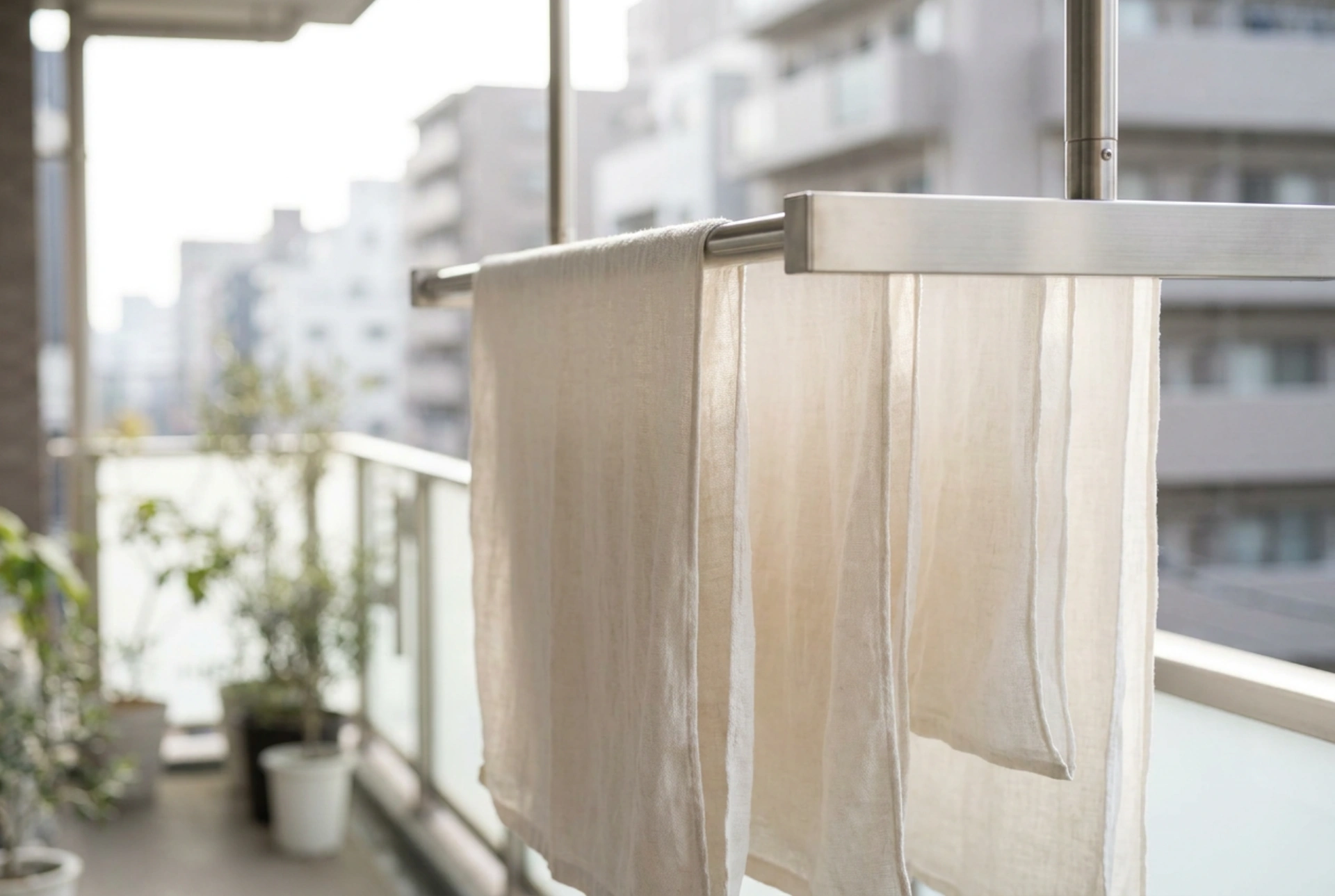


Hanging laundry outside an apartment window utilizes natural airflow and solar radiation to dry clothes rapidly, but it requires careful attention to physics, structural load, and weather conditions. Understanding how to secure textiles and manage moisture dynamics ensures efficient drying without risking safety or damaging fabrics.
The Physics of Outdoor Drying: Airflow and Solar Radiation
Outdoor drying relies on two primary physical processes: evaporation and convection. When wet fabrics are exposed to the open air, the liquid water within the fibers absorbs thermal energy from the ambient air and direct sunlight, transitioning into water vapor. Ambient wind acts as a convective force, constantly stripping away the saturated boundary layer of air surrounding the wet fabric and replacing it with drier air. This maintains a steep vapor pressure gradient, accelerating the drying process significantly compared to stagnant indoor environments.
Solar radiation also plays a chemical role. Ultraviolet (UV) light acts as a natural sanitizer, breaking down organic molecules and killing micro-organisms that cause musty odors. However, prolonged UV exposure can degrade synthetic fibers and fade dyes through photo-oxidation. To balance these factors, hang brightly colored or delicate garments inside out, and retrieve items as soon as they reach target dryness to prevent fiber embrittlement.
Structural Integrity and Wet Load Dynamics
Before mounting or utilizing an out-of-window drying rack, you must calculate the dynamic weight load. Water is heavy; dry cotton can hold more than 100% of its dry weight in water. A standard wash load of 5 kilograms can easily double in weight when wet, placing significant stress on the mounting points of a window rack.
To ensure structural safety, select a rack with multi-point mechanical anchoring that distributes the load evenly across the window sill or masonry. Avoid any alterations that require drilling into structurally critical concrete or external insulation systems, which can compromise the building's thermal envelope and moisture barrier. Instead, rely on heavy-duty, tension-based clamp systems or pre-installed brackets designed for load bearing. Regularly inspect the metal parts for signs of stress corrosion cracking or galvanic corrosion, particularly at the joints and fasteners where moisture can pool.
Optimal Hanging Techniques and Wind Resistance
When hanging garments outside, high winds present a physical risk of both fabric loss and structural strain on the rack. To mitigate wind resistance, position garments strategically. Hang heavier, denser items like denim and towels closest to the window frame where the rack is strongest and lever arm forces are minimized. Lightweight synthetics and smaller items should be placed further along the rails.
The method of fastening is critical. Use heavy-duty pegs with high-tension steel springs. Place pegs over the seams or hemlines of garments where the fabric is layered and structurally reinforced; this prevents tearing and limits kinetic movement in strong gusts. To lower the center of gravity and reduce wind drag, fold larger items like bedsheets or tablecloths over the drying line, securing them with multiple pegs spaced evenly along the horizontal edge rather than hanging them by their corners.
Mitigating Urban Environmental Risks
Urban environments introduce specific challenges such as particulate matter, pollen, and unexpected precipitation. To prevent freshly washed clothes from acting as a filter for urban dust and soot, monitor local air quality indexes before hanging laundry. On high-pollen or high-smog days, drying should be kept indoors or restricted to early morning hours when atmospheric turbulence and particulate concentrations near ground level are typically lower.
To prevent dripping onto lower windows or balconies—which can cause chemical staining from residual detergent and mineral deposits—always use a high-velocity spin cycle (at least 1000 to 1200 RPM) in the washing machine before hanging. This mechanical dewatering process removes the bulk of free water, leaving only bound moisture within the fibers, eliminating gravity-induced dripping and significantly shortening the outdoor drying time.