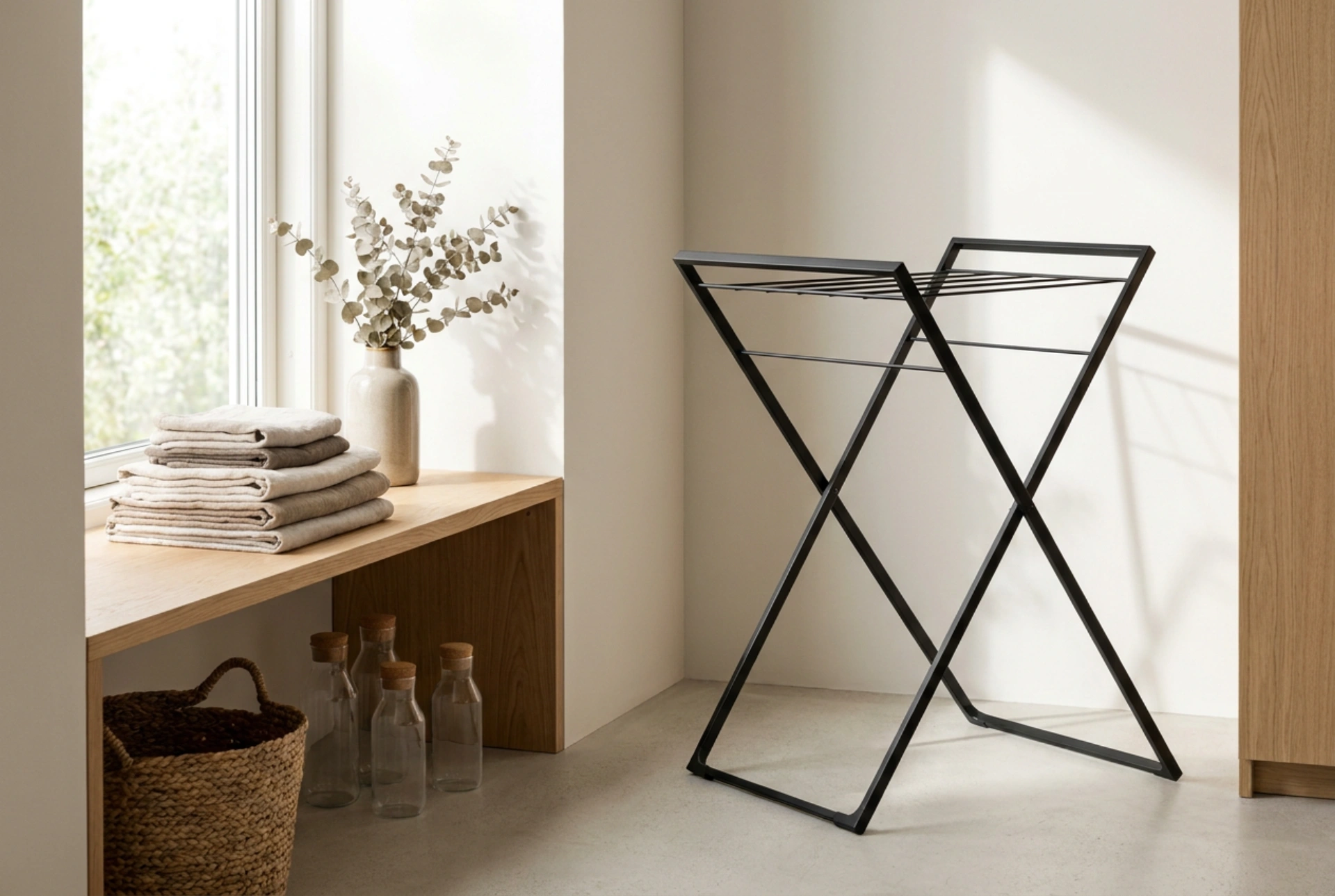


Matte black drying racks offer a sleek, modern aesthetic, but their thermal properties and surface coatings require specific handling to prevent fabric damage and ensure structural longevity. Understanding the physics of heat absorption and weight distribution is key to maximizing their utility while maintaining a safe indoor environment.
The Physics of Heat Absorption on Dark Surfaces
Matte black coatings possess high emissivity, meaning they absorb and radiate thermal energy more efficiently than reflective chrome or light-colored surfaces. When positioned near a window or heat source, a black drying rack will heat up rapidly. While this accelerated heat absorption can speed up the evaporation process of water molecules in fabrics, it also presents a risk for delicate textiles.
Synthetic fibers such as elastane, nylon, and polyester are highly sensitive to elevated temperatures. Direct contact with a hot black metal bar can cause micro-warping of the fibers, leading to a loss of elasticity and premature wear. To prevent this, place the drying rack in a well-ventilated, shaded area rather than in direct midday sunlight. If you must dry garments in sunny spots, restrict these areas to sturdy natural fibers like cotton and linen, which tolerate heat much better.
Coating Integrity and Rust Prevention
Most black drying racks are constructed from steel or aluminum finished with an electrostatic powder coating. This polymer layer acts as a barrier, preventing oxygen and moisture from reaching the underlying metal and initiating oxidation (rust). However, this protective layer is susceptible to mechanical wear.
Zippers, metal buttons, and heavy rivets can scratch the powder coating during hanging or retrieval. Once the bare metal is exposed, the high humidity of damp laundry accelerates galvanic corrosion. To protect the coating, close all metal zippers and turn garments inside out before hanging. When cleaning the rack itself, avoid abrasive scouring pads or harsh acidic cleaners. Instead, wipe the frame with a damp microfiber cloth and a mild, neutral surfactant to remove dust and mineral deposits without degrading the polymer finish.
Load Mechanics and Structural Stability
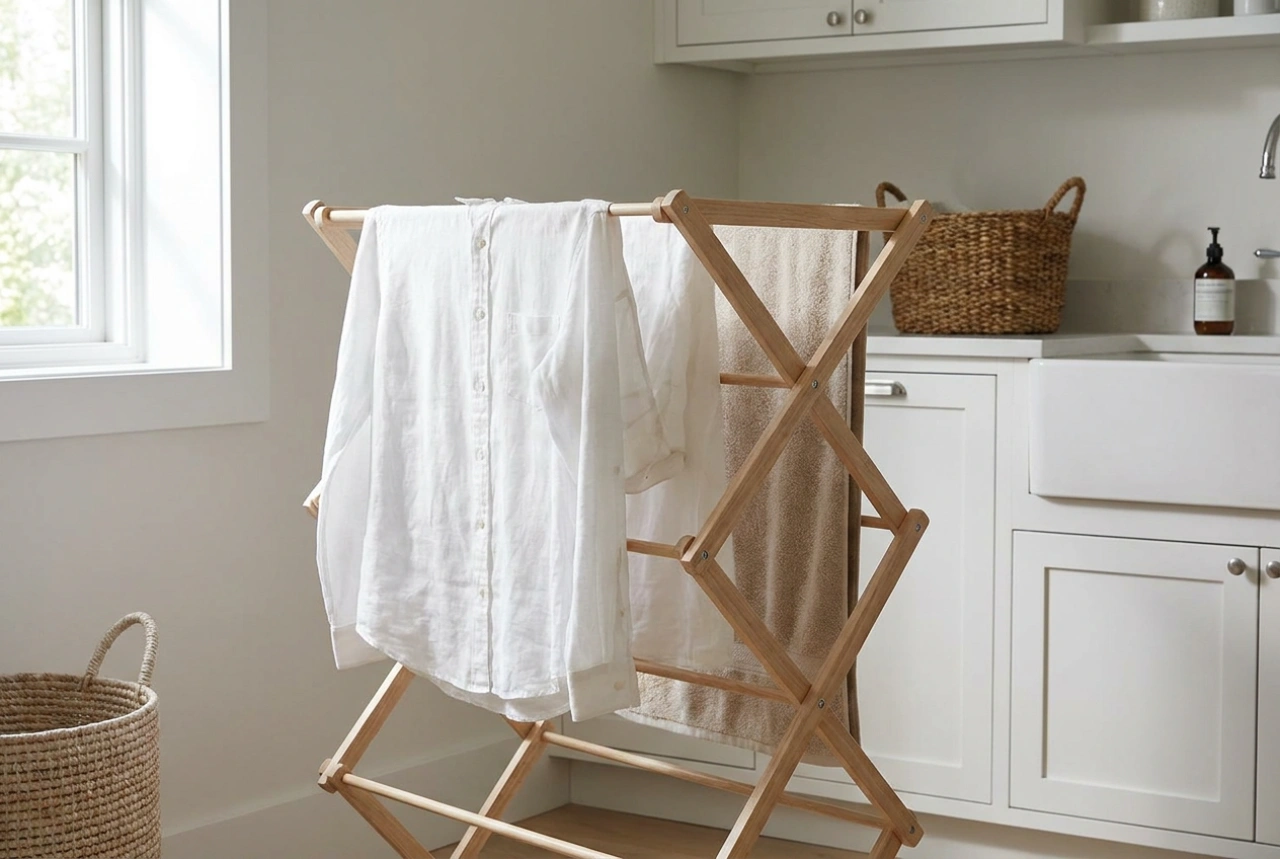
A loaded drying rack functions as a system of levers. Placing heavy, water-logged items on the outer wings of a foldable rack shifts the center of gravity outward, creating a high tipping hazard. This can result in structural damage to the rack joints or physical injury if the rack collapses.
To ensure physical safety and structural longevity, always adhere to a strict loading sequence:
- Center first: Hang the heaviest damp items, such as denim jeans or thick cotton sweaters, on the central rungs directly above the main support legs to stabilize the base.
- Balance the wings: Distribute lighter items, such as t-shirts and undergarments, evenly across both outer wings to maintain symmetrical weight distribution.
- Respect weight limits: Do not exceed the manufacturer’s load capacity, as excessive weight causes elastic deformation of the metal bars, leading to permanent sagging.
Indoor Air Quality and Moisture Control
Drying a single load of laundry indoors can release over two liters of water vapor into the air. If this moisture is not managed, the relative humidity in the room can easily surpass 60%, creating an ideal breeding ground for mold spores and dust mites.
To optimize evaporation without compromising your living space, position the black drying rack in a room with active air circulation. Creating a gentle cross-draft by slightly opening two opposing windows accelerates the boundary layer evaporation on the fabric surface. Additionally, ensure there is at least a two-finger gap between each hung garment; crowding fabrics restricts airflow, trapping moisture and leading to the development of musty, bacterial odors in the textiles.