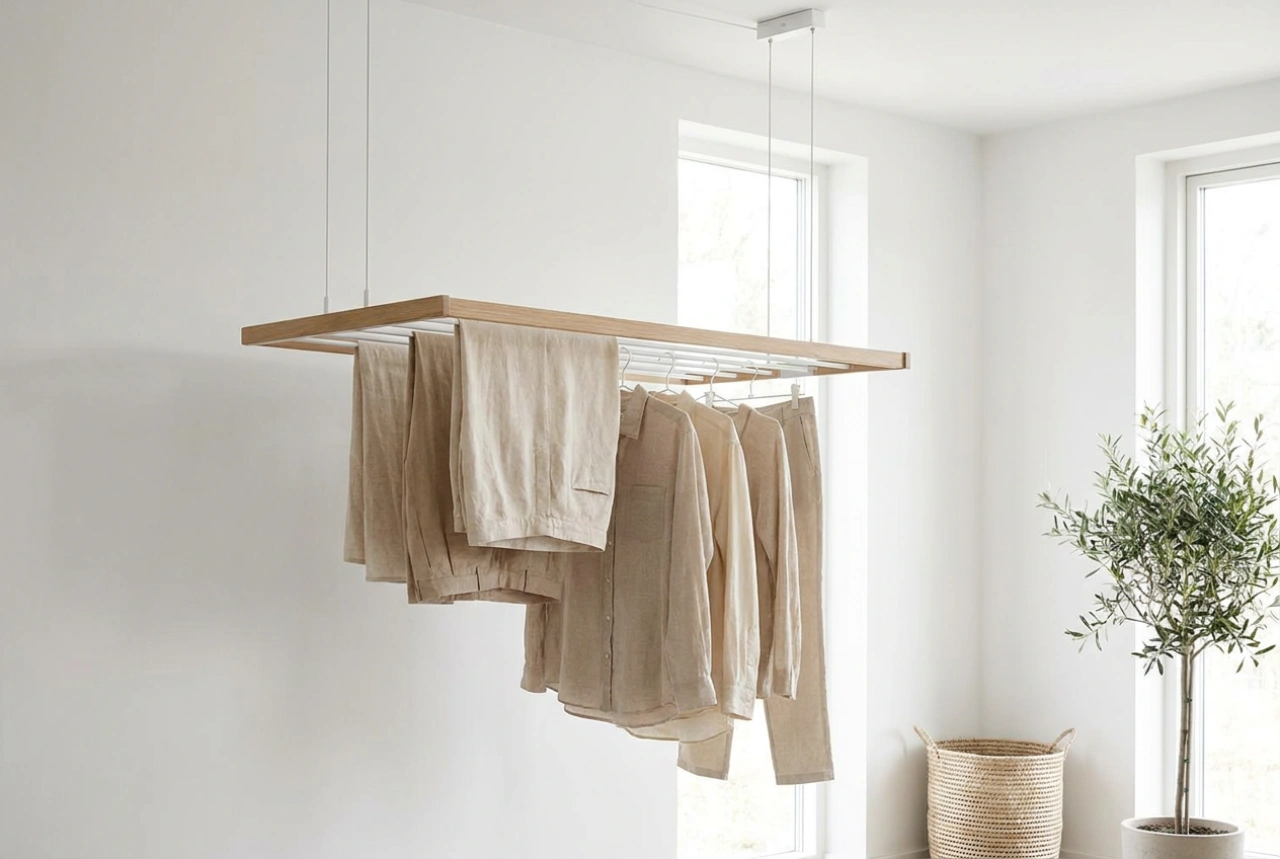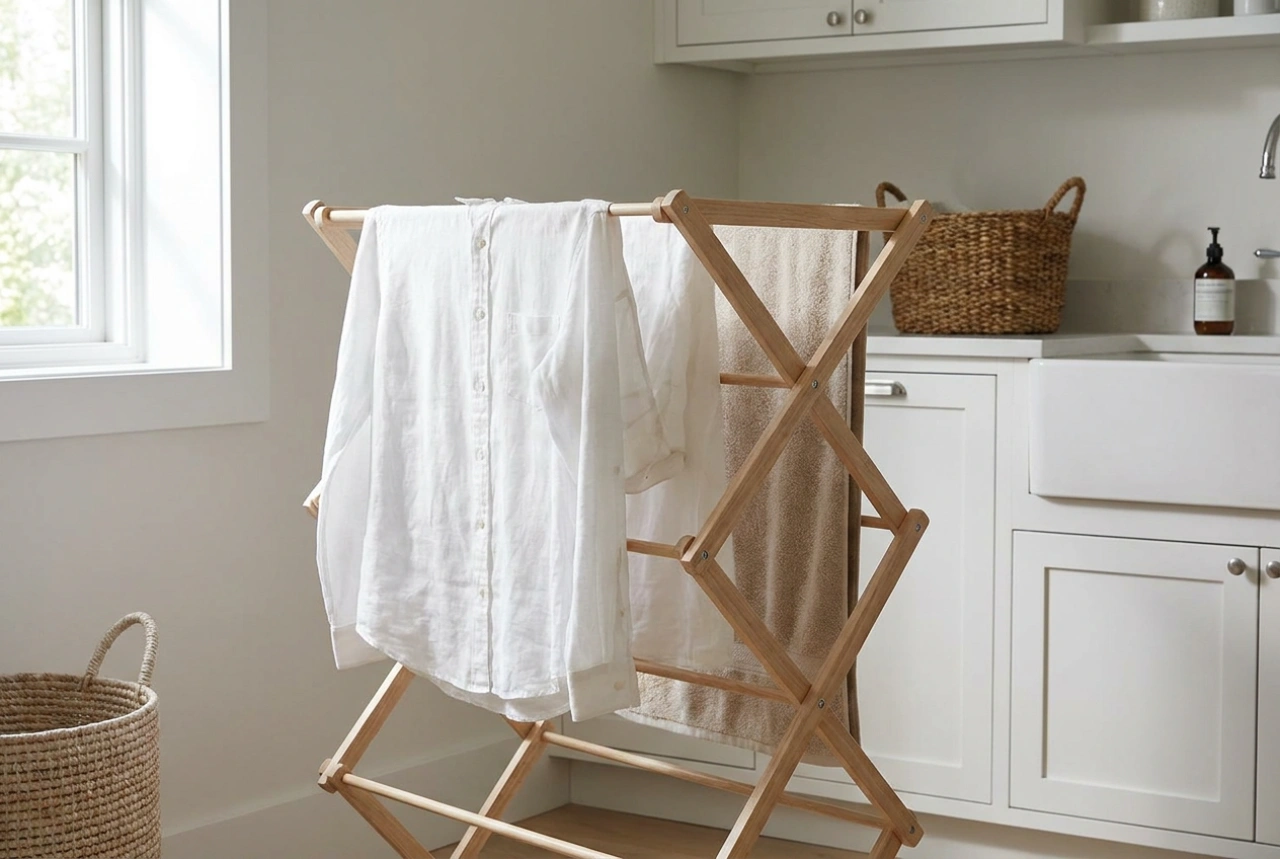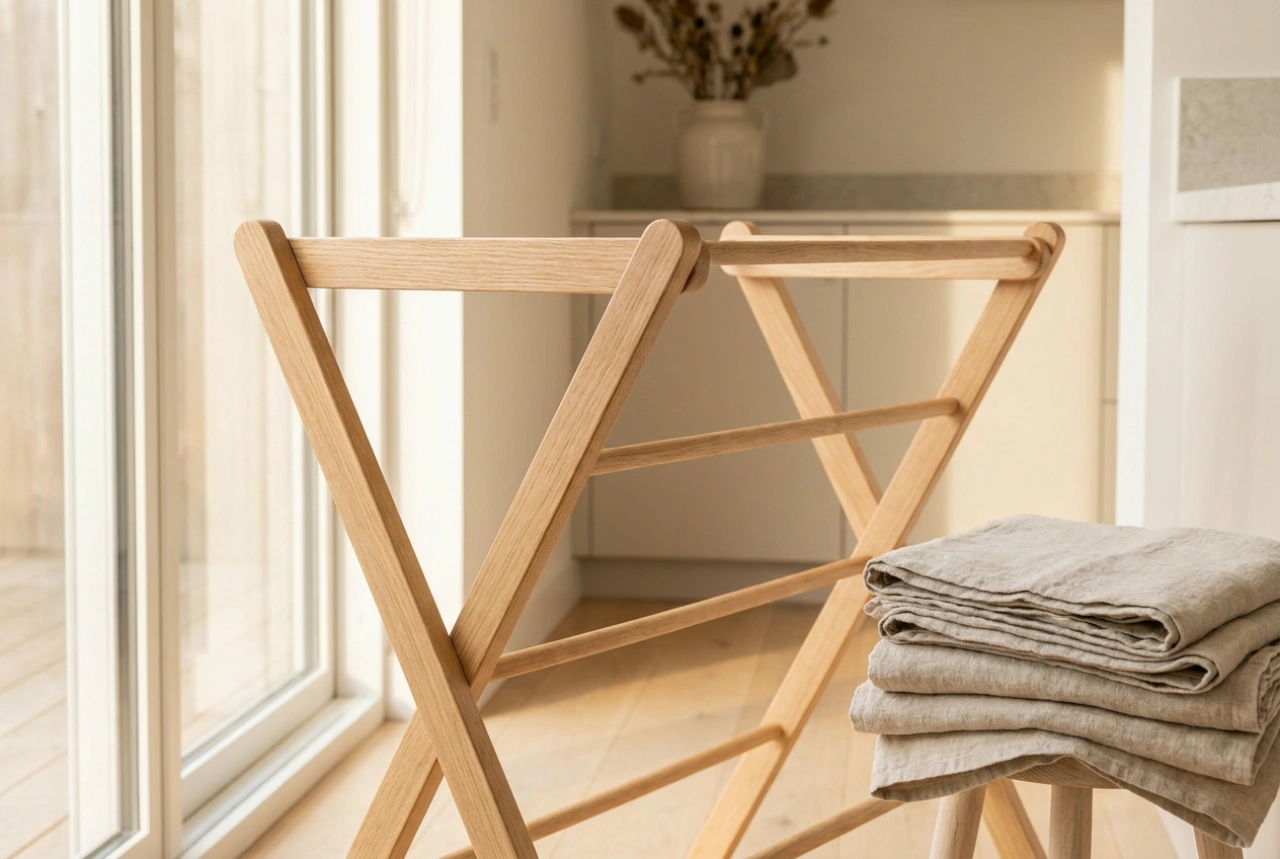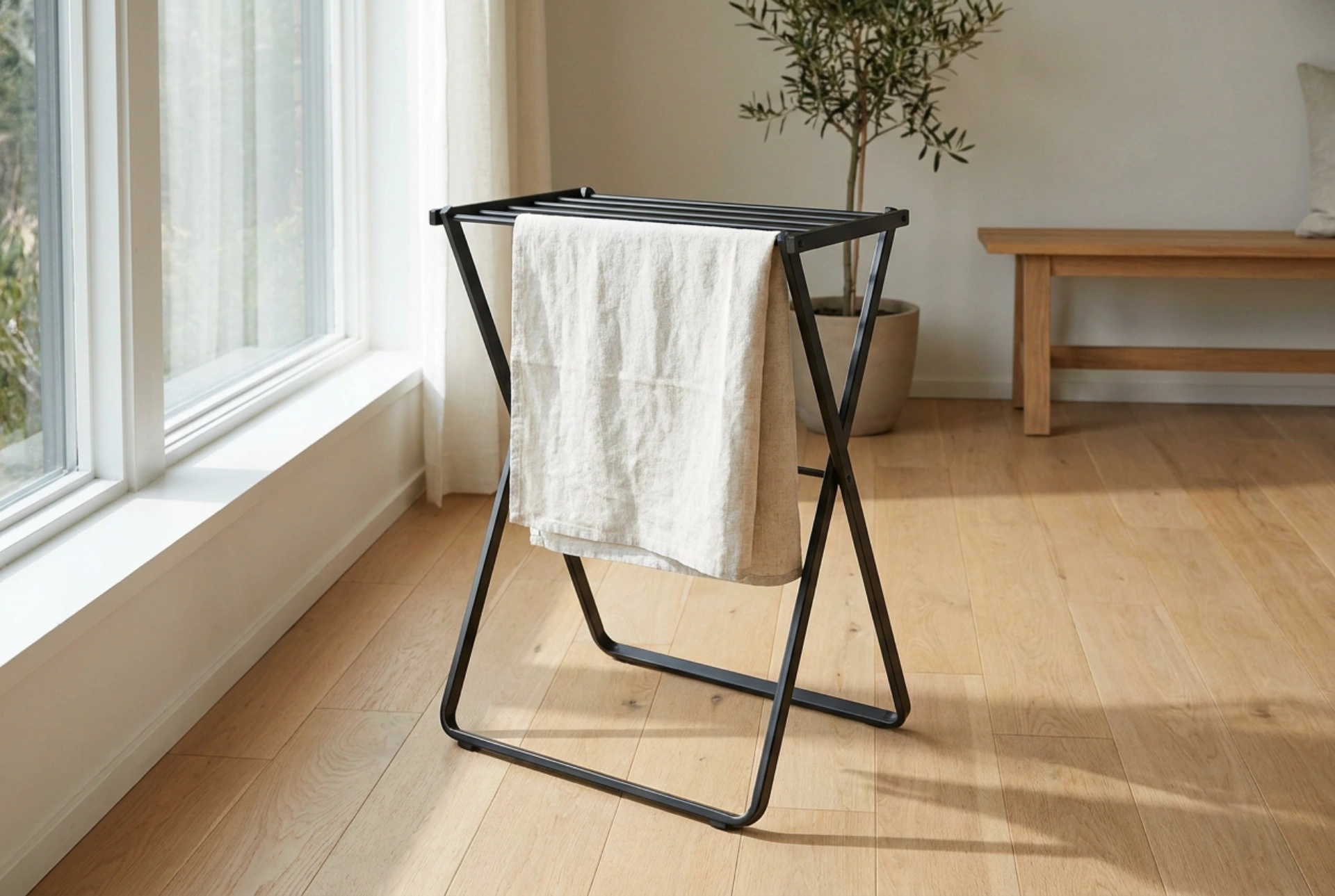


Matte black drying racks are a popular choice for modern interiors, but they present a unique maintenance challenge: white, chalky residues that stand out starkly against the dark finish. When wet laundry dries, water evaporates into the air, leaving behind dissolved minerals—primarily calcium carbonate and magnesium—along with leftover laundry detergent surfactants. Over time, these minerals crystallise on the rack's bars, forming a stubborn layer of limescale that degrades the sleek aesthetic.
The Chemistry of Mineral Removal on Powder-Coated Surfaces
To dissolve these mineral deposits without damaging the dark finish, it is essential to understand the material science of the rack. Most black drying racks are made of steel or aluminium coated with a thermosetting polymer powder. This powder coating is highly durable but sensitive to abrasive physical force and highly alkaline or acidic commercial cleaners. Strong mineral acids or rough scouring pads can micro-scratch the surface, leading to a permanent loss of the matte texture and rendering it more susceptible to corrosion.
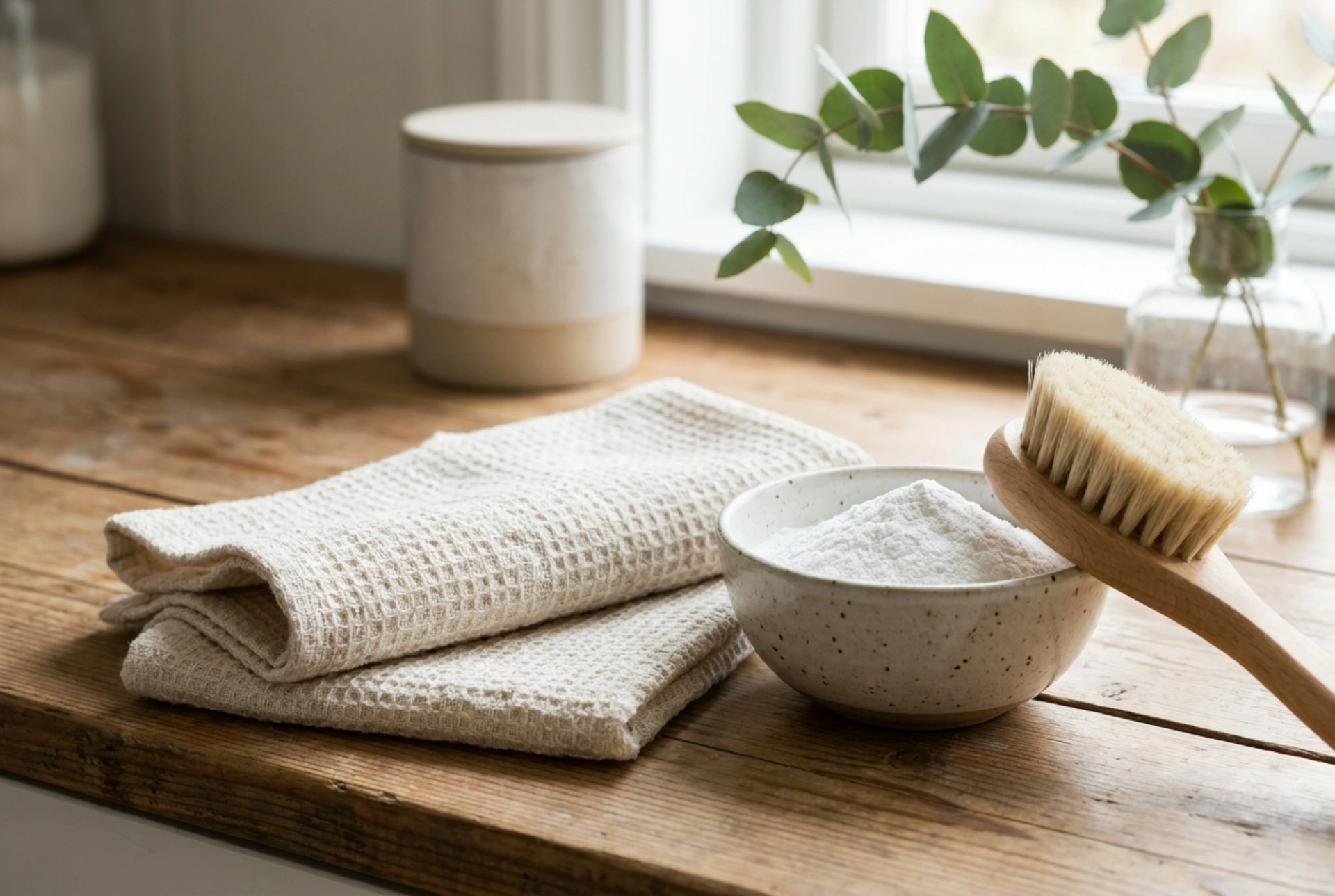
The safest chemical approach relies on weak organic acids, such as citric acid dissolved in warm water (approximately one tablespoon per litre). Citric acid acts as a chelating agent, binding to calcium and magnesium ions to form highly soluble complexes that can be easily wiped away. Apply the solution with a soft microfibre cloth, allow it to react for two to three minutes, and then wipe the bars with a damp cloth before drying them thoroughly. This neutralises the pH on the metal surface and prevents new spots from forming.
Protecting Flooring from Localised High Humidity
The area directly beneath a loaded drying rack experiences a localized microclimate characterized by high relative humidity and falling air temperatures. As water evaporates from the laundry, the air cools and becomes denser, sinking toward the floor. If this moisture-laden air cannot disperse, it settles on the flooring material, creating a high-risk zone for water damage, particularly on wooden floors, laminate, or natural stone.
Wooden and laminate floors are hygroscopic, meaning they absorb moisture from the surrounding environment. Prolonged exposure to high relative humidity causes the wood fibres to expand, leading to cupping, warping, or joint separation. To mitigate this risk, never place a wet drying rack directly over unsealed wood or sensitive joints without ensuring adequate ventilation. Placing a breathable, dense cotton mat beneath the rack can catch accidental drips, but it must be removed and dried immediately after the laundry process to prevent trapping moisture against the floor surface.
Optimising Airflow and Evaporation Dynamics
Efficient drying relies on a continuous cycle of evaporation and air displacement. Without sufficient airflow, the boundary layer of air surrounding the wet clothes becomes saturated, slowing down the drying process and increasing the risk of musty odours and mold spore germination. Positioning the drying rack near a passive ventilation source or utilizing a gentle, indirect fan promotes cross-ventilation, which rapidly disperses the humid boundary layer and prevents moisture from condensing on cool walls and floors.
Preventive Maintenance and Proper Storage
Preventative care is far more efficient than restorative cleaning. To minimize mineral buildup on the black finish, make it a habit to wipe down the rack's frame with a dry microfibre towel immediately after removing the dry clothes. This simple mechanical action removes residual water droplets before they can evaporate and leave mineral rings behind. Additionally, storing the rack in a dry, well-ventilated space prevents moisture from settling in the joints and hinges, where stagnant water can slowly trigger oxidation and rust, even on coated metals.
When folding and storing the rack, avoid dragging the metal components against each other or against hard walls. Friction can chip the thin outer layer of the powder coating, exposing the underlying raw metal to air and moisture. Once the coating is compromised, atmospheric oxygen and moisture will react with the metal substrate, initiating sub-film corrosion that causes the black finish to bubble and flake off. Treating the rack as a precision utility tool ensures both its functional longevity and its visual appeal.
Post-Drying Maintenance Checklist
- Wipe down all bars with a dry microfibre cloth to remove residual dampness and detergent film.
- Inspect the floor beneath the rack for condensation or drips and dry the surface immediately.
- Store the dry rack in a low-humidity area to prevent structural oxidation.
- Ensure the room is thoroughly ventilated to disperse the remaining moisture load.