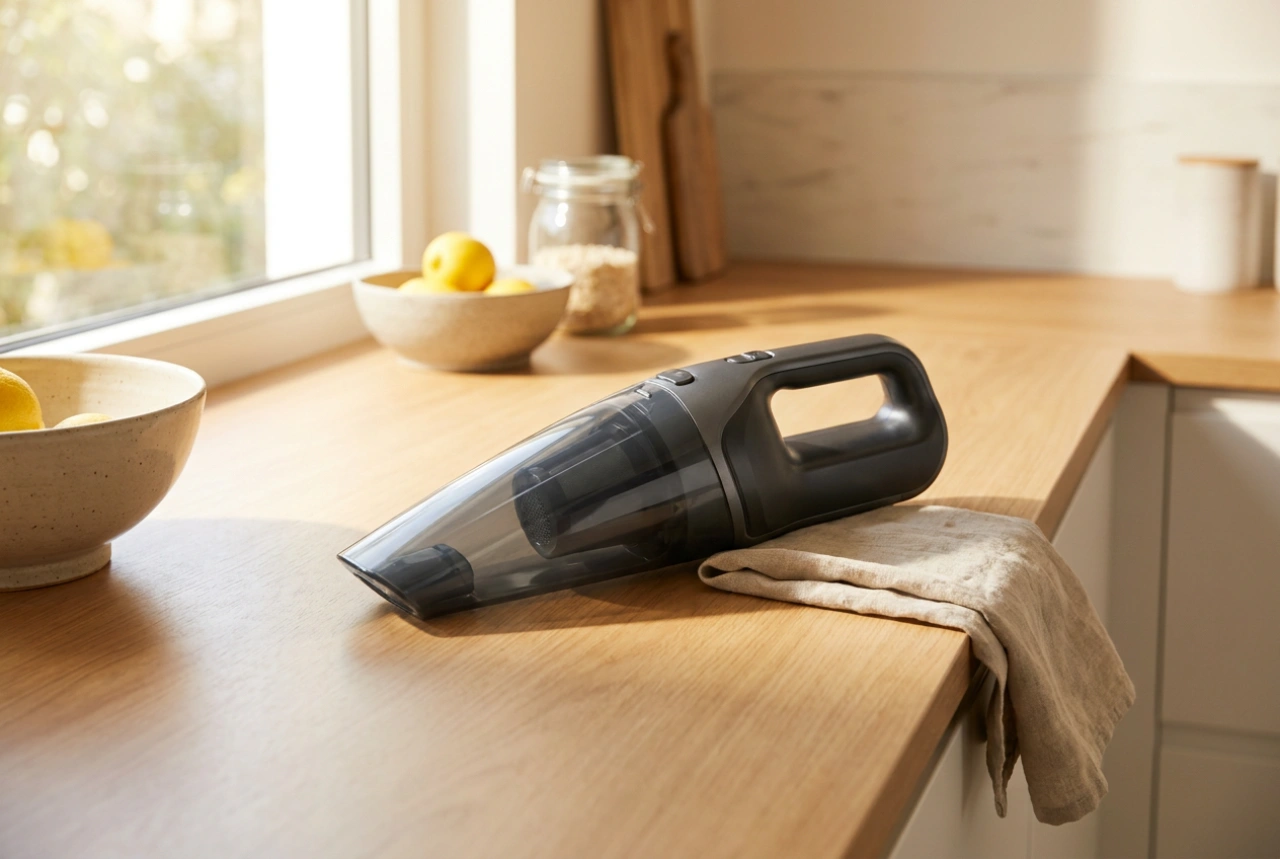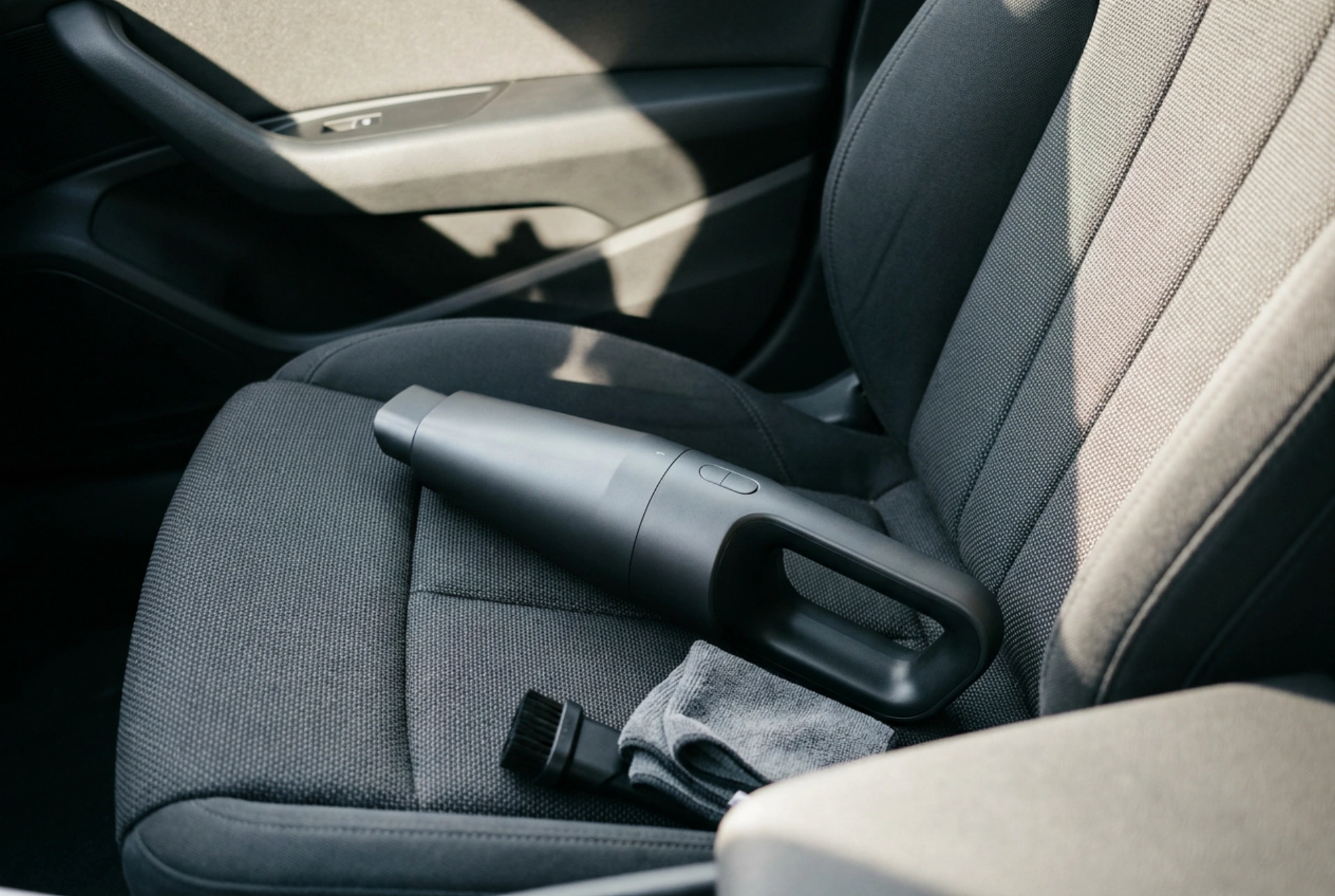


Choosing the ideal car vacuum cleaner is not merely a matter of checking battery life; it requires a fundamental understanding of how different types of debris bind to automotive textiles. From heavy, abrasive sand grains to electrostatically charged dust and hooked pet hairs, each contaminant demands specific mechanical forces and airflow dynamics to be successfully extracted.
The Physics of Car Debris: How Fibres Hold Contaminants
Automotive carpeting and upholstery are typically made of dense, needle-punched synthetic fibres designed for durability. This dense structure, however, acts as a highly efficient trap for environmental debris. To select the right vacuum, one must first understand the physics of what needs to be removed. Sand consists of heavy, crystalline silicon dioxide particles. Because of their weight and jagged edges, sand grains quickly migrate to the very base of the carpet pile, wedging themselves between tight fibre loops where simple surface suction cannot reach them.
In contrast, pet hair does not just sit on the surface; it binds through a combination of mechanical interlocking and electrostatic attraction. Microscopic scales on animal hair act like tiny barbs, hooking into the woven loops of fabric seats. Meanwhile, fine dust consists of microscopic organic and inorganic particulates that carry a slight electrostatic charge. These particles cling to synthetic fibres and plastic surfaces, requiring high-velocity airflow to break the boundary layer of air and pull them free.
Airflow vs. Sealed Suction: Decoding the Specifications
When evaluating vacuum cleaners, manufacturers often list wattage, kilopascals (kPa), or air watts. Understanding these metrics is vital for matching the tool to the task. Sealed suction, measured in pascals or millibars, indicates the maximum negative pressure the motor can generate when the intake is completely blocked. High static pressure is essential for lifting heavy, deeply embedded particles like sand from dense carpets, as it creates the pressure differential needed to pull objects upward against gravity.
Airflow, measured in litres per second or cubic feet per minute (CFM), represents the volume of air moving through the system. High airflow is crucial for capturing light, airborne dust and loose hair over a wider area. A machine with high static pressure but low airflow will struggle to clean efficiently, while high airflow with low static pressure will fail to lift deep-seated sand. For automotive detailing, a balanced system offering at least 8 to 12 kPa of suction pressure is recommended to handle the diverse range of cabin debris.
Power Delivery: Corded vs. Cordless Trade-offs
The power source directly dictates both the runtime and the consistency of the suction performance. Understanding the electrical limitations of each option is key to making a practical choice:
- 12V DC Corded (Cigarette Lighter): These units offer unlimited runtime but are strictly limited by the vehicle's electrical circuit, typically drawing a maximum of 120 to 150 watts. This power constraint often limits their peak suction pressure, making them suitable for light maintenance rather than deep sand extraction.
- Mains-Powered AC Corded: Drawing power directly from a domestic outlet, these vacuums face no such limitations. They deliver consistent, high-wattage performance with exceptional suction and airflow, making them the gold standard for heavy-duty deep cleans, though their mobility is restricted by the availability of an electrical outlet.
- Battery-Powered Cordless (Lithium-Ion): Modern cordless units offer unmatched mobility. However, look closely at the battery voltage (ideally 18V or higher) and the motor type. Brushless motors are highly recommended as they provide greater torque, higher efficiency, and longer operational life without dropping suction power as the battery depletes.
Mechanical Agitation and Nozzle Dynamics
Suction alone is rarely sufficient to dislodge stubborn debris from automotive textiles. Mechanical agitation is the critical secondary force required to break the physical bonds between debris and fibres. When dealing with pet hair, a specialised nozzle with rubber nubs or a motorised brush bar is indispensable. The high-friction rubber grabs the hair, pulling and rolling it out of the fabric loops so the moving air stream can capture it.
For fine dust and sand in tight crevices, nozzle geometry plays a vital role. Narrow crevice tools exploit the Venturi effect: by forcing the incoming air through a smaller aperture, the velocity of the air increases dramatically. This high-velocity stream shears dust particles off plastic surfaces and vibrates carpet fibres, helping to shake loose deeply embedded sand grains so they can be swept into the airflow.
The Importance of Multi-Stage Filtration
An often-overlooked aspect of car vacuuming is filtration efficiency. If a vacuum lacks an adequate filtration system, fine dust sucked from the footwells will pass straight through the collection chamber and be exhausted back into the confined space of the vehicle cabin. This not only poses a respiratory hazard but also leaves a fine layer of dust on the dashboard and windows shortly after cleaning.
Look for systems utilizing cyclonic separation combined with a dense, washable physical filter. Cyclonic action uses centrifugal force to spin heavy particles (like sand) out of the airflow, depositing them directly into the dust bin before they can clog the filter. This preserves consistent airflow during extended cleaning sessions. A secondary fine-particle filter then traps microscopic dust, ensuring that only clean, purified air is exhausted back into your vehicle's interior.