

Steam cleaning upholstery relies on thermal energy to liquefy oils and break down dirt binds, but excessive heat or moisture can ruin delicate fibers. Understanding fabric chemistry and managing steam temperature is critical to achieving a deep clean without compromising textile integrity.
The Science of Steam and Fabric Fibres
Steam cleaners heat water under pressure to produce dry steam, which contains very little liquid water. This high-temperature vapour breaks the physical bonds between dirt, sebum, and textile fibres. However, different materials react uniquely to heat and moisture. Natural fibres like cotton, linen, and wool are hydrophilic, meaning they absorb water readily. Excessive moisture can cause these fibres to swell, weaken, or shrink. Wool, in particular, can felt when exposed to heat and friction.
Synthetic fibres such as polyester, acrylic, and nylon are thermoplastic polymers. While they are highly resistant to moisture, they have specific thermal limits. If the steam temperature exceeds their softening point, these fibres can melt, leading to a permanent change in texture, loss of sheen, or a hardened surface. Knowing the exact composition of your upholstery fabric is the vital first step before introducing thermal cleaning methods.
Deciphering Fabric Care Labels and Pre-Testing
Before applying steam, locate the manufacturer care label. Upholstery fabrics generally fall under four standardised codes:
- W: Wet cleaning allowed. Safe for water-based cleaning agents and mild steam cleaning.
- S: Solvent cleaning only. Do not use steam, as water-based cleaning will cause ring stains, shrinkage, or dye bleeding.
- WS: Water or solvent cleaning. Generally safe for steam, provided temperature limits are respected.
- X: Vacuum or brush only. Strictly avoid steam cleaning, as the fabric is highly sensitive to moisture and heat.
Even if the fabric is marked W or WS, a pre-test is mandatory. Select an inconspicuous area, such as the back of a cushion or the lower rear panel of a sofa. Wrap the steam nozzle in a clean microfiber cloth and apply steam to the test area for five seconds. Allow the fabric to dry completely. Inspect the site under natural light for dye migration, shrinkage, or alterations in texture.
Step-by-Step Steam Cleaning Protocol
Successful steam cleaning depends on a systematic sequence of operations that minimises heat exposure while maximising soil removal.
1. Thorough Dry Vacuuming
Never apply steam to dusty fabric. Doing so turns dry particulate soil into mud, driving it deeper into the weave. Use a vacuum cleaner equipped with a HEPA filter and an upholstery attachment to remove loose dust, hair, and grit from every crevice.
2. The Microfiber Barrier Technique
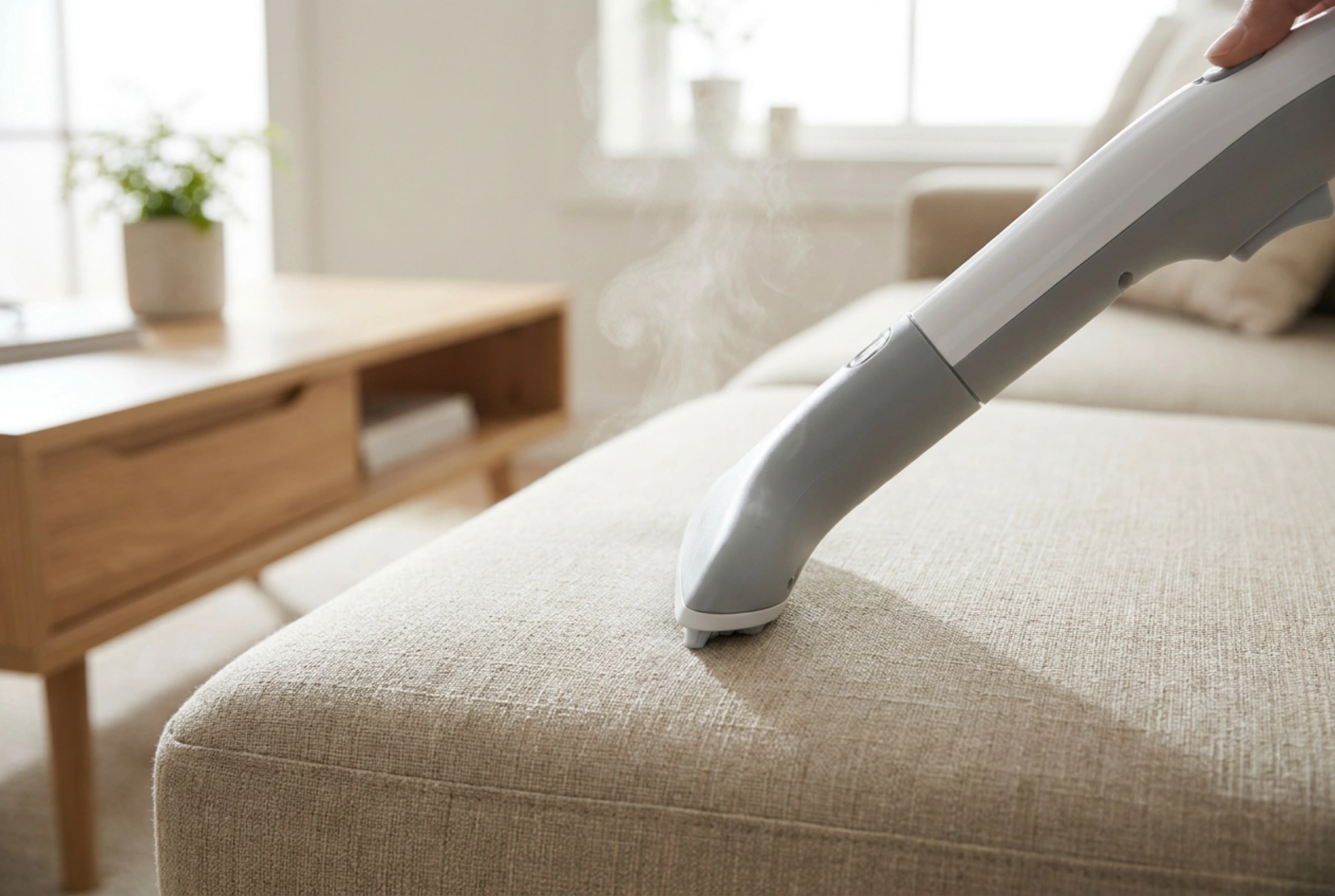
Direct contact with a bare steam nozzle can scorch fibres. Always wrap the upholstery attachment in a clean, lint-free microfiber cloth. This cloth serves a double purpose: it buffers the heat, preventing direct thermal shock, and uses capillary action to instantly absorb the dirt liquefied by the steam.
3. Controlled Passes and Movement
Keep the nozzle moving continuously. Work in small, overlapping sections using a slow, steady gliding motion (approximately ten centimetres per second). Avoid pressing down heavily; let the thermal energy of the rising vapour do the work. Immediately follow each steam pass with a dry microfiber cloth to wick away residual moisture.
4. Rapid Drying Procedures
Moisture left in upholstery for more than 24 hours invites fungal growth and musty odours. Accelerate drying by opening windows to promote cross-ventilation, running a dehumidifier, or placing a floor fan directly facing the cleaned furniture.
Controlling Thermal Output and Distance
The temperature of steam drops rapidly as it exits the nozzle into the surrounding air. If you are dealing with delicate blends or synthetic fibres with lower melting points, increase the distance between the steam nozzle and the fabric. Holding the tool five to ten centimetres away allows the vapour to cool slightly before contacting the textile, delivering gentle sanitation without thermal stress.