

Connecting your power tools directly to a workshop vacuum with an integrated power socket creates a clean, dust-free workspace by capturing particles the moment they are generated. Understanding the electrical synchronization and airflow dynamics of this system ensures safe, efficient operation and protects your equipment from premature wear.
The Mechanics of Synchronised Dust Extraction
The integrated socket on a workshop vacuum operates on a master-slave relay circuit. When you plug a power tool (the master) into the vacuum's socket and turn the vacuum switch to the automatic setting (often marked as "II" or a tool icon), the vacuum (the slave) remains on standby. Once the power tool is switched on, the internal sensing circuit detects the current draw and instantly activates the vacuum motor.
A critical feature of this system is the delayed shutdown mechanism. When you turn off the power tool, the vacuum continues to run for several seconds before shutting down. This delay is essential because it allows the high-velocity airflow to clear any remaining debris and airborne dust out of the suction hose, preventing blockages and ensuring that no dust falls back onto your workspace when the connection is severed.
Managing Electrical Loads and Wattage Limits
Before plugging any power tool into a workshop vacuum, you must calculate the combined electrical load to prevent tripping your workshop's circuit breakers. Every vacuum with an integrated socket has a strictly defined maximum power rating for the connected tool, which is typically printed directly on the socket cover or the machine's rating plate.
For example, if a vacuum is rated at 1200 watts and the integrated socket is rated for a maximum of 1800 watts, the total potential draw is 3000 watts. If your wall outlet is on a standard 16-ampere circuit (operating at 230 volts), the maximum safe load is approximately 3680 watts. Exceeding this combined limit by using high-draw tools, such as heavy-duty table saws or thick planer-molder machines, will overload the circuit. Always verify that the starting current of your power tool, which can briefly spike higher than the running wattage, falls within the safety parameters of both the vacuum relay and your household electrical supply.
Optimising Airflow and Hose Connections
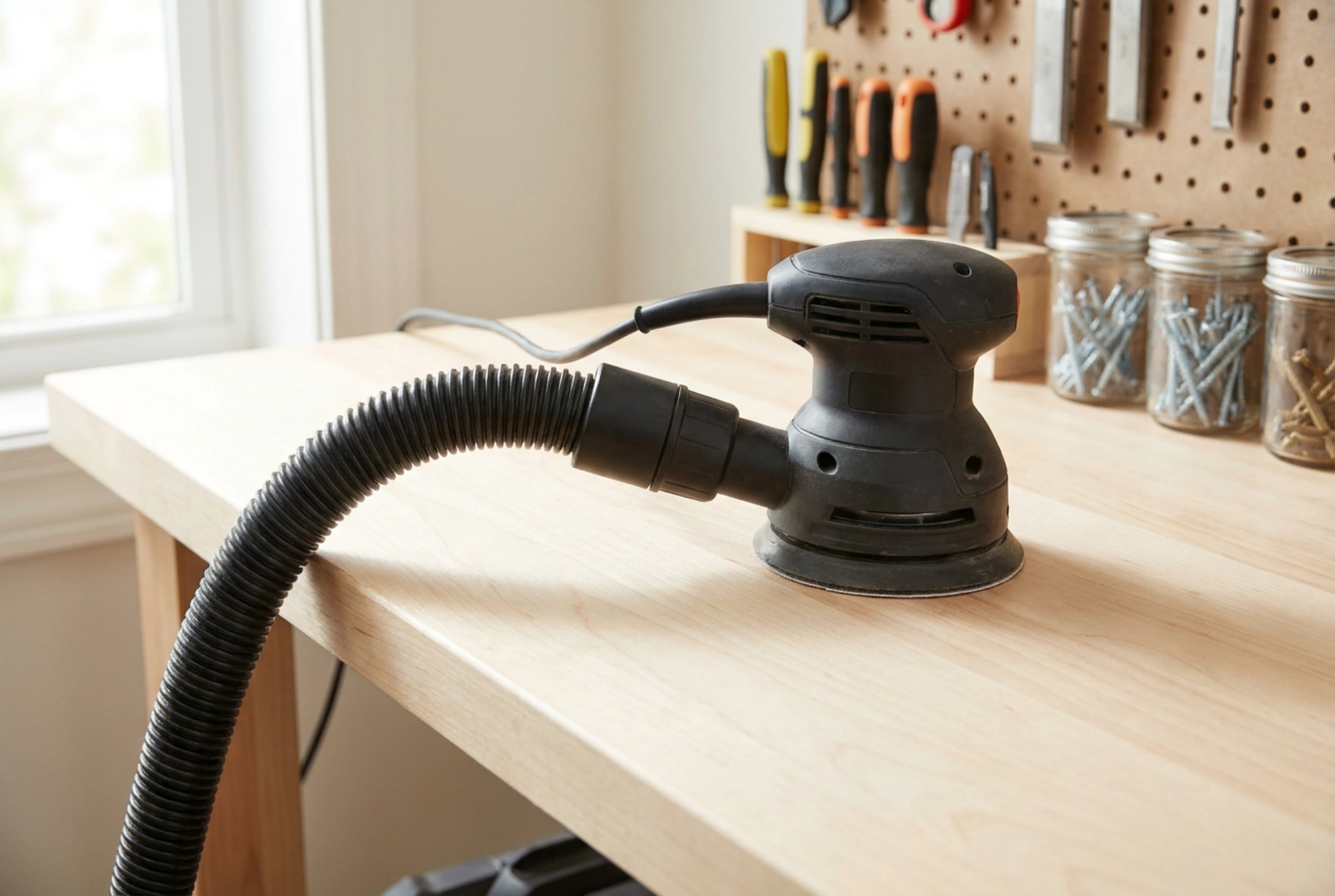
To achieve maximum dust collection efficiency, the physical connection between the tool's exhaust port and the vacuum hose must be airtight yet flexible. Standard power tools come with varying dust port diameters, which requires the use of stepped rubber adapters. These adapters should be cut precisely to the size that fits tightly over the tool port without restricting the airflow path.
Airflow volume and static pressure must be balanced depending on the material you are processing. Working with wood produces coarse chips that require high volume, whereas sanding plasterboard generates micro-particles that require high static pressure. Many professional vacuums feature an adjustable suction control dial. Reducing the suction slightly during fine sanding prevents the sanding pad from sealing itself to the surface, which would otherwise overload the tool motor and cause uneven sanding marks.
Static Dissipation and Filtration Maintenance
The rapid friction of dust particles moving through a plastic suction hose generates significant static electricity. Without proper grounding, this can result in sudden electrostatic discharges that can startle the operator or damage sensitive electronics in modern power tools. To mitigate this risk, utilise an anti-static suction hose which contains conductive carbon fibers that safely discharge static electricity through the vacuum’s grounded chassis.
Furthermore, fine dust requires the use of double-walled fleece filter bags and a high-efficiency particulate air filter. Using a vacuum without a bag when sanding drywall or wood will clog the main filter pores instantly, causing a drop in static pressure and putting thermal stress on the motor. Regularly activate the vacuum’s manual or automatic filter cleaning pulse system to maintain consistent suction throughout your project.