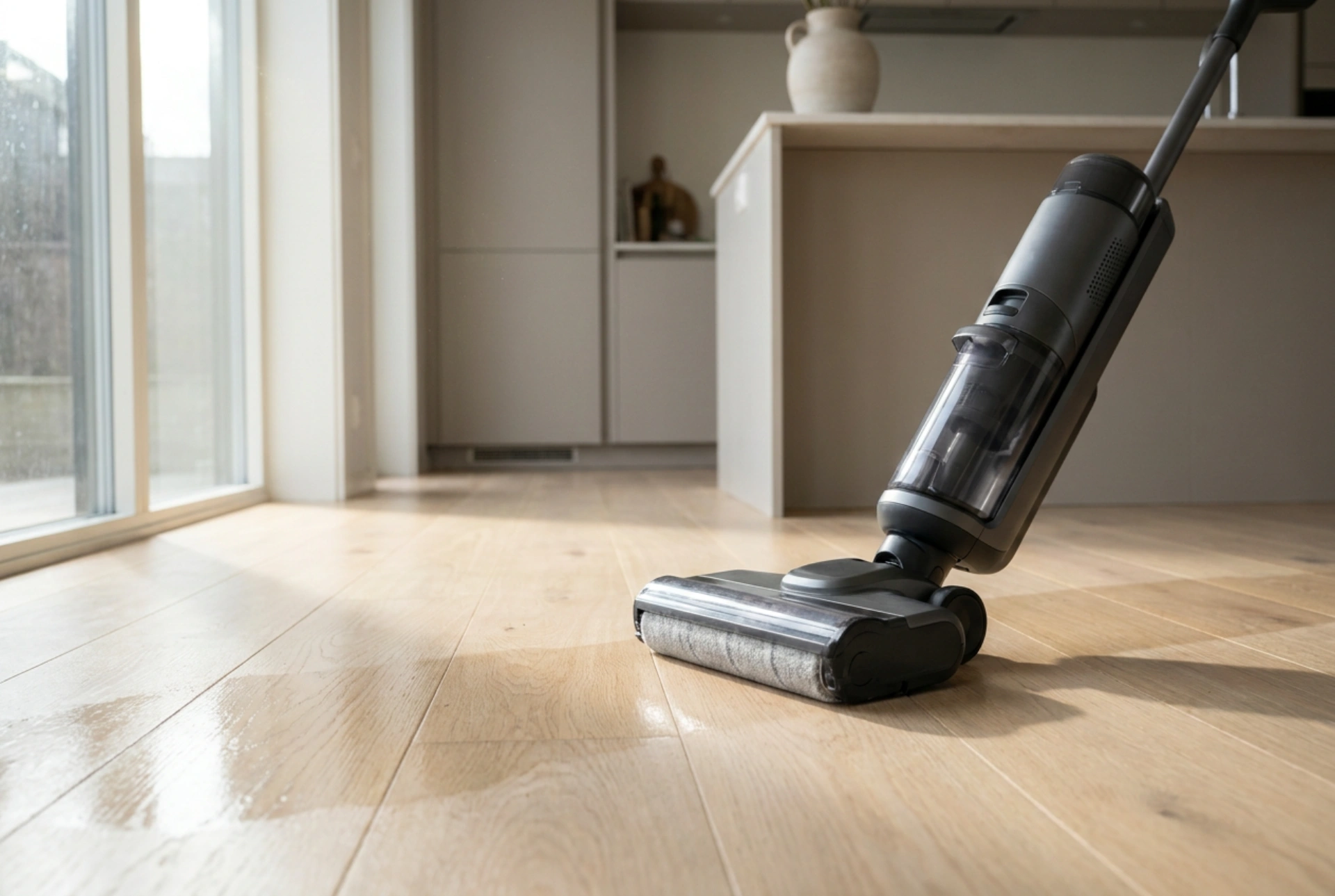


Achieving a flawless, streak-free finish with a cordless vacuum mop requires understanding the physics of evaporation and the chemistry of cleaning agents. While these hybrid appliances streamline household chores, improper technique or incorrect water-to-detergent ratios will inevitably leave unsightly residue lines on hard floors.
The Science Behind Floor Streaks
Streaks are not actually scratches or dirt; they are concentrated deposits of minerals and surfactant residues left behind as water evaporates. When a cordless vacuum mop dispenses water, it creates a thin liquid film on the floor. If this film contains high levels of dissolved solids—such as calcium and magnesium from hard tap water, or excessive detergent molecules—the water molecules evaporate into the air, leaving the non-volatile solids bound to the surface. To prevent this, you must control both the purity of the water and the concentration of your cleaning solution.
Water Quality and Temperature Dynamics
The type of water you pour into your device's clean water tank directly dictates the clarity of the dried floor. Tap water with high mineral hardness is the primary culprit behind cloudy streaks. Using demineralized or distilled water eliminates these inorganic compounds entirely, ensuring that nothing remains on the surface post-evaporation. Furthermore, the temperature of the water plays a critical role in surfactant performance. Lukewarm water (around 30°C to 40°C) lowers the surface tension of the liquid, allowing it to wet the floor evenly rather than pooling into droplets. Extremely hot water should be avoided as it can warp plastic internal components and cause the cleaning solution to evaporate too rapidly, before the vacuum inlet can suction the dirty moisture back up.
Detergent Chemistry: Less is More
Many household cleaners contain heavy foaming agents and synthetic fragrances that do not evaporate. When these products are overdosed, they leave a tacky, hygroscopic film on the floor. This film not only looks dull but actively attracts airborne dust and oils from footwear, causing the floor to dirty even faster. To maintain a pristine finish, follow these chemical guidelines:
- Dilution Precision: Use only a fraction of the recommended detergent amount. A highly diluted solution of a neutral surfactant (pH 7) is sufficient to break down surface lipids without leaving a build-up.
- Avoid Rinser-Free Myths: If a cleaner requires rinsing but is used in a single-pass vacuum mop, it will leave streaks. Opt for specialized low-residue, non-foaming agents.
- Alcohol-Based Additives: A tiny splash of isopropyl alcohol can speed up evaporation rates and reduce surface tension, promoting a flash-drying effect that leaves no trace.
Optimizing Motion and Flow Control
The mechanical execution of your cleaning path determines how effectively the vacuum mop lifts dirty water before it dries. Modern cordless mops rely on a continuous cycle of wetting, agitating with a roller, and suctioning. To maximize this mechanism:
1. The Overlapping S-Pattern
Work in structured, overlapping paths. Guide the machine forward slowly to allow the wet roller to break down grime, and pull it back along the exact same path to maximize suction recovery. Each new pass should overlap the previous one by about 30 percent to ensure no dirty water lines remain at the margins of the roller.
2. Calibrating the Flow Rate
Most cordless vacuum mops feature adjustable water flow settings. On non-porous surfaces like glazed ceramic tiles, a higher flow rate can be tolerated because the suction can easily reclaim the liquid. However, on sensitive materials like sealed wood or laminate, use the lowest moisture setting. Excessive water will seep into joints and evaporate too slowly, resulting in water spots.
Maintenance of Microfiber Rollers
A dirty roller cannot produce a streak-free clean. If the microfiber brush is saturated with oils and fine silt from previous sessions, it will simply paint a thin layer of grime back onto the floor. Clean the roller thoroughly after every use. Wash it in warm water with a fragrance-free, residue-free detergent, and avoid fabric softeners, which coat the fibers in silicone and destroy their natural capillary action. Allow the roller to air-dry completely in a well-ventilated space before reinstalling it to prevent anaerobic bacteria from forming biofilms.