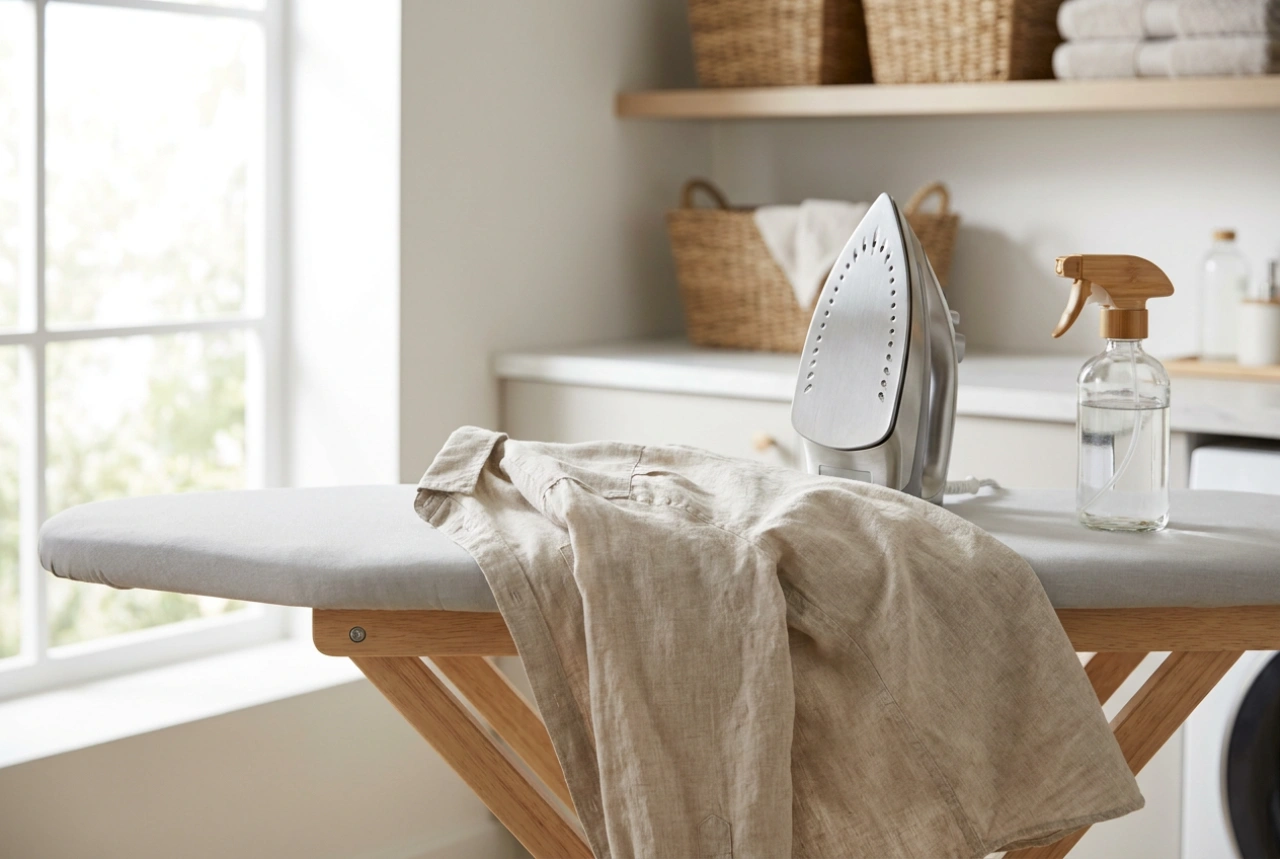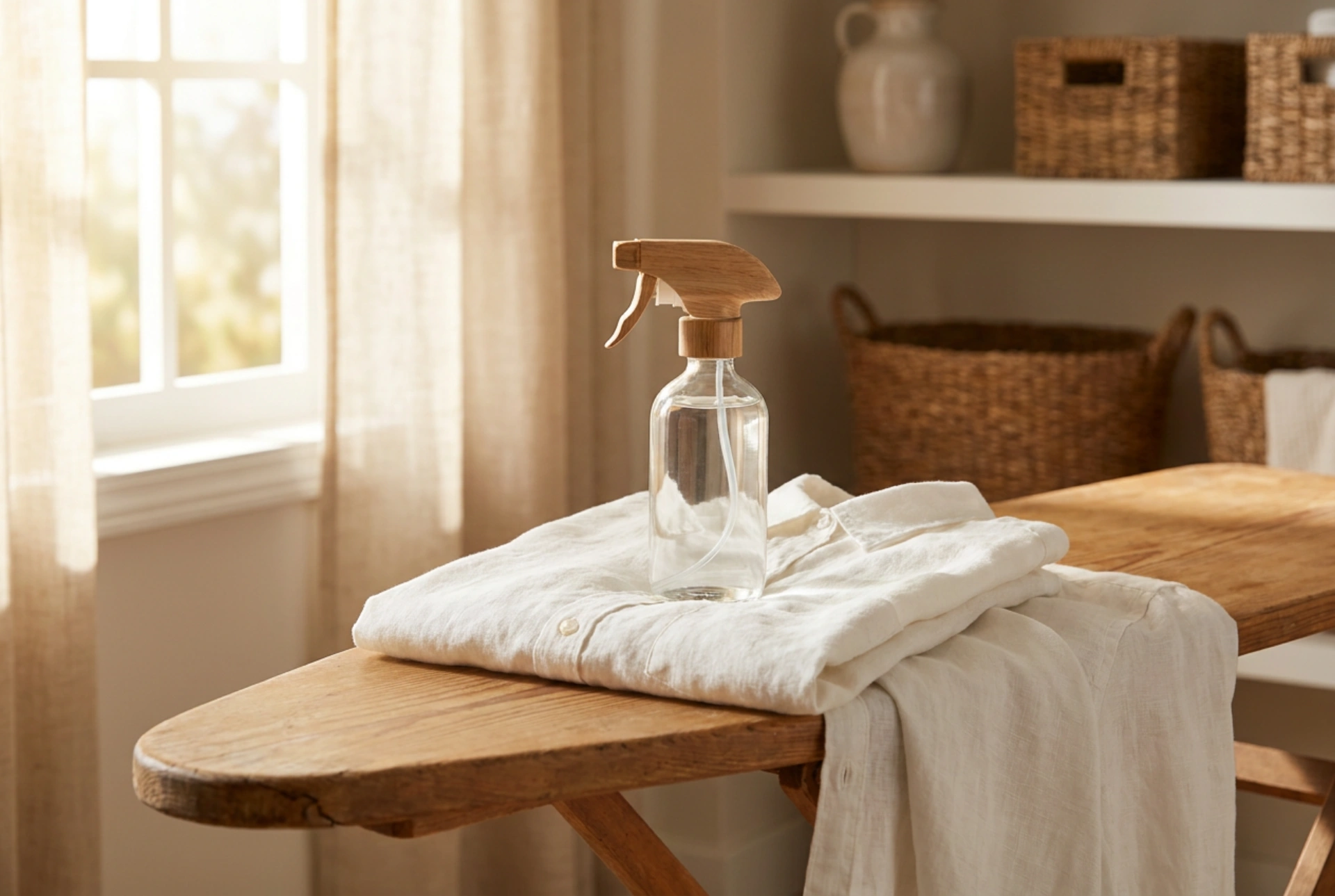


Achieving crisp, wrinkle-free garments involves more than just heat and pressure; it requires managing the physical structure of fabric fibres. Ironing liquids serve as chemical facilitators in this process, but choosing the right type and applying it correctly is vital to protect both your wardrobe and your iron.
The Science Behind Ironing Liquids: Starch vs. Smoothing Agents
To understand how ironing liquids work, one must look at fabric on a molecular level. Natural fibres like cotton and linen consist of cellulose chains held together by hydrogen bonds. When these fabrics wrinkle, the hydrogen bonds lock the fibres into distorted shapes. Ironing liquids fall into two primary chemical categories designed to resolve this: starch-based stiffeners and surfactant-based smoothing agents.
Traditional starch sprays utilise natural polymers, such as amylose and amylopectin. When sprayed onto fabric and subjected to the heat of an iron, these starch molecules gelatinise. This process creates a thin, semi-rigid film over the fibres, giving garments like dress shirts a crisp, structured finish. However, starch remains on the surface of the fabric and can attract moisture and organic dust over time.
In contrast, modern smoothing sprays contain synthetic surfactants or specialised silicones. These compounds function by reducing the surface tension of water, allowing moisture to penetrate deep into the crystalline regions of the fabric much faster than plain water can. Instead of stiffening the fabric, they lubricate the individual yarns, allowing them to slide past one another and align flat under the pressure of the iron plate.
The Physics of Heat, Moisture, and Fibre Relaxation
Heat alone is rarely enough to remove stubborn creases from heavy cotton or flax linen. Water acts as a temporary plasticiser for cellulose. It breaks the existing hydrogen bonds, allowing the molecular chains to move freely. When the heat of the iron evaporates the water, new hydrogen bonds form in the flat, pressed position.
Using an ironing liquid optimises this thermodynamic process. Standard tap water often beads on the surface of dry, tightly woven fabrics due to high surface tension. The active ingredients in ironing aids break this tension, ensuring uniform moisture distribution. This prevents "wet spots" that can cause uneven shrinkage or water spotting on delicate fabrics.
Safe Application: Techniques to Protect Fabrics
Improper use of ironing liquids can lead to scorching, staining, or fabric degradation. To use these products safely and effectively, follow these precise chemical and physical guidelines:
- Maintain Distance: Always spray the liquid from a distance of 25 to 30 centimetres. This ensures a fine, even mist rather than concentrated droplets, which can saturate the fabric and cause scorching when heat is applied.
- Allow Penetration Time: Do not iron immediately after spraying. Wait 20 to 30 seconds to allow the liquid to penetrate the core of the fibres. Ironing a surface that is wet on the outside but dry on the inside causes the active polymers to bake onto the fabric surface, leaving yellow or white residue.
- Match Temperature to Fabric: Starch-based sprays require moderate heat to gelatinise but will burn at ultra-high temperatures. Always adjust your iron according to the fabric type, reducing heat slightly when using heavily concentrated starch.
- Never Mix in the Tank: Unless a product is specifically formulated and labelled as an additive for the iron’s internal water reservoir, never pour ironing liquids or scented waters into the water chamber. The heat of the internal boiler will cause the organic compounds and surfactants to precipitate, clogging the steam vents and permanently damaging the heating element.
Equipment Care and Eliminating Residue Build-Up
Over time, the chemical residues from ironing sprays accumulate on the soleplate of your iron. Under continuous heat, these residues undergo pyrolysis, turning into a brown, sticky substance that can ruin clean laundry. Regular maintenance of your equipment prevents this issue.
To clean a soleplate coated with baked-on starch or silicone residue, wait for the iron to cool completely. Prepare a mild solution of warm water and a small amount of neutral soap, or use a soft cloth dampened with a dilute solution of acetic acid (white vinegar) to dissolve the alkaline deposits. Wipe the soleplate gently, avoiding abrasive scrubbers that could scratch the non-stick or ceramic coating, which would otherwise catch on delicate fabric threads during future use.