

Cleaning window glass effectively relies on neutralizing alkaline mineral deposits and dissolving organic residues without etching the silica structure. Diluted acetic acid serves as an exceptional surfactant-free solvent when applied in mathematically precise ratios, ensuring clean panes without damaging surrounding seals.
The Chemistry of Acetic Acid on Silica Surfaces
To understand why vinegar works, one must look at the nature of window dirt. Glass surfaces accumulate a mixture of atmospheric dust, pollen, grease, and hard water spots. Hard water deposits consist primarily of calcium carbonate and magnesium carbonate, which are highly alkaline and tightly bound to the glass. Acetic acid (CH3COOH) acts as a proton donor. When it contacts these insoluble carbonates, a chemical reaction occurs, converting them into highly water-soluble acetates and releasing carbon dioxide gas. This reaction breaks the bond between the mineral and the glass, allowing the residue to be easily suspended in the liquid phase and wiped away. Furthermore, the mild acidity disrupts the greasy film left by organic pollutants, emulsifying lipids without leaving the synthetic surfactant film characteristic of commercial detergents.
The Golden Ratio: Dilution for Material Safety
Using undiluted vinegar is a common mistake that can compromise the structural integrity of your window frames and seals. Household white vinegar typically contains 5% acetic acid, which has a pH of approximately 2.4. At this concentration, prolonged exposure can degrade elastomeric seals, such as EPDM rubber gaskets, causing them to dry out, crack, and lose their airtight properties over time. It can also strip the protective oil or polyurethane varnishes from wooden sills.
The optimal, chemically balanced ratio for general glass cleaning is one part white vinegar to four parts distilled water. This 1:4 dilution reduces the acetic acid concentration to approximately 1%, raising the pH to a safer level of around 3. This concentration remains highly effective at dissolving mineral deposits while minimizing the risk of chemical degradation to surrounding plastics, rubbers, and finishes. Using distilled water rather than tap water is critical. Tap water contains dissolved minerals that do not evaporate, meaning that as the cleaning solution dries, these minerals will remain on the glass, creating new streaks and spots.
Technique, Mechanics, and Environmental Variables
Achieving a flawless finish depends as much on physical technique and environmental factors as it does on chemical composition. The most critical environmental rule is to avoid cleaning windows in direct sunlight or on exceptionally hot days. High thermal energy causes rapid evaporation of the water carrier. When the solvent evaporates too quickly, the dissolved contaminants and acetic acid are deposited back onto the glass before they can be physically lifted by the cloth, resulting in stubborn streaks.
For the best results, use the following operational sequence:
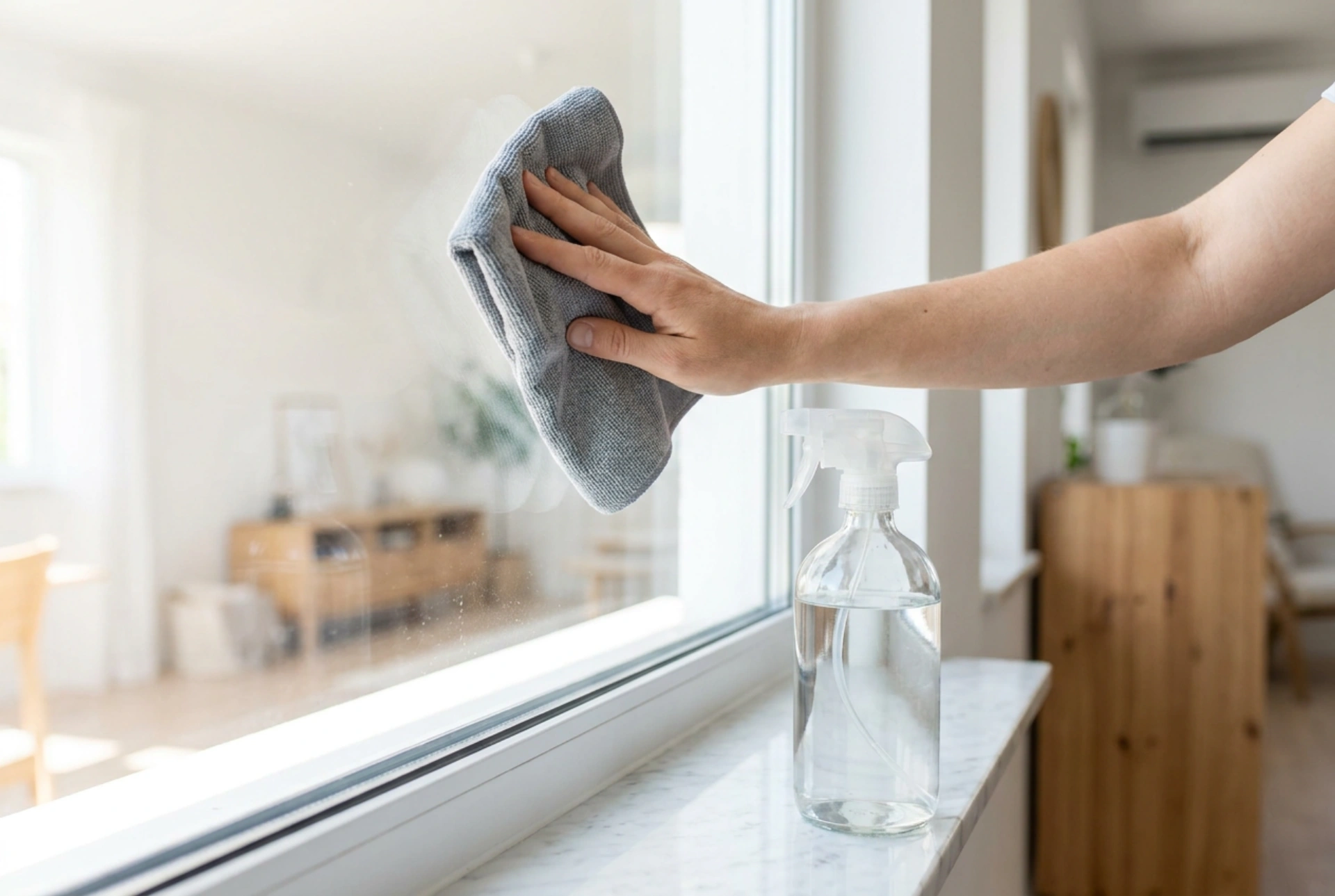
- Mist Application: Spray the 1:4 solution lightly over the glass using a fine-mist spray bottle. Avoid oversaturating the glass to prevent runoff into the frame joints.
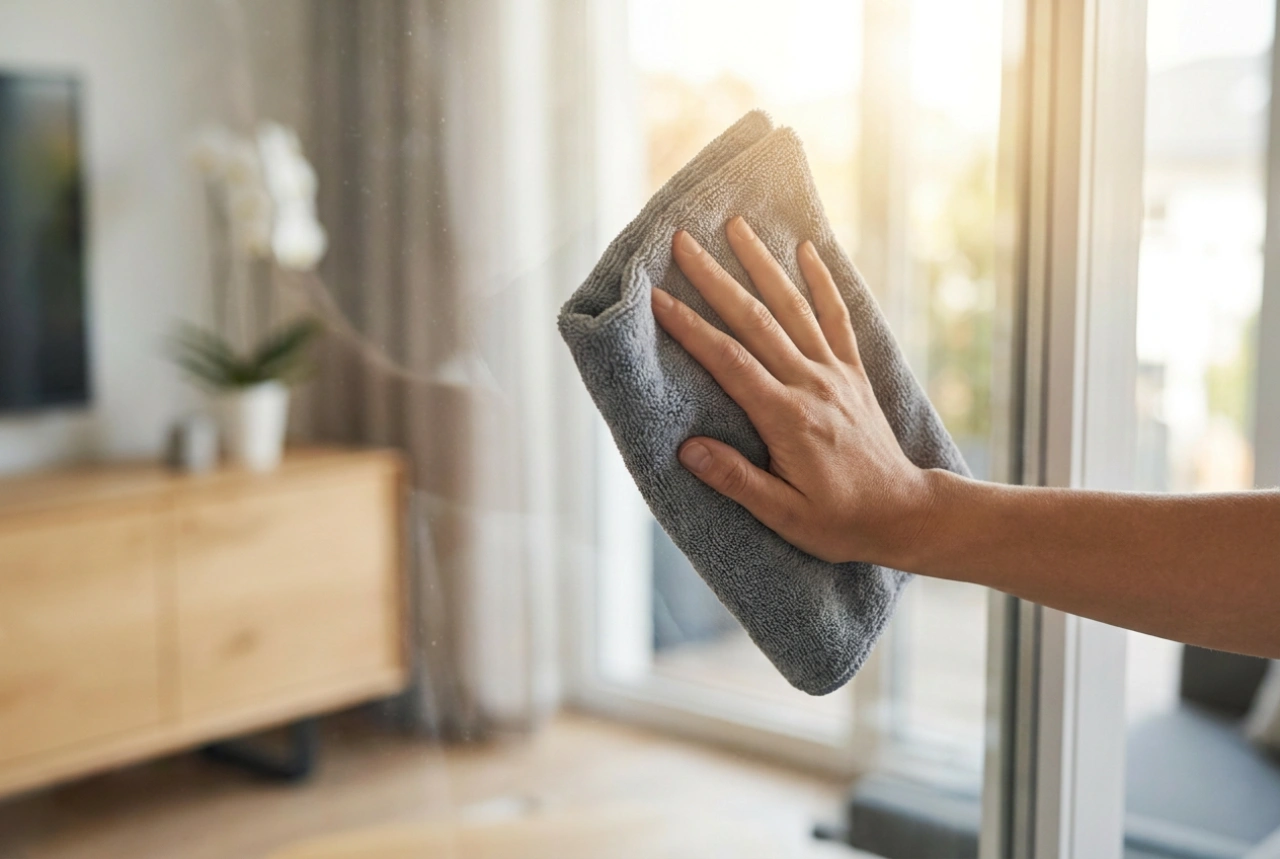
- The First Pass: Use a clean, damp microfiber cloth to agitate the surface, working in systematic, overlapping rows. The friction of the microfiber helps lift the loosened organic soils.
- The Squeegee Technique: Pull a professional squeegee with a sharp, supple rubber blade across the glass. Wipe the blade with a dry cloth after every single pass. Maintain a consistent 45-degree angle to the glass surface to ensure even pressure.
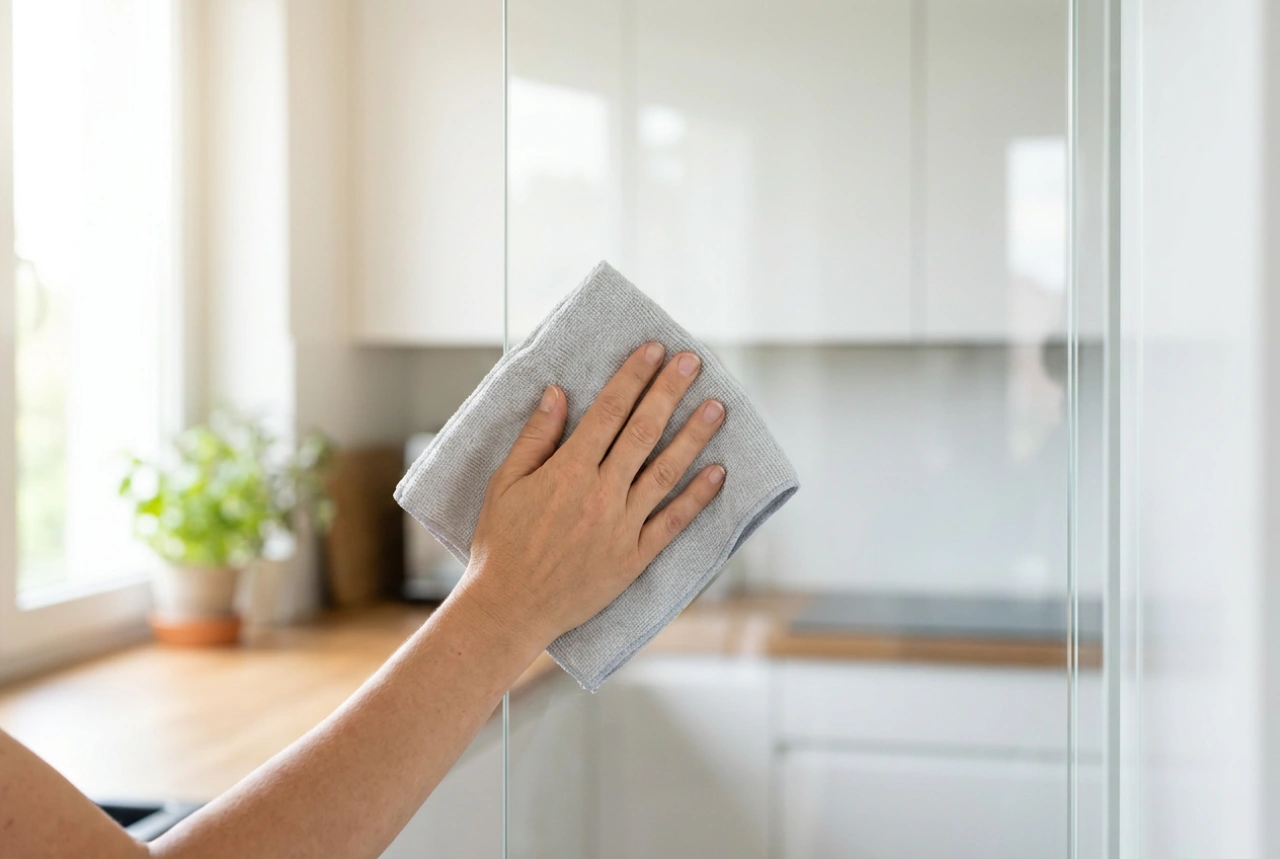
- Drying and Buffing: Use a dry, clean waffle-weave microfiber cloth to dry the edges of the pane and remove any remaining moisture. Buff in straight, alternating directions—horizontal strokes on the inside and vertical strokes on the outside. This allows you to instantly identify which side a streak is on if one occurs.
Protecting Sensitive Architectural Materials
While a 1% acetic acid solution is safe for glass and cured paints, it poses a significant threat to certain natural stone surfaces. Sills made of marble, limestone, or travertine are composed of calcium carbonate. Even weak acids will chemically react with these stones, causing immediate etching—a permanent loss of polish and texture. Always shield natural stone sills by placing a dry, absorbent cotton towel beneath the window pane before spraying. If any acidic solution drips onto the stone, neutralize it immediately by wiping the area with plain water and drying it thoroughly.