

Maintaining the filters in a bagless vacuum cleaner is crucial for preserving suction power, extending motor life, and ensuring high-quality air filtration. Neglecting these components forces the motor to work harder against restricted airflow, leading to overheating and premature mechanical failure.
The Science of Cyclone Filtration and Filter Resistance
Bagless vacuum cleaners rely on cyclonic separation to spin heavy dust particles out of the airflow using centrifugal force. However, microscopic particles and fine dust cannot be separated by centrifugal force alone; they travel directly to the physical filtration barriers. As these filters trap particles, they experience a natural drop in pressure across the filter medium. Over time, dust accumulation plugs the microscopic pathways, drastically increasing resistance. This restriction reduces the velocity of the air moving through the system, which directly diminishes the vacuum's lifting capability and strains the electric motor due to reduced cooling airflow.
Understanding Filter Materials: Washable vs. Non-Washable
Bagless vacuums typically contain a multi-stage filtration system consisting of mesh, foam, and pleated filters. Acknowledging the material composition of each filter is critical before applying any cleaning method. Mesh and coarse foam filters are usually made of polyurethane or similar polymers designed to withstand water exposure. Pleated filters, often rated as HEPA, can be constructed from either paper-cellulose fibers or synthetic polymer fibers. Cellulose filters must never contact water, as moisture swells the organic fibers, permanently collapsing the microscopic pore structure and rendering the filter useless.
Synthetic pleated filters, often reinforced with fiberglass or polyester, can tolerate gentle washing if specified by the manufacturer, but they require delicate physical handling. High-Efficiency Particulate Air (HEPA) filters trap microscopic pollutants through a combination of three physical mechanisms: inertial impaction, interception, and diffusion. Intercepted particles adhere to the fibers, while smaller particles undergo Brownian motion and collide with the fiber matrix. Rough handling or improper washing can distort this delicate structural web, permanently reducing the filter's particulate capture efficiency.
Step-by-Step Cleaning Protocol
Before initiating maintenance, disconnect the appliance from its electrical source to ensure safety. Remove the dust bin and carefully extract the filter assembly over a waste receptacle to contain loose particulates.
Dry Extraction and Mechanical Agitation
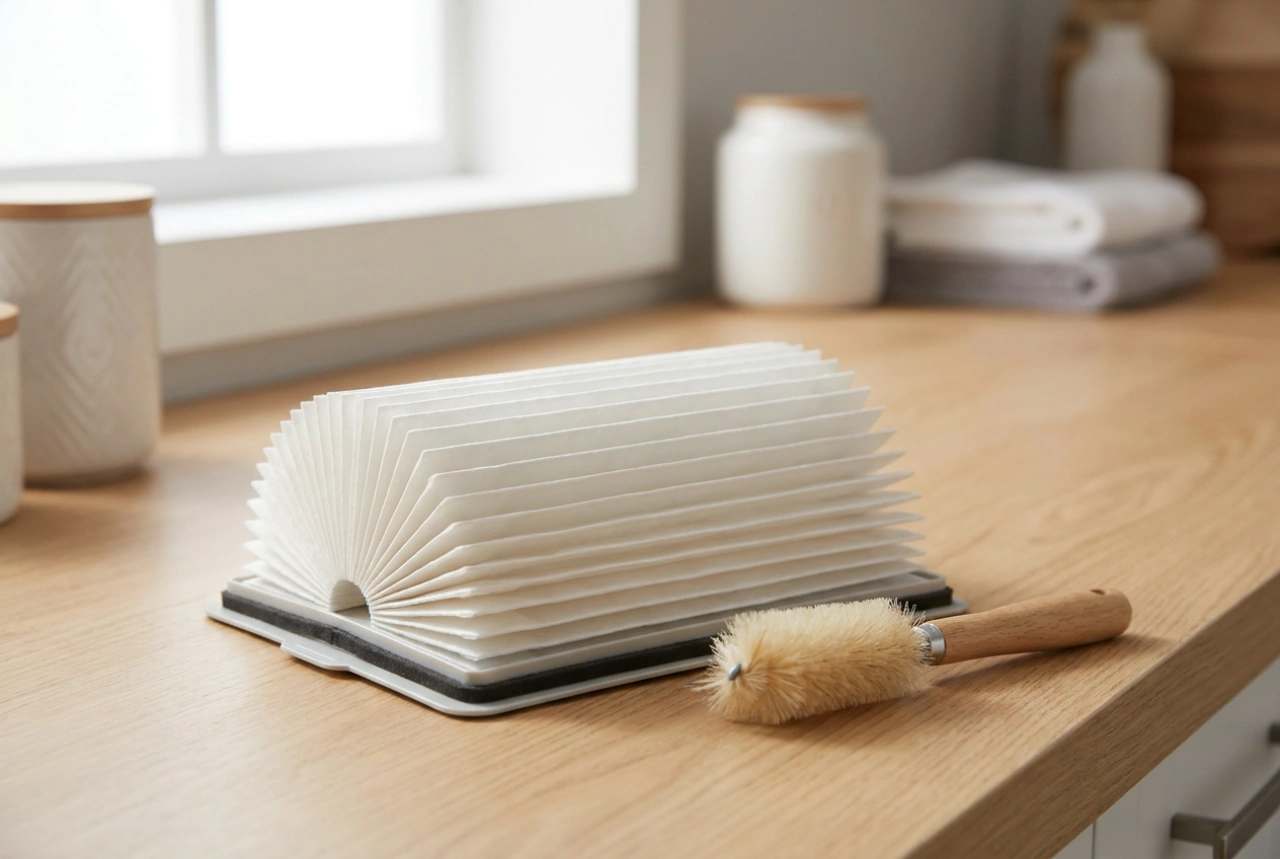
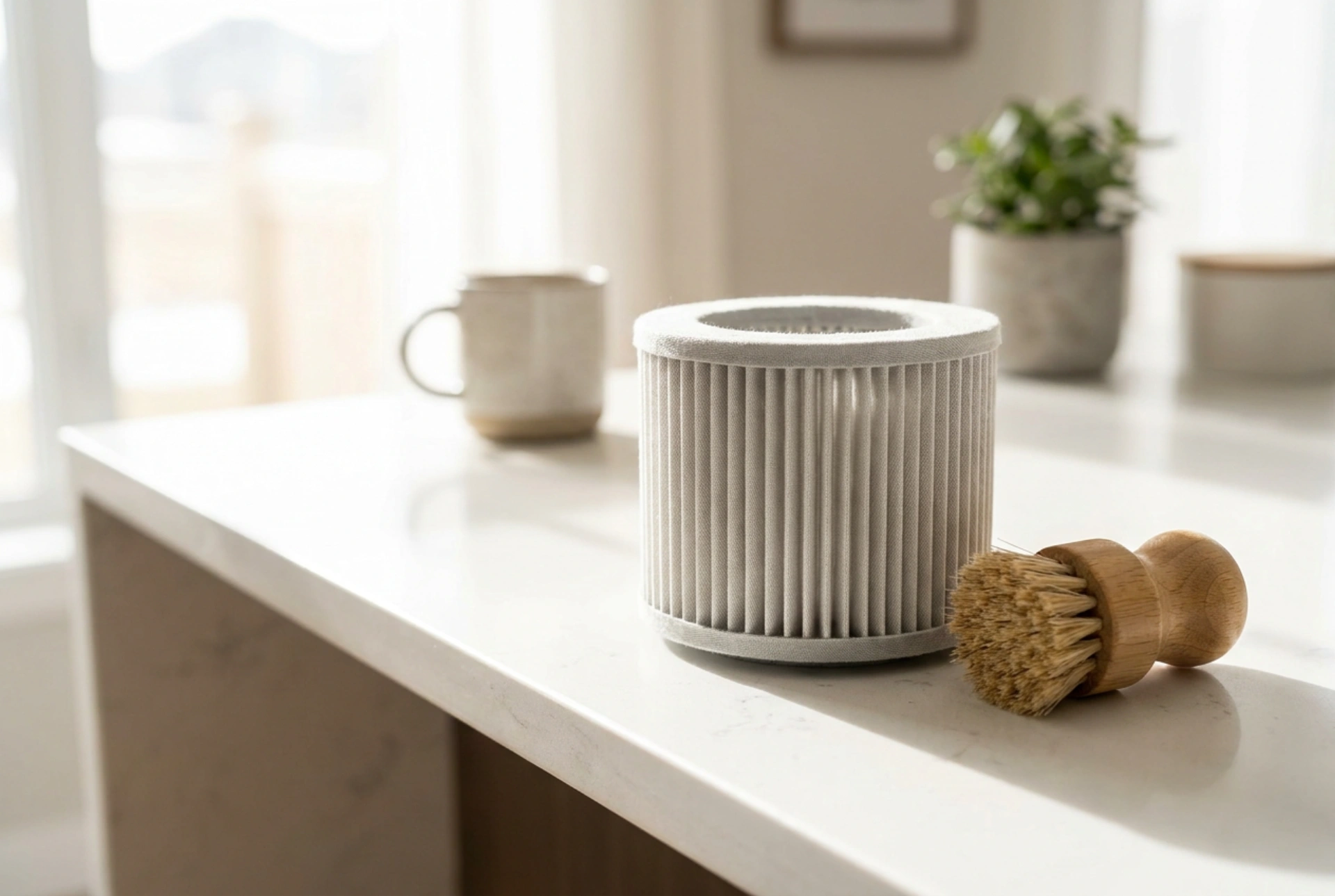
Begin by gently tapping the frame of the pleated filter against the inner wall of a bin to dislodge loose dust cake. Avoid striking the filter material itself. Use a soft-bristled brush to sweep along the pleats in parallel motions. Hard brushing must be avoided, as abrasive forces can micro-tear the delicate web of fibers, instantly compromising the filter's efficiency class.
Chemical-Free Aqueous Rinsing
For washable foam and synthetic pleated filters, rinse them under a low-pressure stream of lukewarm or cold water. Do not use hot water, as high temperatures can deform plastic housings and degrade synthetic adhesives. Direct the water flow from the clean side of the filter to the dirty side to flush particulates out rather than pushing them deeper into the matrix. Never use dish soaps, chlorine bleach, or aggressive surfactants. These chemicals can leave a sticky surfactant residue that attracts dust rapidly during subsequent use, or they can chemically degrade the synthetic polymers of the filter media.
The Physics of Drying
After rinsing, gently shake off excess water. Do not wring or squeeze pleated filters. Place the filters in a well-ventilated area with moderate temperature. They must dry completely for a minimum of 24 hours. Reinstalling a damp filter introduces moisture into the vacuum system, which leads to immediate mold spore colonization within the filter matrix, causing permanent sour odours and potentially damaging the internal electrical components of the motor.
Establishing a Maintenance Routine
Foam pre-filters should be washed or cleared every month, depending on usage frequency. Pleated HEPA-style filters require dry cleaning after every few bin emptyings and a deep wash or replacement every six to twelve months. Regular inspection of the structural integrity of the seals is vital; any cracks or deformities in the rubber or silicone gaskets will allow air to bypass the filter, sending abrasive dust directly into the motor turbine.