

The Material Science of Renovation Dust
Renovation activities generate extremely fine dust, predominantly consisting of calcium sulphate (gypsum) and crystalline silica. Unlike standard household dust, which is fibrous and easily trapped, mineral dust consists of sharp, microscopic angular particles. These particles penetrate deep into the microscopic pores of the filter medium through a process known as inertial impaction and diffusion. Standard cellulose (paper) filters are highly susceptible to blinding—a state where the pores are permanently blocked by packed particles. Polyester or synthetic fleece filters offer better resistance, but still require systematic intervention. When these pores clog, air resistance increases dramatically, forcing the motor to spin faster with less cooling airflow, eventually leading to thermal overload and motor failure.
Dry Cleaning Techniques: Mechanical Dislodgement
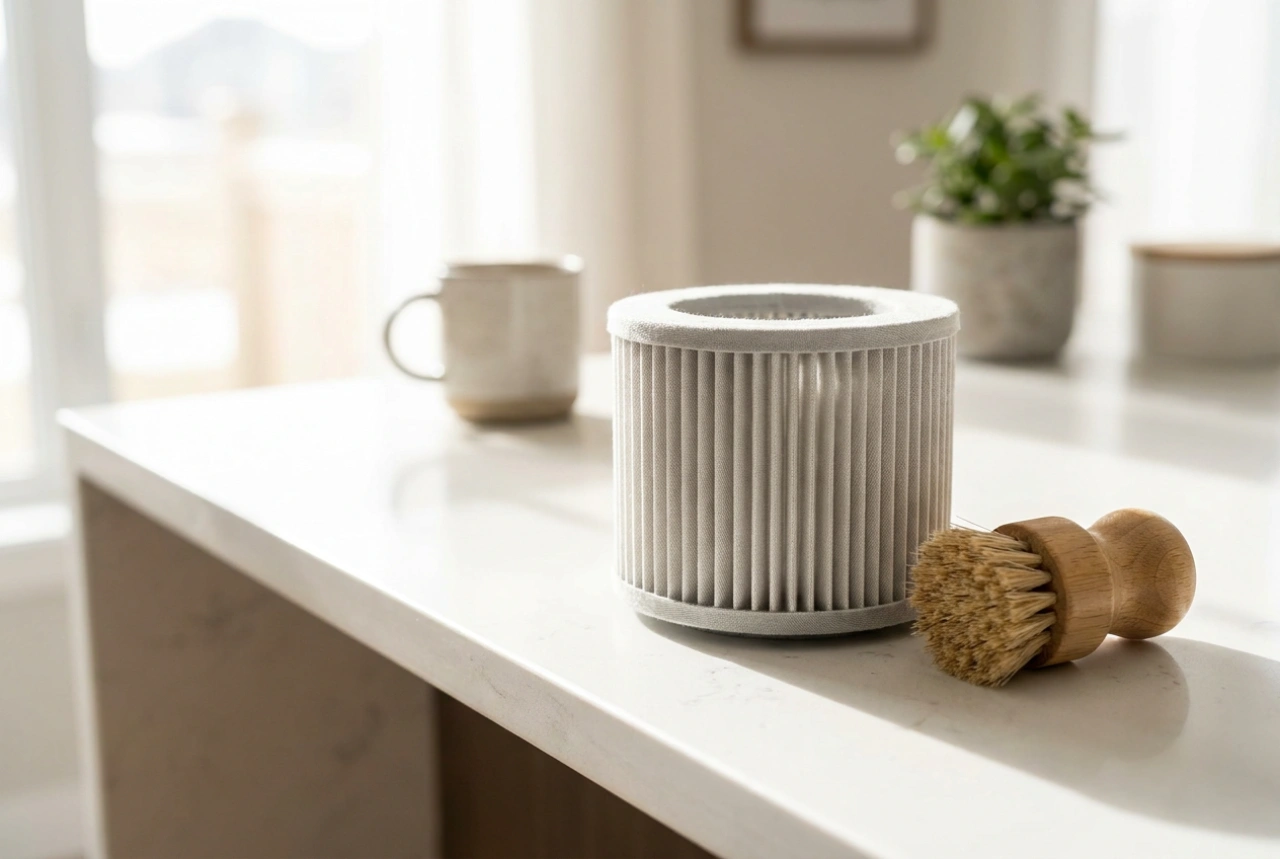
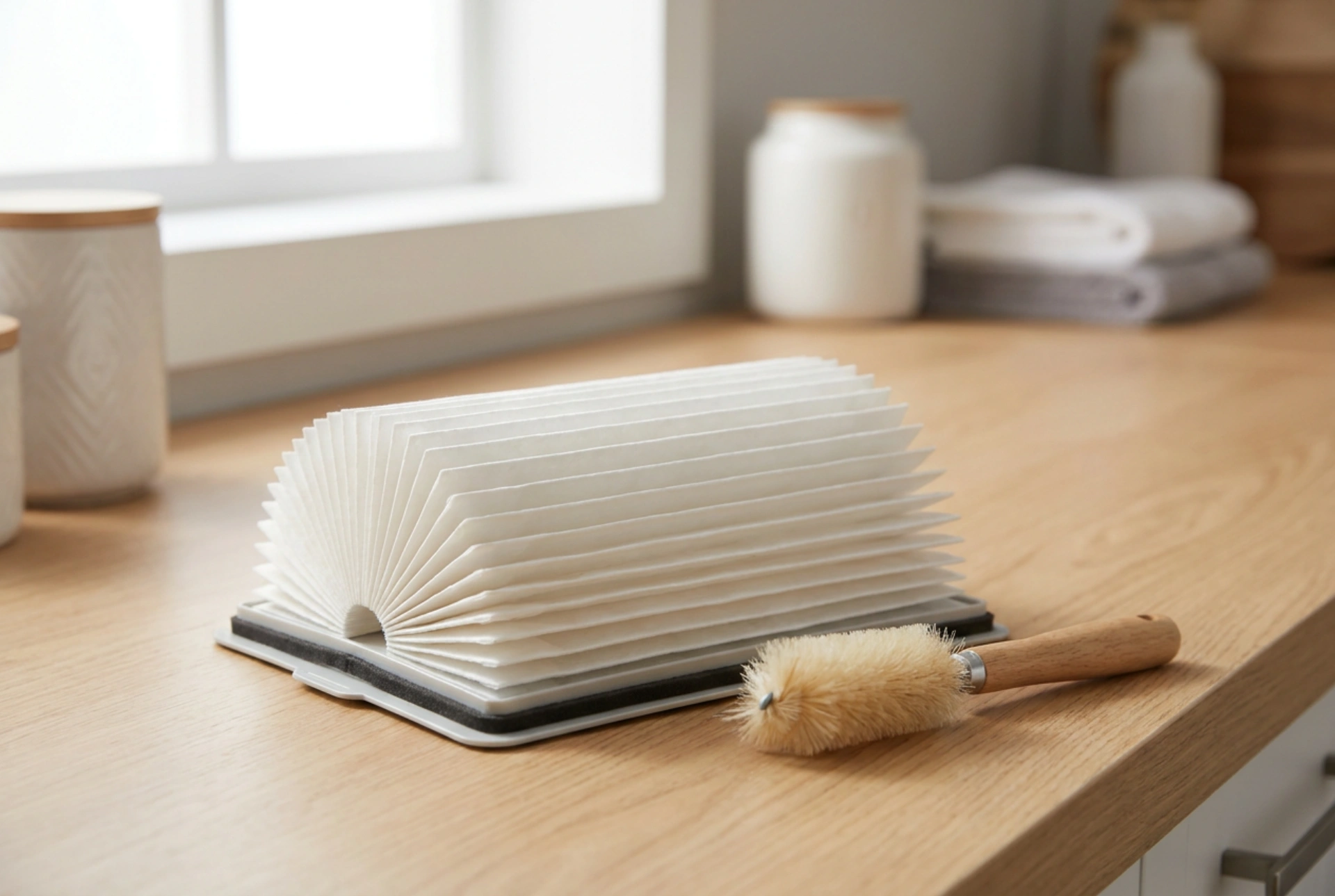
Before applying any liquid, dry mechanical cleaning is crucial. The goal is to break the cohesive forces holding the dust cake to the filter pleats without damaging the delicate filter media. Start by gently tapping the plastic frame of the filter cartridge against a hard surface to dislodge the bulk of the dust cake. Avoid striking the pleated material directly, as this can create micro-tears, rendering the filter useless. Next, use a soft-bristled brush to sweep along the pleats in a parallel direction. Never scrub perpendicular to the pleats, as this forces particles deeper into the substrate. If compressed air is available, direct the airflow from the inside out (counter-flow cleaning) at a low pressure of no more than 2 bar. High pressure can rupture the microscopic mesh of HEPA or EPA-grade materials, allowing fine dust to bypass the filtration system completely during subsequent operations.
Wet Washing Protocols for Washable Filters
Not all industrial vacuum filters are washable; cellulose-based elements will disintegrate when exposed to moisture. Only filters clearly labelled as polyester, PTFE, or washable HEPA should undergo wet cleaning. The cleaning process must respect the polymer chemistry of the filter. Use lukewarm water (not exceeding 30 degrees Celsius) to wash the filter from the inside out, allowing the water pressure to push out embedded dirt. Hot water can expand the synthetic fibres, permanently altering the pore size and structural integrity of the pleats. Do not use chemical detergents, bleach, or solvents, as these can dissolve the bonding agents holding the filter pleats to the polyurethane frame. After rinsing, shaking off excess water is vital. The filter must dry completely in a well-ventilated area for at least 24 hours. Installing a damp filter is catastrophic: wet plaster dust will react with the moisture, setting into a hard plaster barrier that completely ruins the filter's permeability.
Sequential Filtration and Protection Strategies
To prolong the lifespan of your main pleated filter during heavy sanding or drilling, implement a multi-stage filtration strategy. Never run an industrial vacuum during a renovation without a high-quality fleece pre-filter bag. Fleece bags act as a sacrificial barrier, catching 99% of large plaster chunks and fine dust before they reach the main cartridge. If you are suctioning highly adhesive materials, such as damp concrete slurry or tile adhesive residues, ensure your machine is equipped with a mechanical filter-vibrator system. Activating this pulse-clean mechanism every ten minutes of continuous use drops the accumulated dust cake back into the collection drum, maintaining an open path for air circulation and preventing thermal stress on the motor.