

Extracting soil from upholstery using a wet vacuum cleaner requires strict control over moisture volume and extraction mechanics to prevent unsightly water rings and streaks. Understanding how capillary action moves dissolved dirt to the surface during drying is the key to achieving a flawless, uniform finish.
The Physics of Upholstery Stains and Capillary Action
To prevent water stains, one must understand how they form. Water is an excellent polar solvent. When fabric gets wet, water dissolves deep-seated dust, organic matter, and microscopic soil trapped within the weave and the underlying foam. As the fabric dries, water evaporates first from the outermost tips of the fibres. This evaporation creates a capillary draw, pulling the moisture—along with the dissolved soil—from the deep padding up to the surface. When the water finally evaporates entirely, it leaves behind a concentrated ring of dirt: the classic water stain. Preventing this requires two things: removing as much particulate matter as possible before wetting, and extracting the injected water quickly and evenly to stop the capillary flow.
The Critical Dry Extraction Phase
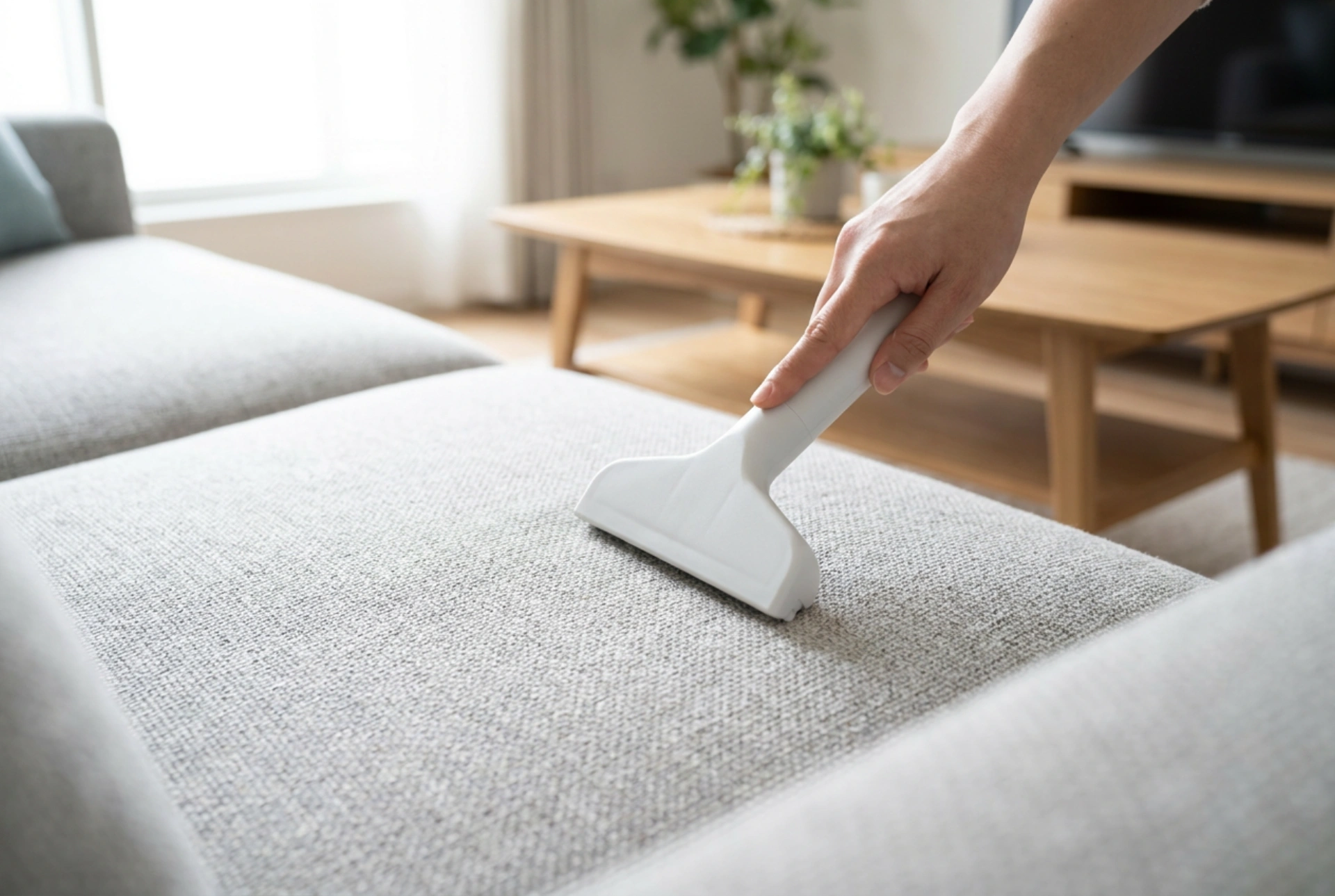
Before introducing any liquid to the textile, thorough dry extraction is mandatory. Wetting upholstery that contains loose dust simply turns that dust into liquid mud, which penetrates deeper into the weave and is significantly harder to extract. Use a vacuum cleaner equipped with a clean upholstery attachment. Vacuum the surface in a precise cross-hatch pattern, first moving vertically and then horizontally. Apply moderate, even pressure to open up the fabric weave and reach the dust settled in the lower layers. Pay extra attention to seams, crevices, and tufts where abrasive silica particles accumulate. This mechanical pre-cleaning removes up to eighty percent of dry contaminants, drastically reducing the material available to form streaks later.
Wet Extraction Mechanics and the Overlap Rule
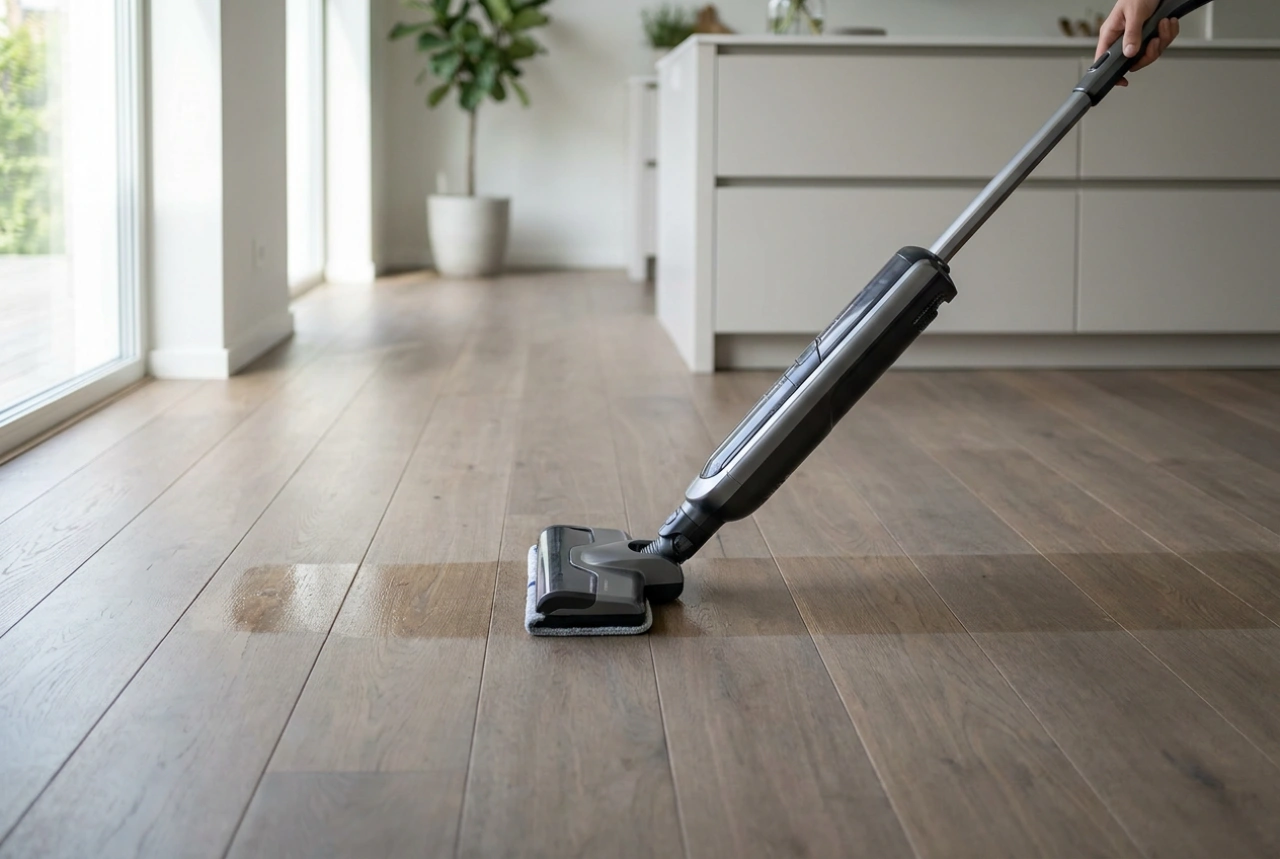
When executing wet extraction, fluid control and nozzle physics are paramount. Working in small, manageable zones of approximately thirty square centimetres prevents the cleaning solution from sitting too long and soaking into the deep backing foam. Apply a mild, pH-neutral surfactant solution sparingly using a fine mist. When drawing the vacuum extraction nozzle across the fabric, maintain a consistent forty-five-degree angle. This angle ensures the suction slot maintains a tight seal against the fabric, maximizing the pressure differential needed to pull water out of the fibres. Always overlap each pass by fifty percent. This prevents striping, which occurs when the edges of the nozzle exert less suction than the centre, leaving wet paths of dirt behind. Follow every wet stroke with at least two dry strokes—passes where no water is sprayed—to extract the maximum amount of moisture.
Accelerating Drying Kinetics to Lock Fibres in Place
The final step in preventing streaks is managing the drying environment. The faster the remaining moisture evaporates, the less opportunity capillary action has to transport deep-seated residues to the surface. Immediately after extraction, use a soft-bristled upholstery brush to gently groom the pile in a single direction. This aligns the fibres, opens up micro-channels for airflow, and prevents shading differences. Increase ambient air circulation by positioning a floor fan to blow air across the surface, rather than directly down onto it. Maintain a room temperature of twenty to twenty-two degrees Celsius and keep relative humidity low. Never use direct high-heat sources like hair dryers, as rapid local heating causes uneven drying rates, which guarantees ring stains and can warp synthetic fibres.