

Drying laundry efficiently in confined spaces requires a precise balance of mechanical strength and thermodynamic airflow. Telescopic drying racks solve this by extending outwards only when needed, utilizing structural physics to support significant wet weight while maintaining optimal fabric separation.
The Mechanics of Telescopic Extensions
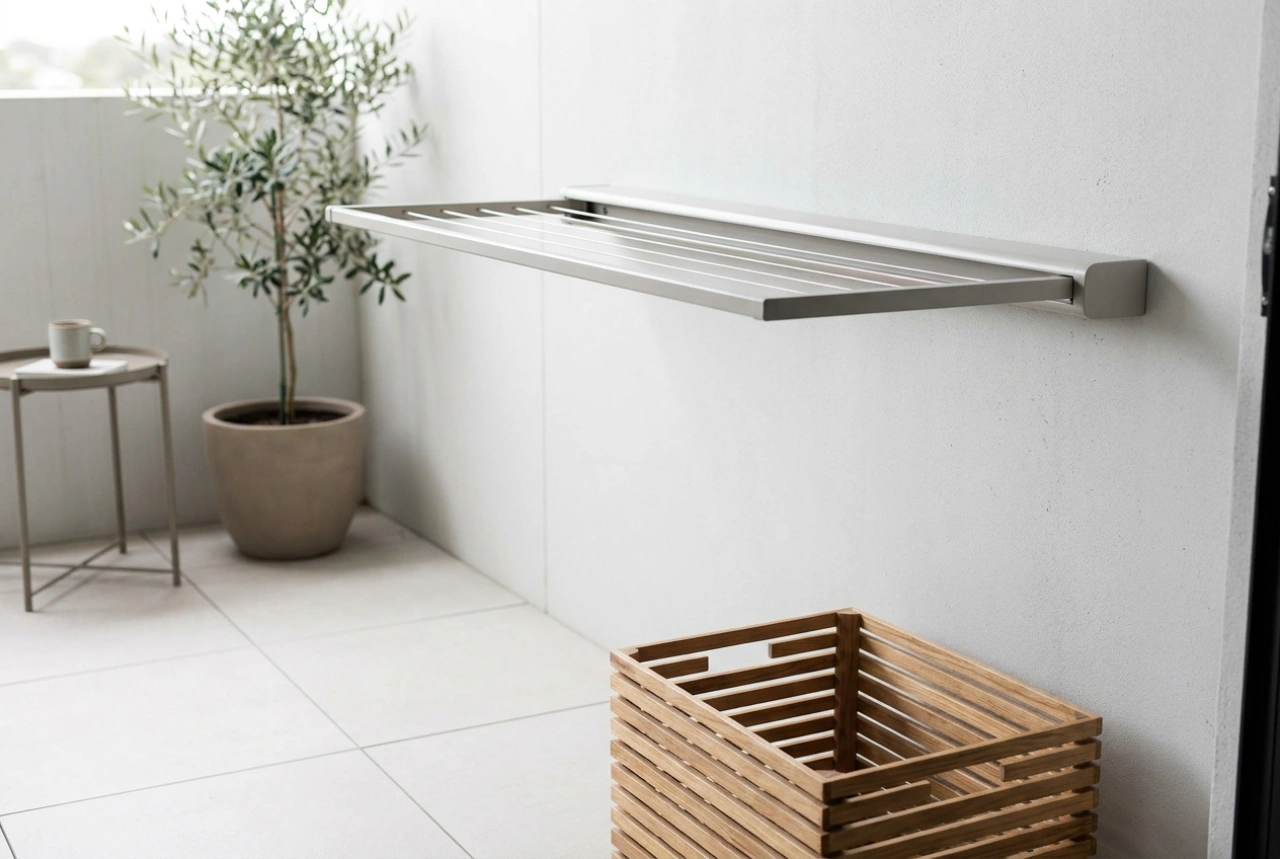
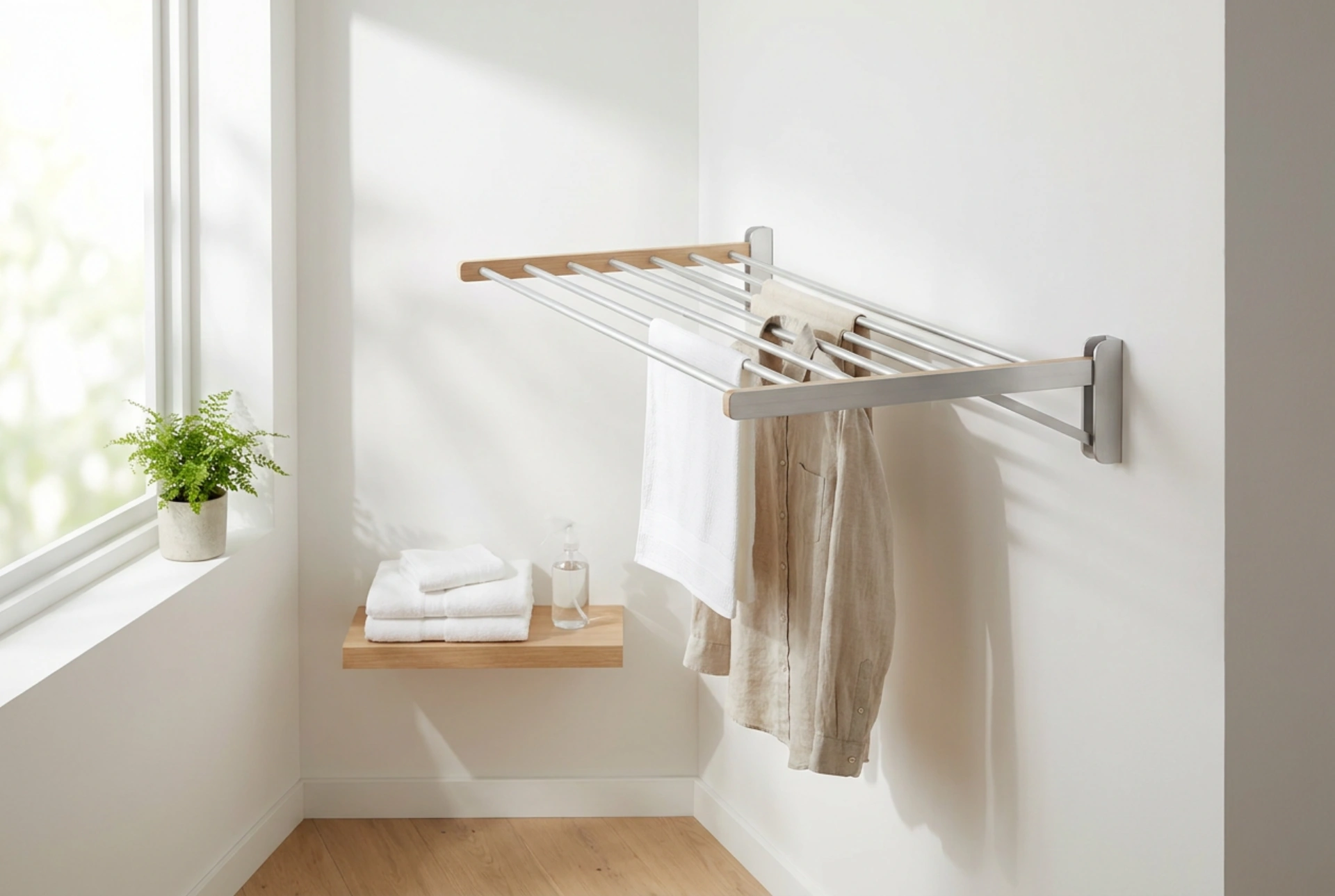
Telescopic drying racks rely on nested cylindrical or rectangular profiles that slide within one another. This design minimises the physical footprint of the rack when idle, compressing it flat against a wall or inside a recess. The primary structural challenge of a telescopic system is cantilevered force. When wet clothes are hung at the outermost edge, the torque exerted on the wall mounts increases significantly.
High-quality telescopic mechanisms mitigate this stress through precision tolerances between the nested sections. Minimal clearance prevents sagging at full extension, while internal nylon or PTFE sleeves reduce friction during deployment and prevent metal-on-metal wear. Understanding this load path is critical: heavier garments, such as damp denim or woollen knits, must always be placed closest to the wall anchor points to reduce leverage and protect the integrity of the extending arms.
Evaporation Kinetics and Airflow in Small Areas
The speed at which laundry dries is governed by boundary layer physics. When wet fabric is exposed to air, water molecules evaporate, creating a thin, highly humid boundary layer of air directly surrounding the cloth. If there is no air movement, this local humidity reaches saturation, halting further evaporation.
In a small utility room or balcony, space is restricted, making fabric separation vital. Telescopic racks allow users to adjust the depth of the drying plane. By pulling the rack to its maximum extension, you increase the physical gap between hanging garments. This spacing allows natural convection currents—driven by temperature differentials in the room—to penetrate the spaces between clothes, displacing the saturated boundary layer with drier ambient air.
Material Science: Preventing Corrosion and Staining
Hanging wet laundry subjects the drying rack to prolonged moisture exposure, making material selection a critical factor for longevity. Most modern telescopic systems are constructed from anodised aluminium or stainless steel (typically grade 304). Anodisation increases the natural oxide layer on aluminium, making it highly resistant to corrosion and scratching, while ensuring it remains lightweight.
Alternatively, powder-coated steel offers high structural rigidity but carries a risk: if the polymer coating is chipped or scratched by metal clothing fasteners, the underlying carbon steel will rapidly oxidise when exposed to moisture. This leads to rust, which can permanently stain damp fabrics. For high-humidity indoor environments, anodised aluminium or marine-grade stainless steel is recommended due to their self-passivating properties, which naturally form a protective barrier against moisture without relying on surface coatings.
Load Distribution and Structural Wall Mounting
Because telescopic racks project outwards, they act as levers, multiplying the downward force of wet laundry. A load of 5 kilograms of wet laundry can exert a significantly higher pull-out force on the upper wall fixings. Proper installation is therefore essential to prevent structural failure.
- Solid Masonry: For brick or concrete walls, expansion anchors or nylon wall plugs paired with heavy-duty screws are optimal. They expand against the solid bore-hole walls to resist pull-out forces.
- Drywall/Stud Walls: If mounting to plasterboard, the rack must be fastened directly into wooden or metal studs. If studs are unavailable, hollow-wall anchors (such as toggle bolts) must be used to distribute the load across a wider surface area on the back of the plasterboard.
Spatial Configuration for Faster Drying
To maximise the efficiency of a telescopic rack, arrange laundry systematically. Hang heavier, thicker fabrics (like cotton hoodies) on the outermost and innermost rods, where air circulation is naturally higher due to open room boundaries. Lighter synthetic fabrics, which require less energy to evaporate water, should occupy the middle rods. Always leave a clear corridor beneath the rack to allow cooler, moisture-laden air to sink unimpeded, establishing a continuous thermal siphon within the room.